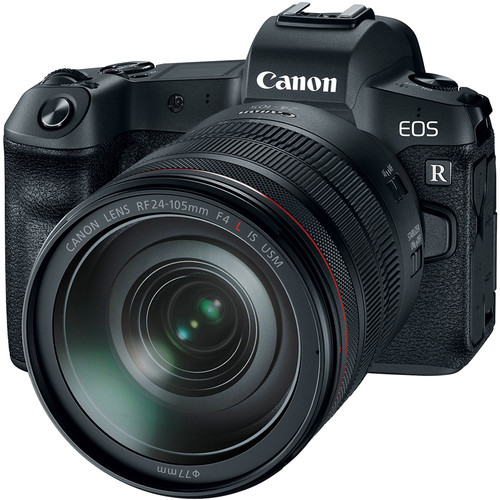
A lot of people have been reaching out to me for my thoughts on the all new Canon R – Canon’s answer to the recently introduced Nikon Z series - given my history a “Canon shooter”. Long-time readers have noticed that I’ve been very vocal about how much I loved the Sony a7R III (my 2017 Camera of the Year) and Sony a9, so would my history with Canon change my opinion?
I’ve been off doing other things besides blogging lately, so I have actually been out of the loop on the rumors of the “R” until friends started reaching out to me about it this past weekend. While I’m not surprised about the announcement, I had no inside info prior to the release so it’s been a learning experience for me too.
My first thoughts are:
Why only 30mp?
Where’s the advanced eye auto focus?
Nice job with the screen on the top like my DSLR’s, but where’s the rest of the buttons?
No joystick?!!!! No thank you!!!
On paper, it feels like it’s button layout is more like a 6D Mark II / 80D but its sensor seems targeted for a 5D Mark IV user. This places it in line to compete with the Sony a7 III not the Sony a7R III which is a bit of a surprise for me – especially given the fact that this camera is priced like the more capable Sony a7R III.
While I should reserve judgement until actually using one, on paper I still think that Nikon and Canon have both missed the mark in competing with Sony’s more compelling offerings. I think Nikon did a better job with the Z7, but if I were spending my money on a mirrorless right now I’d still go with Sony.
Disclosure
If you make a purchase using links found in this article, I may make a commission. It doesn’t cost you a penny more, but it does help to support future articles like this.
In Part I of my review I asked Sony a9 - The Ultimate Action Camera By Which All Others Will Be Judged?, and I think the answer has to be yes. It's a very impressive AF system that almost guarantees you'll get the decisive moment for an action scene. However, this is a big investment and most of us aren't paid sports photographers, yet this camera has a lot of reasons why you might want to buy. As a result, I thought I'd spend the second half of this review discussing its value as an all-purpose camera to see how it does with typical shots that the average person might take.
Would this be a case of yet another expensive camera that's really just a one trick pony, or did Sony really make one camera to rule them all? Read on to find out and see my final conclusion.
Real World Shots
Real world shots is my way of saying examples of photos that an ordinary person might take as compared to ones that a paid professional being hired to photograph something would take. I like to include these types of shots in my reviews because it reflects exactly what you can expect to see if you buy this camera and examine the results on your computer.
All of the photos are 100% unedited (not even cropping unless noted) and you can click the photos to see the exact unedited JPEG that came out of the camera.
While I might use white balance (shade) and creative style (vivid) adjustments to enhance the in-camera image, the rest of what you see is what you'd see at home yourself if you took this same shot yourself.
All images are copyright, Ron Martinsen - ALL RIGHTS RESERVED, but you may examine the originals to your hearts content while viewing this article in your web browser. After closing the article, you agree to delete any local copies and you also agree not to print, re-post, re-distribute, link to or otherwise use these photos in any way without written consent.
f/2.8 @ 70mm for 1/250 sec at ISO 400 However, if you switch to the APS-C mode, then you get some extra optical zoom without sacrificing quality - but you do get a smaller 3936x2624 file so you've essentially just done an in camera crop. That said, I still liked this mode and it will still print and look gorgeous on a 4k TV.
f/2.8 @ 70mm for 1/250 sec at ISO 500 Using the Clear Image Zoom feature at its maximum 4x means you can't pick the focus point but you get impressive reach and quality using this intelligent digital zoom technique. Again, I have a file that needs no editing to show friends on a 4k TV - impressive
f/16 @ 24mm for 1.3 sec at ISO 100 In this intentional dynamic range torture test, I was reminded that this definitely no a7R II The highlights were pretty blown despite the cloudy conditions
f/22 @ 24mm for 2 sec at ISO 100 However, if you shoot within the dynamic range of this camera,
the landscape results are very satisfying
f/4 @ 70mm for 1/800 sec at ISO 100 I snatched a frame of the distant boat, but I was surprised to see how much detail still remained in the power lines
f/4 @ 68mm for 1/3200 sec at ISO 100 (cropped - click for unedited original) As I was taking the shot above, I heard this plane overhead so I took a quick shot Despite being underexposed, I was impressed with the detail in the shadows and especially the wires going from the vertical stabilizer on the tail
f/5.6 @ 70mm for 1/100 sec at ISO 640 Zoom in to the original for a scary look at this spider shot done at full frame at roughly the minimum focus distance of the 24-70mm f/2.8 GM lens
I don't do much with video, but I think slow mo videos are cool so I couldn't help but play around with that feature on this camera. In this test, I was curious to see how the AF would hold up to the torture test of keeping up with my son's eyes. It failed, but honestly I thought it did better than expected given the fact that I was using eye focus mode on such a challenging scene.
Bookshelf Test
f/5.6 @ 50mm for 10 sec at ISO 100 ISO 100 quality was excellent even by today's standards and the shadow detail above the books to the back wall was impressive
Where many special purpose cameras fail is how they perform when pushed to the extremes. In this case, I'm happy to report that the a9 did a respectable job in my bookshelf test that I use to just shadow detail, dynamic range and ISO performance. The full gallery of shots lets you examine full ISO stops from 100 (shown above) to 51,200 (shown below) where you can decide what your maximum tolerance is for sensor noise and noise reduction control. However, I found 51,200 to be usable in a pinch and 12,800 to be good enough to consider it a default top ISO for regular shooting.
f/5.6 @ 50mm for 1/50 sec at ISO 51200 As this shows, unless you are going to be viewing at large sizes, images of your vacation or kids shown a social media sizes is going to be totally fine at ISO 51,200
Conclusion
Yes, I have to say that this is the most impressive camera that I've tested this year and one of the best ones I've every shot with. While I won't be getting rid of my Canon 1D X Mark II because if its superior line up of sports lenses, better metering and excellent flash system, I did find myself looking at my camera and wondering why Canon can't do that!
I've also shot with the Nikon D5, and I'd prefer it over the Sony for the same reasons. Yes, I've seen adapters used with Canon and Nikon lenses and I'm extremely underwhelmed at AF performance when used with adapters, but manual focusing is fine. That kinda defeats the purpose of this camera and sports lenses, so I'd still say that if you are a sports shooter that this is a good second camera for close range action, but stick to Canon or Nikon for your >200mm needs.
With that said, if you are an event or wedding photographer then I think this is the camera you have to own. While you might want a a7R Mark II also around your neck or in the hands of your second shooter for its superior dynamic range, this will be the camera that helps you to get the shots that bring tears to your clients eyes. It's also got the high ISO performance to come home with concert and evening event shots that are totally usable.
Now this is an extremely expensive camera, so it's tough to suggest it for parents based on price. However, if you are a financially successful dual income household that can easily afford it then I can say without hesitation that this is the camera you want to photograph your precious little angel.
Overall, I'm extremely satisfied all around with the first Sony camera body that I didn't hate (thanks to its wealth of programmable buttons) and can easily give it MY HIGHEST RECOMMENDATION.
If you make a purchase using links found in this article, I may make a commission. It doesn’t cost you a penny more, but it does help to support future articles like this.
Unless noted, ALL shots in this article are unedited and come straight out of the camera as shown. In-camera JPEG's were used with in-camera Creative Style (vivid) and White Balance (shade) being leveraged to give shots an improved color over the camera default.
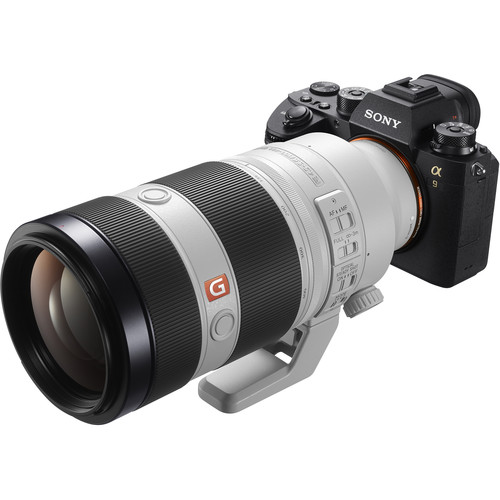
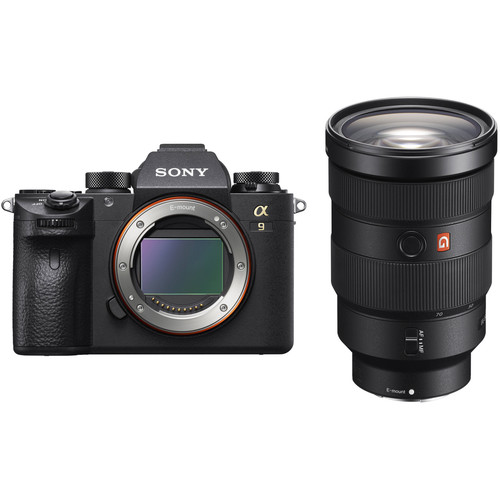
Sony a9 shown with the 70-200mm I've used the kit 24-70 f/2.8 GM for my review
Henri Cartier-Bresson was famous for capturing The Decisive Moment in many of his images. When I got this camera and heard of its claim of 20fps shooting with a buffer that could hold hundreds of images, the first thing I thought was this might be a camera that helps mere mortals to increase their odds of capturing their own decisive moments in everyday life - in a high resolution image (vs video frame capture). If so, this would be a game changer.
Read on to see if this camera lives up to the hype and accomplishes that goal, or if it's yet another case of fan boy hype all over again.
I read a lot of stupid things on the internet, but one that really cracks me up is when people make the argument that this camera (and its siblings like the a7 and a7R II) are smaller or more compact.
Since I'm currently only shooting with a Canon 1D X Mark II, I had to use the only normal body DSLR I have on hand - a Canon 6D Mark II review unit for a comparison. I wanted to show how physically a a9 is roughly the same size as a common DSLR. This isn't a comparison of the features of these two cameras as they are totally different, but I did want to illustrate how this camera and especially the lens is very similar to what you'll get with your average DSLR.
One gripe I have had against the Sony a series is that their attempt to make a more compact profile just limits the better grip experience you get with a Canon or Nikon DSLR, so I do wish Sony would actually bulk them up a bit to make them more comfortable to hold with heavier lenses.
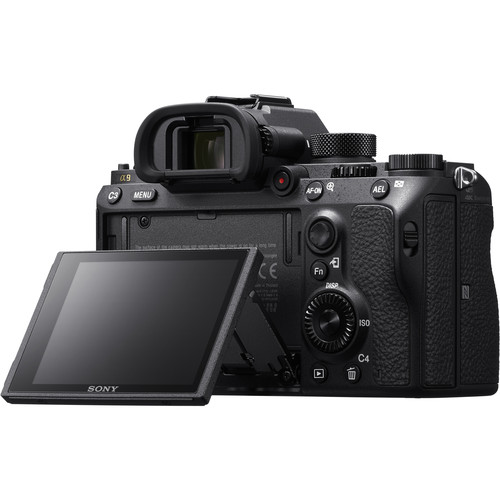
Another thing you'll notice about this Sony is that it finally gets a joystick (which sadly isn't present on the 6D Mark II for reasons that perplex me). This plus an exposure dial on top and just more buttons and knobs in general make this my favorite Sony camera body ever!
Overall, I loved this body which features:
A very good electronic viewfinder that shows exactly what you'll get when you shoot
The best coverage of AF points (especially at the edges) of any camera I've ever used
Excellent programming options for 8 buttons and even the joystick press event and the dial. As a result, getting this camera dialed in the way you want it without hunting through Sony's annoying menus is easily accomplished
An exposure compensation dial that makes it Fujifilm easy and fun to use (although it does get bumped out of its setting easier than I'd like)
A dial for drive modes and focus modes that Nikon lovers will feel right at home with
An articulating LCD screen that helps when shooting from odd angels, but sadly doesn't rotate where you can see it if you are in front of the camera doing group shots
Dual card slot, although one only takes SDXC II if that is your preferred format
and much more
Simply put, haters of Sony's annoying menus can set this camera up where they don't need to use those menus to successfully shoot out in the field. This is CRITICAL for sports photography, and something Sony has definitely done right.
The first thing I wanted to know when I unboxed this camera was "is this burst mode for real"? I've seen other cameras that made this claim and only delivered on low resolution images. I've also seen other smoke and mirrors tricks that resulted in something that was a marketing claim, but not something that could really be used.
I built this blog because I hated all of the fan boy hype and lies in the mainstream media for photography that made big claims that failed to materialize when I invested my money on those products.
In this video, I prove beyond a shadow of a doubt that the Sony a9 is the real deal and it deserves credit for doing something no other camera I've ever tested has accomplished:
As a follow up to the video, you can find all 222 frames taken in the video in this gallery here. You are free to download and examine them to your hearts content, even though they are intentionally boring. :)
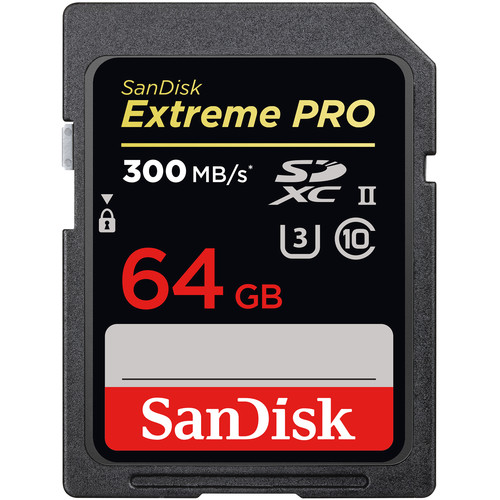
As I mentioned in the video, I did do RAW+JPEG on a common SDHC I 95mb/s card so your performance will only get better if you use the recommended SDXC II cards as shown above. I also didn't upload the RAW's simply due to bandwidth cost and download policies (login required) of the service where I host my images.
I took over 6000 shots with this camera which is extremely easy to do when you have a burst mode that is this rapid. Here's a link to a gallery that contains a random selection of some of the throw away burst sets I took while following my son around for various activities.
While I know there's some concern about the 12-bit images you get when using the electronic shutter in full burst versus the mechanical shutter in a slower burst mode (which offers 14-bit images), I can say in real world applications it doesn't make any difference. The value of getting the shot also more than makes up for the 2-bit difference that no viewer of our image will see (or should see if your capture doesn't suck).
I had a lot more bursts than these, but I only wanted to include throw away sets so readers are free to download and examine them to their hearts content.
Metering Issues - Room for Improvement
f/5 @ 70mm for 1/1000 sec at ISO 320 (unedited) Despite doing okay for most frames, the metering was totally off for this frame Sadly this happened more than it should for a camera of this price point
Despite advances made by Nikon and Sony in performance, one thing that keeps me on the Canon platform is the metering performance of my 1D X Mark II. If you take enough frames in a burst then odds of having a shot worth publishing is high, but having images that are way off on the exposure can lead to a lot more hassles editing or in some cases an unsalvageable shot.
In the shot above and many in this article you'll notice how the exposure is way off. Yes, I could have used exposure compensation to fix the problem, but the fact is that this is a weakness of the Sony and Nikon platforms that Canon definitely does a better job with. Like Nikon, using spot metering can help - but this camera only does spot metering from the center and not from the AF point so that's a huge fail for sports photographers who need precise metering on their target no matter what happens in the background.
If I could make only one wish to Sony for what they can fix in the next version of this camera, metering would definitely be that wish. See Canon's Evaluate Metering with an emphasis on the AF point for a case study on how metering should be done.
Swing Test
If you are a parent, you know how hard it is to get decent shots of your kids on the swing. Cameras are improving every year, but this is still a real world torture test for any camera. However, the a9 performed extremely well with hundreds of in focus images to chose from. Here's a few examples:
If you have kids and and can afford this camera, it really is the perfect tool to get the perfect shot for just about any action your kids will do.
Handling Obstructions
The downside of photographing in public places is that someone always walks in your darn shots - especially when you are in burst mode. While it can be frustrating since you'll have editing to do, it's even more frustrating when the camera changes focus and you miss a series of shots that are impossible to capture again.
Fortunately the default settings of this camera are very good at keeping the focus point where it belongs - especially if you stick with the Flexible Spot S on your subject. Here's a few unedited examples of shots that could have been ruined, but weren't as the default AF-C settings give your original subject the priority.
This is great for a default setting, but if you are shooting sports like Basketball where you want the AF to change quickly to different subjects you can easily dial that in too. Sony on it's first attempt has effectively matched the Nikon D5, and one upped the D5 and 1D X Mark II by offering more focus points all the way to the edges to help increase your odds of getting the shot.
The Decisive Moment - Guaranteed
PLEASE NOTE that ALL images in this article are copyright Ron Martinsen - All Rights Reserved. You may view the associated original images while this article is open in your browser, but you must delete them when you are done. You may not print, edit, re-post, or otherwise any images in this article without written permission.
What I love about this camera is that when you see an opportunity where you know there's going to be a great decisive moment of the series that you want to capture, your odds of getting it are almost 100%. Even in my case where I was using the wrong lens and due to water I had to stand far back, I knew I was going to get the frame I wanted with this camera so I just planned to crop and took the shot anyway. I chose this frame, but I had tons to choose from so I could have had Kai in the water or just out of it - I had the shot no matter which artistic decision I decided to go with. That's incredibly powerful!
The rest of the shots in this section are all 100% unedited and appear exactly as they came out of the camera. Click on any to view the in-camera JPEG original file, or visit this gallery for more.
f/2.8 @ 28mm for 1/500 sec at ISO 100 I wanted a shot with a little edge flair, bouncing backlit hair and a nice shadow to the edge Accomplished on the first attempt
f/2.8 @ 59mm for 1/2000 sec at ISO 1600 I wanted to capture a great facial expression and the peace sign with his eyes in perfect focus Accomplished on the third attempt
f/4 @ 70mm for 1/2000 sec at ISO 2000 Kai was having a happy day and I caught an expression that However, the meter failed me but I can fix that in post-processing
f/2.8 @ 44mm for 1/2000 sec at ISO 3200 I wanted to capture an expression of unbridled enthusiasm of a boy jumping off a rock Accomplished on the first attempt
f/2.8 @ 70mm for 1/2000 sec at ISO 2500 A big swing, parallel to the ground with a spot on smile - done Now if that darn lady wasn't in the background - thank goodness for content aware fill :)
f/2.8 @ 70mm for 1/500 sec at ISO 1600 I wanted to capture Kai running away from his little sister - done Accomplished on the first attempt better than I imagined with Ara appearing under his arm in a hug/headlock type subliminal gesture
f/2.8 @ 70mm for 1/500 sec at ISO 1600 And sometimes you just get a funny shot that may not be what you are going for, but any shot that evokes an emotion response is worth keeping (My Facebook friends loved this one)
The Downside
It might surprise you that I only spent a few hours shooting with this camera over 6 separate days of reviewing. I've been crazy busy, so I just don't get to review and blog like I used to, yet I still managed to take 6000 frames of photos worth about 60GB of disk space (excluding a lot of deleted RAW's).
Fortunately if you are using the electronic shutter, there's no fears about shortening the life of your camera like a mechanical shutter, but it can do some damage to your hard disk and backup storage in a hurry! It can also be problematic while you are on vacation, unless you buy A LOT of large capacity memory cards.
I also found it painful going through so many images in a burst that looked alike (see examples here), so often times I found myself going down to the lowest burst mode or switching to mechanical shutter just to slow things down. This is even true on my much slower Canon 1D X Mark II, as often times you simply don't need so many shots in a burst.
That said, in practical use you'll find that the high speed electronic burst mode is fantastic when you need it - but you'd be wise to save it for only when you really need it.
If you make a purchase using links found in this article, I may make a commission. It doesn’t cost you a penny more, but it does help to support future articles like this.
Unless noted, ALL shots in this article are unedited and come straight out of the camera as shown. In-camera JPEG's were used with in-camera Creative Style (vivid) and White Balance (shade) being leveraged to give shots an improved color over the camera default.
I've been heads down working and not paying too much to the new gear coming out recently. I guess that's a testimony to how much I've loved my Canon 1D X Mark II, but wild claims about the Sony a9 caught my attention so I just started testing it last night.
Ok Sony, you now have my attention.
I'll do a real review later, but I thought I'd toss a couple images up taken from my first and only 20 minutes using this camera with the 24-70mm kit lens which you know I don't care for much if you've read part II of my Sony a6500 review. This copy seems to suffer from the same things I saw with other copies, so I've reached out to B&H for another lens to test for my review.
In the meantime, here are a few 100% unedited in-camera jpeg's:
f/2.8 @ 70mm for 1/1000 sec at ISO 3200 This was part of a huge burst with Kai being silly, but it illustrated a new use for this camera to me - it's incredible burst mode is great for capturing emotions when interacting with people
f/3.5 @ 70mm for 1/800 sec at ISO 1000 This was just one frame from an astonishing burst of over 150 frames at RAW+JPEG where the electronic shutter was quiet and smoking fast. Every frame within the minimum focus distance was in focus enough to use (a few were slightly off, but not enough to be problematic)
If you make a purchase using links found in this article, I may make a commission. It doesn’t cost you a penny more, but it does help to support future articles like this.