Showing posts with label 24-105mm. Show all posts

Thursday, January 15, 2026

Canon R6 Mark II Review: Killer AF, Amazing High-ISO JPEGs & Legacy Lens Love (2026 Update)

Camera ReviewRonMartBlog

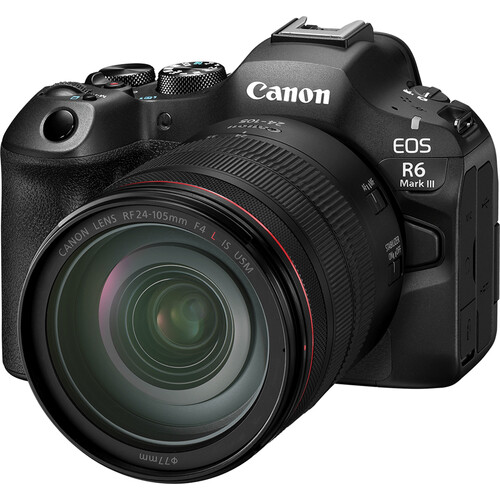
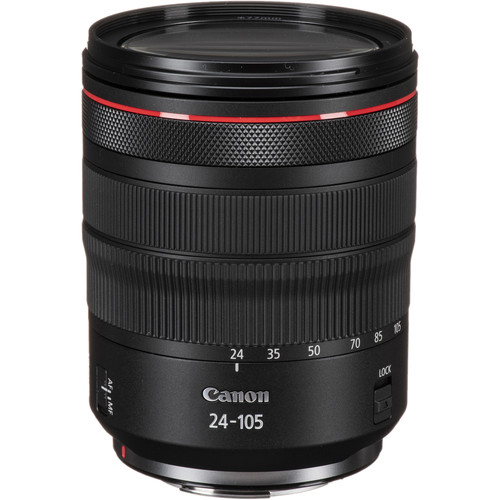
REVIEW: Canon R6 Mark II & RF 24-105 f/4L IS USM

Phenomenal autofocus, outstanding in-camera JPEGs at high ISOs, and great support for legacy EF lenses and flashes makes this a nice upgrade for those sitting on the fence.

REVIEW: Canon R6 Mark II & RF 24-105 f/4L IS USM product photo
REVIEW: Canon R6 Mark II & RF 24-105 f/4L IS USM — click to check current price / availability

✅ Pros

  • Excellent in-camera JPEG quality especially at high ISO (up to ISO 20,000+ with impressive detail retention)
  • Fast, reliable autofocus that rarely hunts—even with legacy EF lenses—and outperforms older pro bodies like the 1DX Mark II
  • Pivoting LCD is very handy for macros in difficult shots, great for screen protection, and perfect for awkward angles
  • Strong IBIS (In-Body Image Stabilization) + lens stabilization for sharp handheld low-light shots

⛔ Cons

  • In 2026, it trails newer bodies (e.g., Nikon Z6 III, Sony a7 V, Canon R6 Mark III) in buffer depth, rolling shutter, and burst rates for fast action
  • Even at street prices around $1,999 body-only new (or $1,800 used/refurb), it's pricey compared to aggressive competition in a shrinking market
  • DPP 4 is painfully slow for raw processing, despite being optimized for Canon files
  • Limited 4K 60p recording time due to potential overheating in extended clips (common for the model; external fan helps if video is priority)
  • ⚖️RAW shadow recovery / dynamic range isn’t class-leading if you push files hard (vs. some Sony a7 and Nikon Z bodies)

TL;DR ⚡

For dedicated Canon shooters, the R6 Mark II delivers outstanding high ISO performance. Combined with IBIS and lens stabilization, it enables slower shutter speeds for still subjects, reducing ISO for cleaner images. See my full review for more info on how it compares to the new Mark III.

R6 Mark II: Pro-level performance and stabilization—without the Mark III price tag.

Table of Contents

  1. Who it’s for and who should skip
  2. Video review
  3. Real World Shots
  4. Sample Video Recorded on R6 Mark III
  5. Observations
  6. Difference between the R6 Mark II and Mark III
  7. Recommended products
  8. Closing thoughts
  9. Related articles

Test Context

  • Main lens: RF 24–105mm f/4L IS USM
  • Legacy EF lenses used: EF 70–200mm f/2.8L IS II, EF 11–24mm f/4L, EF 100mm f/2.8 Macro USM
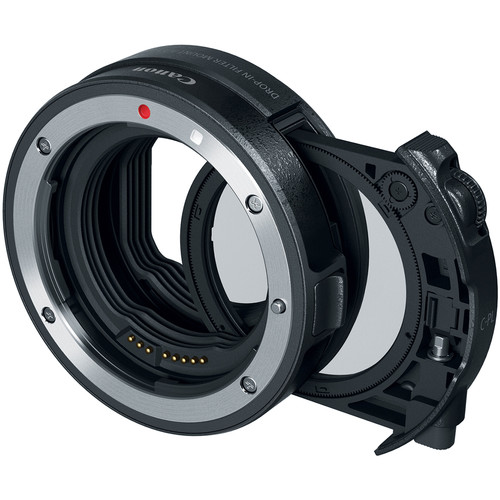
  • Adapter: Canon Drop-In Filter Mount Adapter EF–EOS R (circular polarizer)
  • Scenes Reviewed: Everyday life, macro + close focus, long exposures, low-light indoor, and a "distraction torture test”
  • Files: JPEG + RAW (CR3) + HEIF (.HIF) & MOV
  • Firmware Version: 1.5.0 (Lens 2.0.6)
  • Lightroom Classic Version (for triaging RAW): 15.1 (Camera Raw 18.1)
  • Digital Photo Professional: 4.20.11.0
  • Photos Taken: 1770 (3549 files)

Who it’s for

  • Parents looking to get great shots of their kids in difficult sports conditions
  • Events photographers who often have lots of low-light handheld shots
  • Canon EF lens owners looking to upgrade to a newer camera body (while keeping their existing glass)

Who should skip

  • Those who have to have the latest and greatest gear
  • Studio and landscape photographers who prioritize pixels over autofocus performance
  • If you already invested in Sony, Fujifilm or Nikon, there's not enough here to warrant a platform switch

Video Review 🎥

If the player doesn’t load here, watch on YouTube.

Real World Shots 📷

The photos below are real-world samples. Click any photo to open the original size.

Click here to view the entire gallery of images taken for this review.

The 24-105 minimum focus distance was quite usable.

Real-world shot 1
f/5 for 1/100 sec at 70 mm ISO 320 [0 EV, Pattern metering, No flash, Aperture priority with RF24-105mm F4 L IS USM]

However, I found myself wishing this was a f/2.8 lens quite often to get more bokeh in the background. Click the photo to open the original size 👆

Manual focus peaking was needed to get sharp focus for this shot, but it worked great.

Real-world shot 2
f/4.5 for 1/320 sec at 98 mm ISO 640 [0 EV, Pattern metering, No flash, Shutter priority with RF24-105mm F4 L IS USM]

The wind really gave the autofocus its only fits during my testing, so the focus peaking made it easy to see when the wind was calm enough to take the shot. Click the photo to open the original size 👆

The Canon Drop-In Filter Mount Adapter EF-EOS R with Circular Polarizer Filter worked great with my legacy Canon EF70-200mm f/2.8L IS II USM lens.

Real-world shot 3
f/7.1 for 1/125 sec at 120 mm ISO 8000 [0 EV, Pattern metering, No flash, Aperture priority with EF70-200mm f/2.8L IS II USM]

I rotated the circular polarizer to eliminate the reflections on the leaves and stump to make a more vibrant image. I quickly became a fan of having filters on the camera side of the lens instead of on the end of the lens. Click the photo to open the original size 👆

The in-camera JPEG processing of ISO 20,000 is awesome

Real-world shot 4
f/13 for 1/160 sec at 130 mm ISO 20000 [-0.33 EV, Pattern metering, No flash, Aperture priority with EF70-200mm f/2.8L IS II USM]

I quickly fell in love with the fact that I don't need to worry about hitting high ISOs with this camera. The noise reduction is impressive while still maintaining plenty of details as shown in this low-light shot. Click the photo to open the original size 👆

My very old EF100mm f/2.8 Macro USM lens worked great with the Canon Drop-In Filter Mount Adapter EF-EOS R with Circular Polarizer Filter

Real-world shot 5
f/13 for 1/125 sec at 100 mm ISO 6400 [0 EV, Pattern metering, No flash, Aperture priority with EF100mm f/2.8 Macro USM]

I had no issues with both auto and manual focus with this super sharp but very outdated lens Click the photo to open the original size 👆

I was happy to see my legacy Canon EF11-24mm f/4L USM, one of my most expensive lenses, worked great with the R6 Mark II's autofocus system!

Real-world shot 6
f/20 for 2.5 sec at 24 mm ISO 100 [-1 EV, Pattern metering, No flash, Manual with EF11-24mm f/4L USM]

The circular polarizer came in handy on this long exposure shot as did the articulating LCD which kept me from having to get into funny positions. I just rotated the LCD so I could see it easily no matter what position my camera was in! Click the photo to open the original size 👆

Another long-exposure shot that highlights the sharpness of this lens even at f/14

Real-world shot 7
f/14 for 1/2 sec at 63 mm ISO 100 [-1 EV, Pattern metering, No flash, Manual with RF24-105mm F4 L IS USM]

I currently own a legacy 24-70 and two variants of the 24-105 lens, but this new RF made me want to get rid of all of them as it performed very well with super crisp images worthy of the L designation. Click the photo to open the original size 👆

Cigar lounges are a visual treat in person, but they give cameras fits

Real-world shot 8
f/4.5 for 1/60 sec at 50 mm ISO 12800 [0 EV, Pattern metering, No flash, Aperture priority with RF24-105mm F4 L IS USM]

I was pleased that the autofocus never had any problems and didn't hunt for something to lock onto. The in-camera JPG was great and the off colors accurately reflect what I saw in person as well, so it nailed the color even with the AWB setting. Click the photo to open the original size 👆

In-camera color accuracy was fantastic

Real-world shot 9
f/9 for 1/80 sec at 32 mm ISO 12800 [0 EV, Pattern metering, No flash, Aperture priority with RF24-105mm F4 L IS USM]

I might be sounding like a broken record, but Canon's strength has always been its in-camera color quality and this was no different. It's an exact replica of what my eyes were seeing at the time. Click the photo to open the original size 👆

Even at ISO 8000, the textures of the cigars were excellent.

Real-world shot 10
f/6.3 for 1/80 sec at 70 mm ISO 8000 [0 EV, Pattern metering, No flash, Aperture priority with RF24-105mm F4 L IS USM]

I've been so happy with my iPhone over the past few years that I'm not breaking out the big camera anymore, but the resolution and crispness especially at high ISO with this camera has me rethinking that decision. Click the photo to open the original size 👆

This was my token f/22 shot that is more about having a lot of things to look at than it is photography. Overall, the wind hurt this shot quite a bit but I also believe diffraction was the bigger enemy here. There's no substitute for more megapixels for stuff like this as I've shown in my 50 and 100 megapixel Fujifilm reviews.

Real-world shot 11
f/22 for 8 sec at 24 mm ISO 100 [0 EV, Pattern metering, No flash, Aperture priority with EF11-24mm f/4L USM]

For this shot I was using my legacy EF11-24mm lens and the light conditions were constantly changing, but in the Northwest this was about as much sun as I could get so I was happy to capture it! Click the photo to open the original size 👆

f/16 looks great as long as you don't pixel peep at unrealistic zoom levels

Real-world shot 12
f/16 for 1.6 sec at 24 mm ISO 100 [0 EV, Pattern metering, No flash, Aperture priority with EF11-24mm f/4L USM]

I focused on the sign and again was using my sharpest lens in my bag for this shot Click the photo to open the original size 👆

I used the right eye autofocus and despite my daughter's hair partially obscuring it, and it did great.

Real-world shot 13
f/5.6 for 1/100 sec at 95 mm ISO 5000 [0 EV, Spot metering, No flash, Aperture priority with RF24-105mm F4 L IS USM]

For those new to this feature, the right and left eye refer to the subject's right and left eye - not photographers right or left. This is something that you need to think about when using that feature as it's easy to get it confused. That said, auto eye priority works great most of the time too. Click the photo to open the original size 👆

This was a hard shot to capture and the result is nothing to write home about, but what impressed me was that the autofocus never hunted around trying to lock onto the inscription - despite the fact that I struggled to see it!

Real-world shot 14
f/6.3 for 1/60 sec at 53 mm ISO 6400 [+2 EV, Pattern metering, Flash fired, Aperture priority with RF24-105mm F4 L IS USM]

Autofocus in difficult conditions that used to trip up the best of cameras is no longer a thing, so I never dealt with focus hunting even when using my older lenses. What's more, I almost never needed manual autofocus, and when I did it was for creative reasons. Click the photo to open the original size 👆

Another tricky one just above

Real-world shot 15
f/6.3 for 1/60 sec at 81 mm ISO 6400 [+2 EV, Pattern metering, Flash fired, Aperture priority with RF24-105mm F4 L IS USM]

In both cases, the autofocus just worked like it was any other subject - which was great! Click the photo to open the original size 👆

I had the wrong white balance settings for this shot, but I was pleased with the exposure of the blackberries at 0 EV against the bright pineapple in Canon's Evaluate metering (aka pattern) mode.

Real-world shot 16
f/5.6 for 1/60 sec at 43 mm ISO 4000 [0 EV, Pattern metering, No flash, Aperture priority with RF24-105mm F4 L IS USM]

A better white balance and partial metering would have been a better choice, but the CR3 raw file leaves plenty to work with after the fact. Click the photo to open the original size 👆

It's the winter in the Northwest, so there's little light to speak of. As a result, I was pleased to see how much detail was still left in the top of this hat even at ISO 8000.

Real-world shot 17
f/5.6 for 1/80 sec at 63 mm ISO 8000 [0 EV, Pattern metering, No flash, Aperture priority with RF24-105mm F4 L IS USM]

Yet another example of why I loved the 24-105mm so much - super sharp images and great image stabilization for handheld shots. Click the photo to open the original size 👆

ISO 8000 was so good on that last shot, I decided to push things and give ISO 10,000 a shot

Real-world shot 18
f/4 for 1/125 sec at 105 mm ISO 10000 [0 EV, Pattern metering, No flash, Aperture priority with RF24-105mm F4 L IS USM]

Once again, the in-camera JPEG didn't disappoint. However, I can still leverage the raw and Imagenomic Noiseware to get it even more sharp if I wanted to edit this image. Click the photo to open the original size 👆

Photographs on your typical ice rink are always terrible due to the poor lighting conditions and distractions in the background, but I was super impressed with the eye autofocus and AI Servo performance with my legacy 70-200mm during this torture test.

Real-world shot 19
f/4 for 1/320 sec at 102 mm ISO 5000 [0 EV, Pattern metering, No flash, Manual with EF70-200mm f/2.8L IS II USM]

Lots of distractions in the foreground and background kept showing up, but the AF almost never missed a shot and stayed in sharp focus of my daughter's eyes even when I struggled to see where she was. Click the photo to open the original size 👆

I've got countless distractions shots like this where the AF did a great job tracking my intended subject and never getting tripped up.

Real-world shot 20
f/2.8 for 1/320 sec at 135 mm ISO 2000 [0 EV, Pattern metering, No flash, Manual with EF70-200mm f/2.8L IS II USM]

I was extremely pleased with the performance, even though people were ruining any chances of a getting a good photograph! Click the photo to open the original size 👆

Another distraction example and there's more in the review gallery, but the AF never lost sight of my intended subject.

Real-world shot 21
f/2.8 for 1/320 sec at 200 mm ISO 8000 [0 EV, Pattern metering, No flash, Manual with EF70-200mm f/2.8L IS II USM]

I can say with confidence that the R6 outperforms my Canon 1DX Mark II in terms of AF performance in every way. Click the photo to open the original size 👆

This is a horrible photo, but what's impressive is that the eye autofocus actually stayed on the eye of the moving and partially obscured subject

Real-world shot 22
f/4 for 1/400 sec at 91 mm ISO 1600 [0 EV, Pattern metering, No flash, Manual with RF24-105mm F4 L IS USM]

I threw a lot at this AF system and it passed with flying colors. Click the photo to open the original size 👆

Yes, its true, auto eye AF even works on closed eyes!

Real-world shot 23
f/4 for 1/640 sec at 105 mm ISO 4000 [0 EV, Pattern metering, No flash, Manual with RF24-105mm F4 L IS USM]

In the past you'd have a sharp focus of a basketball and blurry subject, but not with the R6 Mark II. Click the photo to open the original size 👆

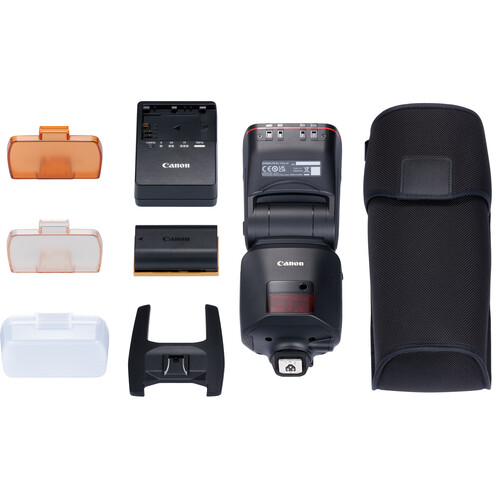
I didn't get enough time with the amazing Canon EL (Version 2) Flash, but this was all that flash with no third party modifiers.

Real-world shot 24
f/5.6 for 1/60 sec at 72 mm ISO 3200 [0 EV, Pattern metering, Flash fired, Aperture priority with RF24-105mm F4 L IS USM]

It's heavy, and its expensive, but the battery makes it a always ready when you need it super performing flash. If I was shooting event photography, I'd definitely buy this flash. Click the photo to open the original size 👆

After taking a photo with my iPhone, I decided to see if I could improve upon it by getting a shot that the iPhone would never get - a sharp focus on the brush as paint is applied.

Real-world shot 25
f/4 for 1/60 sec at 96 mm ISO 160 [-0.67 EV, Pattern metering, No flash, Manual with RF24-105mm F4 L IS USM]

Spot autofocus saved the day and I got the shot that I was hoping to get. Click the photo to open the original size 👆

Unhappy with the darkness of the last shot, I tried again and once again spot AF had no problems getting my desired result.

Real-world shot 26
f/4 for 1/100 sec at 105 mm ISO 320 [0 EV, Pattern metering, No flash, Manual with RF24-105mm F4 L IS USM]

In retrospect I wish I would have tried this shot at f/9 to get both the brush and hand in better focus together, but that's all on me not the camera. Click the photo to open the original size 👆

Notice how in-camera HEIF (.HIF) files render in Lightroom versus the CR3 thumbnail/default rendering.

Real-world shot 27
In-camera generated HEIF files don't look good in Lightroom Classic (in my testing)

I’m not sure if this is a Lightroom issue or a camera firmware issue from not being on the latest version. Leave a comment if you have more details on this issue. Click the photo to open the original size 👆

4K Video Example - Northwest Stream

If the player doesn’t load here, watch on YouTube.

1080p 120fps Slomo Video Example - Northwest Stream

If the player doesn’t load here, watch on YouTube.

Observations

Battery Life & Ergonomics

In mixed stills shooting (with occasional bursts and LCD use), I got about 2000 images (about 1000 shots) per LP-E6NH charge—solid for a mirrorless body. Grip is comfortable for long sessions, weather-sealing held up in light rain/Northwest drizzle, and the EVF is bright and clear. IBIS makes handheld low-light easy.

Still Worth It in 2026?

Launched in 2022, the R6 Mark II now often sells new for ~$1,999 body-only (or less refurbished/used around $1,800). It’s a fantastic value for EF lens owners avoiding a full system switch. If you want the absolute latest (better buffer, sensor readout, video endurance), the R6 Mark III is the step-up—but this one still punches way above its age for sports, events, and family action.

Difference between the Mark II and Mark III (AI Generated)

Image Quality & Resolution

The most notable difference is the sensor. The Mark III offers a 32.5MP sensor compared to the Mark II's 24.2MP, providing greater flexibility for cropping and larger prints. This extra resolution, however, can result in slightly more noise in high ISO scenarios compared to the Mark II's clean low-light performance.

Video Enhancements

The Mark III is a significant upgrade for videographers. It introduces internal 7K RAW recording and Open Gate recording, which uses the entire sensor area for flexible aspect ratio cropping in post-production (e.g., for social media vertical video). It also adds a full-size HDMI port, Canon Log 2, and professional tools like waveform monitoring. The Mark II is a capable everyday video camera with crop-free 4K 60p, but lacks these advanced features.

Speed & Buffer

Both cameras shoot at an impressive 40fps with the electronic shutter. The Mark III pulls ahead with its CFexpress card slot (alongside an SD slot), which allows for a much larger buffer capacity (around 150 RAW shots vs. 75 on the Mark II) for extended burst shooting. It also has a more robust implementation of the Pre-continuous shooting feature.

Autofocus & Stabilization

Both use Canon's effective Dual Pixel CMOS AF II system. The Mark III benefits from an enhanced AF algorithm and the "Register People Priority" feature, which allows you to prioritize focus on specific registered faces. It also offers a slight bump in in-body image stabilization, up to 8.5 stops.

Closing Thoughts

I’ll admit I was late to the game reviewing this one—it originally launched in 2022—but it’s still a very relevant camera today, especially if you’re coming from older Canon DSLRs with EF glass and have been waiting for the right moment to upgrade. If you’ve already moved to the R series, the gains here are more incremental and may not justify the cost.

That said, if you value Canon’s ergonomics and its consistently excellent in-camera JPEGs, this camera earns its keep. Autofocus stayed locked on even in ugly, low-contrast situations, and high-ISO performance was strong enough that I rarely felt forced into shooting RAW. When I did, RAW + Imagenomic Noiseware produced results that easily meet 2026-level expectations.

If you still find yourself wanting more—faster everything, more headroom, and the newest refinements—then stepping up to the Canon R6 Mark III makes sense. Either way, the Canon RF 24–105mm f/4L IS USM remains a rock-solid everyday pairing that fits this body perfectly.

👉 Click here to learn more

Sunday, August 28, 2016

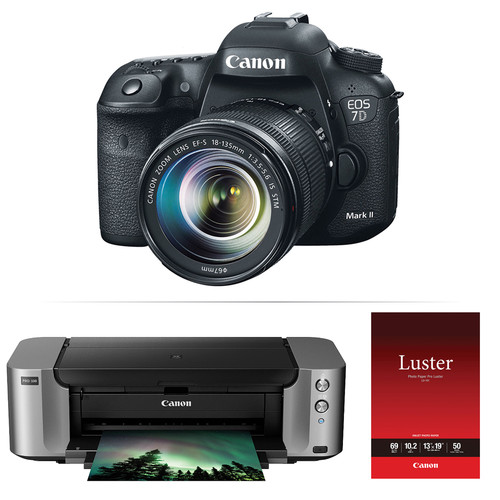
Canon 6D & 7D Mark II Printer Bundle 4 Day Sale & New Product Announcements


Canon 6D & 7D Mark II Printer & Lens Bundles (LIMITED TIME)


4 Offerings as low as $1,1999 after mail in rebate with printer and paper


This offer expires on AUG 31, 2016

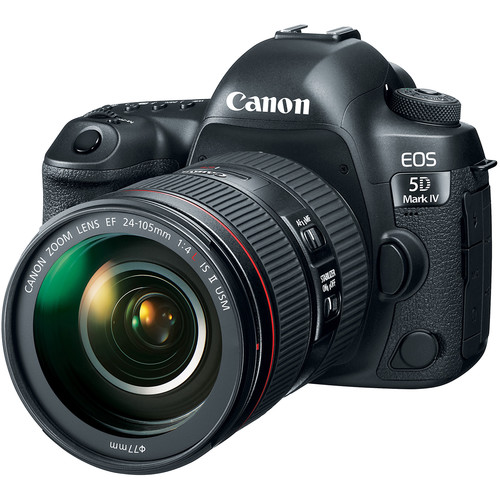
Canon EOS 5D Mark IV & New 16-35 III & 24-105 II Lenses


Click for full details on the 5D Mark IV, new lenses and more

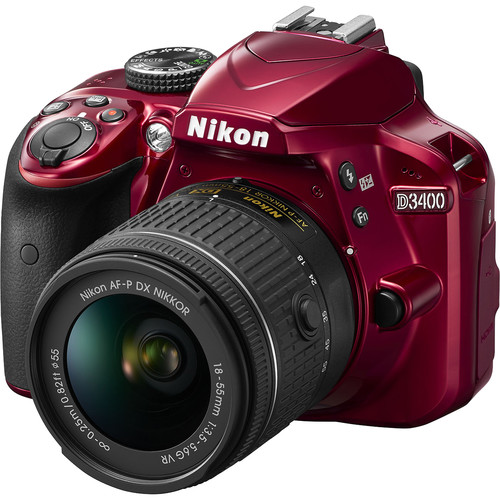
Nikon D3400


New and available in multiple colors and options

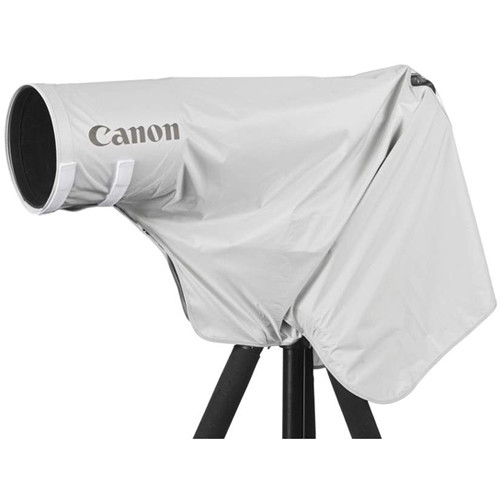
Canon ERC-E4 DSLR Rain Cover


As little as $79.95


If you make a purchase using links found in this article, I may make a commission. Thank you very much for your support!

Thursday, February 7, 2013

REVIEW: Canon 24-70mm f/4L IS (vs 24-70 f/2.8L II)

Canon EF 24-70mm f/4.0L IS USM

The new Canon EF 24-70mm f/4.0L IS USM was a big disappointment to me when it was first announced because what we all REALLY want is a 24-70mm f/2.8L IS lens. However, Canon won’t give us that and even if they did then nobody would probably be able to afford it. With this reality in mind, I was even more disappointed that Canon didn’t just give us a sharper 24-105mm with the improved IS found in the 70-200mm f/2.8L IS II USM

I know this an important lens and I expected it to be both sharper and better performing than its 24-105 predecessor and it did not disappoint. This is still a pretty expensive lens though and it’s not a 2.8, so the question then becomes – why bother with this when there’s a cheaper f/4 option with a longer maximum focal length (24-105mm) and a faster 2.8 lens (albeit more expensive and without IS)? I try to answer those questions in my review.

Sample Images

I didn’t get a chance to shoot with this lens as much as I would have liked. A nasty cold with nasty weather prevented me from getting out much with it as well. With that said, the following are a sample of unedited in-camera JPEG’s taken using this lens. You can get the full gallery here.


Canon EOS 5D Mark III, f/4 @77 mm (via Macro mode), 1/125, ISO 400, Flash


Canon EOS 5D Mark III, f/4 @70 mm, 1/50, ISO 1000, No Flash


Canon EOS 5D Mark III, f/4 @70 mm, 1/50, ISO 1250, No Flash


Canon EOS 5D Mark III, f/8 @42 mm, 1/60, ISO 3200, No Flash


Canon EOS 5D Mark III, f/8 @77 mm (via Macro Mode), 1/50, ISO 400, Flash


Canon EOS 5D Mark III, f/8 @47 mm, 1/50, ISO 400, Flash


Canon EOS 5D Mark III, f/9 @50 mm, 1/50, ISO 5000, No Flash

Image Quality

As you can see from the images above, the quality of this lens is excellent. it’s super sharp, fast focusing, handles low light well, and the stabilization is excellent. I had a bit too much sake when I took the sushi restaurant images so it’s not my best work, but it still performed very well.

I also fell in love with the macro mode (see discussion below) so my gallery contains too many of those and no 24mm images. I apologize for that, but I’m sure plenty will be found in time on flickr like here and eventually pixel-peeper.com.

Compared to the 24-105mm f/4L IS

In my article entitled Comparison: Canon 24-70 f/2.8L II vs 24-105mm f/4L IS vs 70-200mm f/2.8L IS II–70mm Test, I concluded that the 24-70mm f/2.8L II was much sharper. This still remains true and you can see this by going to slrgear.com and comparing the blur index of zooms. While the new 24-70mm f/4L IS isn’t as sharp as the 2.8 when you pixel peep, in real world applications (i.e, web and common print sizes) you aren’t going to see the difference. I do think you’ll see the difference between the new 24-70mm f/4L over the 24-105mm f/4L, so if sharpness and the best IS performance are important then it’s worth the upgrade.

If you aren’t a pixel peeper and you aren’t printing big prints (> 13x19”) then I think current 24-105mm owners can still get plenty of enjoyment out of their lens and you don’t need to upgrade. In fact, I like mine so much that I haven’t sold it. It’s worth the $800 or so I’d probably get for it used to keep it and have the extra range when I’m on a family vacation shooting for me instead of a client. I’ve made many great images with that lens and I plan to continue to do that moving forward. Sure the new lenses are sharper, but Sharpener Pro can help you overcome that difference.

Macro Mode


Macro mode is activated by the switch on the side and rotating beyond 70mm

I must admit that I as pretty annoyed with Canon for not offering a 24-105mm f/4L IS II because I really liked that extra range for my walkabout lens. I figured that this lens would offer very little for me as a f/2.8 II owner, but Canon replaced that extra telephoto zoom with a macro zoom. When I discovered this feature I fell in love – it works really well and reminds me of the joys of macro photography again! The best part is that you don’t have to switch lenses!

The macro zoom is activated by rotating the ring to 70mm, engaging the lock, and then rotating beyond that. One engaged you use the zoom ring to get approximate focus and then the camera will auto focus for you up to the minimum focus distance. You can actually go well beyond the minimum focus distance if you manually focus as shown here:

Canon 24-70mm f/4L IS Minimum Focus Distance (Manual Focus)
My bookshelf test area and LOTR book location indicated in red

While I could get literally a fingertip away from my subject and get some degree of focus, I got the sharpest focus when I was roughly 1.5 inches (4cm) away. Here’s an example:

Click for original full-size image
1D X, f/11 @ 80 mm,13s, ISO 800, Handheld 600EX-RT via ST-E3 with Rogue Softbox
Click to view the original full-size image

If you click the image you can view the original, but below you can see just how detailed it is:

Click for original full-size image
Zoomed in to 100% (Screen capture resulted in poor color)

This is with no post-processing, so I was very, very satisfied with the macro mode. In fact, I’m so satisfied that I’m in a bit of a quandary.  I don’t want to sell my old 24-105mm because I love the range, I don’t want to get rid of my new 24-70mm f/2.8L II because it’s super sharp and can do f/2.8, and I lust for this lens so I can have this awesome macro mode available when doing street and food photography on vacation. I definitely don’t want three 24-70mm lenses, so the reality is that things just got even more complicated and worse than before these two new 24-70mm’s came out!


Canon EOS-1D X, f/4 @ 77 mm (macro mode), 4s,ISO 100, No Flash
My Lord of the Rings & Hobbit books never looked so sharp!

Comparison: 24-70mm f/4L vs 24-70mm f/2.8L II

It’s been written elsewhere, but I’ll restate the obvious – yes, the 24-70mm f/2.8L II is Canon’s sharpest lens in this range. However, sharpness isn’t the only reason to buy one lens over another. Let’s also not forget price, so hopefully my bookshelf test results found here will help you decide if you want to spend an extra $800 more for the the 2.8 and lose IS.

The images in the gallery were all converted from RAW to JPEG 100 using Lightroom 4.3 with the default settings. I did not crop or enhance any of these images in any way. They were shot using ISO 100, mirror lockup, a 2 second timer and on Gitzo GT1541 tripod using a Canon 1D X. IS was turned off and I manually focused using live view once, then turned off the LCD. The hood was on both lenses and the conditions were otherwise identical. I use the camera in the same position for each shoot and only replace the lens. I refocus between each aperture and focal length change.

Mouse in to see retracted, mouse out to see extended
24-70 f/4L (left) vs 24-70 f/2.8 II (right)
Mouse in to see retracted, mouse out to see extended

Now one interesting observation was that the different physical zoom lengths caused the f/4 lens to to use shorter shutter speeds with it than the 2.8 to get what the meter thought was a correct exposure (in evaluate metering mode). However, the 24-70mm f/2.8 images seem a tad darker so I think this was caused by the physical distance of the end of the lens to the bookshelf and how that impacted the size of the overall frame and light.

Here’s what I observed:

image

This made the “faster” seem not faster after all. If I were shooting for real in Aperture priority (Av) the camera would have chosen the values shown in the table above to get a correct exposure according to the meter on my 1D X. What this means is that I should have adjusted the tripod so that the ends of the lenses were at the same position so that the meter light measurement was identical, but I didn’t do that. This DOES NOT MEAN that the f/4 is faster or optically brighter.

Keep this in mind when viewing the images in the gallery, but everything is close enough to do a reasonable sharpness comparison. Here’s an example done at 24mm, f/5.6 at ISO 100:


Sharpness is very close in the center at most focal ranges
f/4 on the left, 2.8 on the right – click image to zoom

As you get to the edges that’s where you see the sharpness improve on the f/2.8 over the f/4. Both lenses are close enough in practical application though that I think the real question becomes – do you need f/2.8 for more shallow depth of field or do you need IS. For most people, I recommend IS over 2.8 because shallow depth of field with soft main subjects (due to camera shake) isn’t as impressive as using lower ISO’s and tack sharp thanks to a very effective IS system.

Try before you buy


Visit my discount coupon code page to save 5% off your LensProToGo orders

I know for some people it will be near impossible to decide which of these zooms is right for them, and these suckers are expensive so you don’t want to make the wrong choice. As a result, I highly recommend renting before you buy (assuming you can’t borrow from a friend).

I did a lens rental series where I got to experience how easy it is to rent online (it’s actually easier and cheaper than renting local too). I have discounts for BorrowLenses.com, LensRentals.com and LensProToGo.com – all of whom are great to rent from.

Conclusion

I really liked the Canon EF 24-70mm f/4.0L IS USM and highly recommend it over the 2.8 for most people. I really have been missing image stabilization (IS) every since I switched to the 24-70 f/2.8L II USM, so I find myself getting more blurry shots from camera shake (I have shaky hands) as a result. With the weight of heavy camera equipment and lenses, it’s really tough not to have IS in this focal range too. This reality coupled with the excellent performance, the awesome macro mode and much cheaper price makes it an excellent lens to own. Sure you’ll give up the extra bokeh you get with a f/2.8 lens, but you’ll gain ISO performance by being able to shoot at lower ISO’s in low light because you can use slower shutter speeds (assuming your subject is stationary).

Where to order

Click here to order the Canon EF 24-70mm f/4.0L IS USM on the B&H web site. My friends at Adorama have it available here too.

Visit my discount coupon code page to save 5% off your lens rental reservations!!!!

Other articles you may enjoy

If you enjoyed this article, you may also enjoy these:

Disclosure

If you make a purchase using links found in this article, I may make a commission. It doesn’t cost you a penny more, but it does help to support future articles like this. B&H loaned the 24-70mm f/4L IS lens to me for this review, but I owned the 24-70mm f/2.8L which I purchased from Adorama.