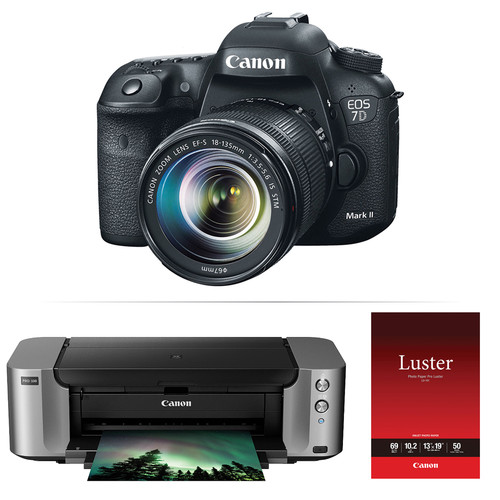
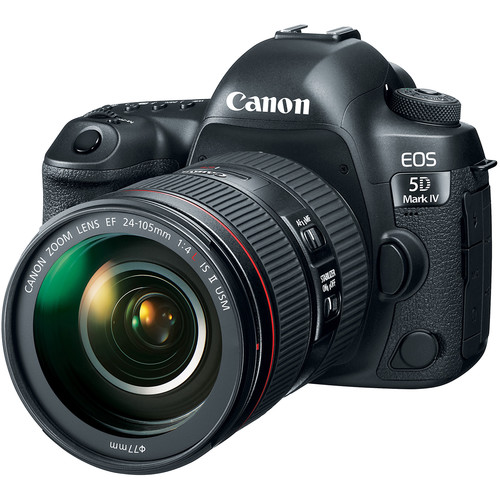
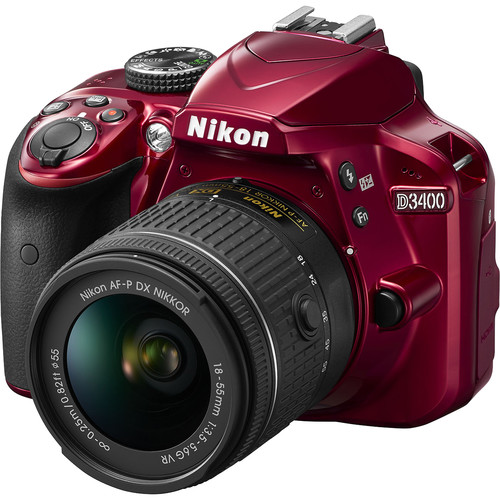
I was big fan of the Nikon D7100 and D7200, so when I heard Nikon was doing a APS-C sized sensor (23.5 x 15.7 mm) camera, I wondered where this would fit into the line up. After learning about its 10fps burst mode, it immediately became clear that this was to be a direct compete to the Canon 7D Mark II (review). In fact, I spent a little time comparing the specs of all three side by side to get my head around all of the differences. In a nutshell the D500 gives you:
Ever since I heard Nikon released the 24-70 f/2.8 VR, I've been anxious to try it - but it has alluded me due to high demand - until now. While this is a very expensive lens, the idea of having my favorite travel range of 24-70 with both f/2.8 and VR was a dream come true.
Another item high on my todo list from Nikon was the SB-5000 speedlight which features both radio control support, as well as a tiny fan to allow for up to 100 consecutive shots without overheating. Given the problems the SB-900 & SB-910 had with overheating, this was a big improvement and the radio control puts it on par with the Canon 600EX-RT flashes that I shoot with.
Unfortunately for this review, I didn't have the WR-R10 so I wasn't able to test the off-camera radio control support.
Hands On Impressions
One of the main features of this camera is its burst mode performance, but a fast burst mode is meaningless if the buffer fills up and you cant' take photos. It's hard to quantify burst mode and buffer flush times in text, so I decided to do a quick video where I do a quick high level overview of the body and show off its burst mode in action:
Ultimately I liked the body performance which mimics the great Nikon design with lots of physical hard buttons that are user reprogrammable. It's burst mode was great, and buffer flush times were reasonable - although not as blazing fast as the D5 (review) - of course. That said, I didn't test XQD, but even with a SanDisk 16GB Extreme Pro UHS-I SDHC U1 Memory Card (Class 10) it was very fast.Simply put, buffer flush times aren't going to be an issue with this camera based on my extensive experience testing other camera bodies.
During my testing, I found the performance to be closer to the D5 than I expected but not as good in the tests that I ran. This is to be expected since I wasn't using a sports lens for this test, so your mileage may vary depending on the lens used.
Like the D5, the best performance was in AF-C single point mode for moving subjects and of course AF-S single point for stationary subjects. Just like the D5, when you try to use the dynamic area modes it seems to get lost sporadically during the burst mode before locking onto the subject again.
Overall, I found myself getting less in focus shots than I did with the D7100 and D7200 I tested, but again that could be due to the lens used. Bargain hunters should keep this in mind when deciding which lens to buy (my recommendations), as I would expect the best in-focus shots performance to come with the newest and best Nikon sports lenses.
A Word About Nikon Metering
If you read the marketing material for Nikon's metering system it sounds wonderful - in fact, it sounds revolutionary. However, in practice the metering experience I've had on the D5 and the D500 is the worse metering I've ever seen on a digital SLR since 2007.
This statement will infuriate the fan boys and cause me no end of hate mail, but I've got to say it because it's been such a nuisance in real world testing. I've experimented with all of the modes (see the manual here) and here are my observations:
Matrix - This is the mode you want to use (and the default) because it's supposed to take into consideration the entire scene and balance the exposure for the scene using the most advanced algorithms developed by Nikon. Sadly, it is very inconsistent alternates between dark and light exposures even when the camera and subject doesn't move. In real world use it can drive you made, so you'll start trying other modes.
Center-weighted - this is a classic simple mode that is supposed to meter based on what in the center of the frame and in some cases it can be the best choice, yet for the D5 & D500 it isn't quite as reliable and is prone to errors just like Matrix
Spot - Many of my Nikon friends both in the pro and prosumer ranks have sworn that Spot metering is the way to go on Nikon because it will meter off your focus point. In theory this sounds brilliant, but in practice even this can screw up if your spot is on an dark eye vs the cheek of a subject. The cheek will give you the metering you want and the wrong focus, but eye will over expose with perfect focus. It's very frustrating!
Highlight-weighted - This looks like spot, but what I does is assign the greatest metering weight to the highlights which ends up being the wrong choice for pretty much every circumstance unless your subject is a Geisha with hot highlights of light on her face. Nikon suggests it for use with stage actors, but I haven't used it for that so I can't comment if it works well but for everything else I tried it with it would make the highlights great at the expense of what you cared about.
The more you time spend fighting it, the more you learn how to work around it (hint: spot metering is you friend and often with -1EV of exposure compensation), but why does it have to be so difficult? For all of the Canon, Fujifilm, Sony, Panasonic, and Olympus cameras I've tested the default metering modes just work so it's something you never really need to fool with. In fact, out of 400,000+ shots I've taken with Canon cameras, I've only switched from Evaluate metering mode to Spot mode < 10 times, and while I've demonstrated what it's Partial and Center-Weighted metering do, I've never really needed to use them.
I think this will be a frustrating point to new DSLR owners who buy this camera, and ironically it was never this bad with other models before the D5 & D500. Yes, those benefited from spot metering and weren't as good as I'd like, but they were loads better than the D5/D500 metering.
Hopefully Nikon will address this in a firmware update at some point, but in the meantime don't say you haven't been warned! It's also another reason to make sure you shoot RAW.
Auto Fine Tune Frustrations
If you don't know what Auto Fine Tune is, you can see a good video in my D5 first look article, but what this does is "automatically" calibrate your lens with your camera to avoid any focus errors (aka back focus / front focus). On most cameras this has to be done manually using something like a Datacolor SpyderLensCal Autofocus Calibration Aid, or software like the like Reikan FoCal. Both of these work, but it's not as easy - in theory - as the camera doing it for you.
There lies the rub, I've found that it doesn't work well and often makes things worse more than it helps. I'm not alone with the frustrations and inconsistency in the results as you can read on DPReview here.
I'm glad they have it and I hope they perfect it, but for now I strongly advise people to avoid this buggy feature and do it the good old fashion ways mentioned earlier in this section.
I like the 24-70mm range on any camera platform as a versatile every day / travel lens, but surprisingly it's been a common practice to offer a f/2.8 without any sort of vibration reduction/image stabilization, but it has shown up on f/4 variants. As a result, it's been a long-time ask of fans of many platforms to have their cake and eat it too by getting a lens that is both a 24-70mm f/2.8 AND VR. Of course, the predecessor 24-70mm f/2.8 was an outstanding lens, so getting VR at the expense of image quality simply wouldn't do.
During my testing, I've been very happy with the sharpness but even more impressed with the minimum focus distance. As any parent will tell you, when you photography kids - especially little ones that are on the move - they are going to come after you as soon as they see the camera. As a result, you have precious little time to try to get a shot before you end up with a finger on your lens. Typically this results in a series of blurry out of focus shots, but the nice thing about this combo was that the excellent minimum focus distance meant that I could still acquire focus even as a child would cross into my personal bubble. The burst mode and great focus of the D500 allowed me to get the shots I wanted and surprise shots that were closer than I expected to get.
f/22 @ 24mm for 1/100 sec at ISO 400 Shooting in the sun used to always create lens flare like this, but it's less common with premium lenses these days. I was disappointed that this lens didn't do better.
The only major concerns that I had with this lens was that it doesn't have the warm contrast punch that I typically enjoy of lenses in this price range, and it was subject to a lot more flare issues than I would have expected. Lenses like my Canon 11-24mm have a coating that basically eliminates flare, so I would expect a lens of this price point to leverage a similar technology for excellent flare protection. Of course if you don't shoot into direct harsh light like the sun this won't be an issue, so it's not a serious problem.
I give this lens high marks for parents and travel photographers who want a single lens that's good for unpredictable situations in life under all lighting conditions. The VR can save you from camera shake blurriness, and the physical size of the lens isn't too obnoxious to carry around.
I liked it and and can easily recommend it for parents, event and travel photographers.
SB-5000 Thoughts
f/2.8 @ 60mm for 1/250 sec at ISO 45600 I was a bit surprised that the camera with SB-5000 flash chose such a high ISO when in Auto ISO mode and Matrix metering
While I didn't get to do as much testing as I would have liked with this flash, I was impressed with how well it coordinated with the camera to give me the right amount of flash when I needed it. It also had a good harmony with the auto ISO which means that backgrounds weren't pitch black when in matrix metering mode. However, you may want to cap the maximum auto ISO when using it as sometimes I think it went too far - as in the case above where it chose ISO 45,600. While technically right, it wasn't what I expected after using other flashes for so many years so this is something to keep in mind.
The SB-900 and SB-910 suffered from overheating issues when used heavily, so this flash addresses that by having a built-in fan that fires up briefly after you take a shot (and yes, you can disable it). I didn't' find the noise to be a problem in real world use, and I appreciated how fast this flash was ready to go for another shot (much faster than any flash I can recall using).
When used properly it can give you results that give you the amount of light you need without having the overly bright look that you see in the shot above (pointed directly due to this being taken in pitch black darkness during July 4th fireworks).
If I were a Nikon shooter, this is the only flash I would want to have on my camera. I'd gladly take it over the SB-910 any day. The radio wireless support makes it an even better choice for anyone that needs a proper flash.
Overall Thoughts
Everything I've seen seems to indicate this is the camera that most were hoping it would be - it's basically a D7200 on burst mode steroids with improved AF performance and higher ISO support. The camera body is a delight to use, and I definitely prefer it over the Canon 7D Mark II. While the usability of both the Canon and Nikon are very good, I'd take the Nikon over the Canon for better high ISO performance and overall image quality.
Real World Shots
For my reviews I always like to take casual shots of every day life using both RAW+JPEG with default camera settings (excluding exposure and other where noted below). These shots have been unedited and are 100% exactly s they came out of the camera.
All images are copy protected and may not be used for any other purpose beyond this review, and must not be printed, edited, uploaded, displayed or otherwise used without signed written consent on a notarized document.
Click here for a full gallery of images, and see my comments on a subset of those images below...
f/4 @ 70mm for 1/2000 sec at ISO 280 This was the 149th of 156 shots in a running series and my son was all of the place for the last part of this sprint. I was pleased at how great the focus was with him being at the edge both from the camera and lens performance. The minimum focus distance also made the last few shots sharper than I usually get with sports cameras.
f/2.8 @ 56mm for 1/640 sec at ISO 100 The colors are a bit exaggerated here because I forgot the camera in Vivid picture control mode but the image quality was solid. This was a bit of a dynamic range torture test that passed with flying colors - especially with the data in the raw file
f/22 @ 62mm for 1/125 sec at ISO 250 Excellent dynamic range for a cropped sensor means that if you can position yourself right you can get great in the sun shots - just be mindful of the position of the inevitable flare spots
f/5.6 @ 62mm for 1/1600 sec at ISO 100 On a full frame with this lens this spider would have been a speck so this shot wouldn't have been possible, so this was definitely a case where I was happy to be shooting APS-C!
f/11 @ 34mm for 1/60 sec at ISO 100 I needed a flash here but didn't have it, but I was impressed with the dynamic range that I got despite that reality. This was one frame of a bracketed shot, so I definitely can save the shot via HDR processing later in Aurora.
f/3.5 @ 70mm for 1/250 sec at ISO 720 While you can't tell from this shot, my son was walking and looking the other direction when I yelled "hey Kai". With one frame in single-shot mode it managed to nail the focus quickly and the cropped sensor meant that I could put the focus point exactly where I wanted it (his eye instead of just below it on full frame sensors)
f/8 @ 24mm for 1 sec at ISO 800 Long exposure shooters will appreciate the switch to close the viewfinder to avoid light leaks during events like firework shows where you are surrounded by people with cell phone flashes going off during your long exposures
f/5.6 @ 24mm for 1/160 sec at ISO 2200 The dynamic range is good even as the ISO's climb yielding much better results than I expected for tough conditions like this shot
f/2.8 @ 38mm for 1/250 sec at ISO 1600 The bokeh of the 24-70 is quite pleasing and I was plenty satisfied with the sharpness even when it was wide open at f/2.8. Edge performance was impressive too!
f/3.5 @ 70mm for 1/500 sec at ISO 900 In camera processing is very pleasant even with the Standard Picture Control and Auto1 White Balance. It's rare to see an image this pleasing out of a Nikon, but thanks to three Auto white balance choices, you can get great in-camera results instead of the historically cold neutral tones
f/22 @ 62mm for 1/60 sec at ISO 51200 Read those settings - both the lens and camera impressed me here with an image that would have not been this good even at 1600 ISO just 7 years ago! Yes, the high ISO performance is great and the VR made this handheld shot super sharp!
f/5.6 @ 62mm for 1/100 sec at ISO 2800 The great minimum focus distance of the 24-70mm will make it a great choice for amateur macro photographers who want the one lens that does it all during their vacation
Conclusion
It's been a while since I shot an APS-C sensor, but this camera reminded me why there is still a place for them in the crowded camera body market these days. I loved being able to put my focus points all the way to the edges of the frame without having to point and recompose like I must do on full-frame cameras. I loved the extra reach especially when at the minimum focus distance zoomed at 70mm. This makes the tilting LCD on the back during live view even more important and useful - as is the pinch to zoom!
This camera is everything everyone has been saying it is. It's got very good AF performance with even a simple travel lens like the 24-70, and its got the burst mode and buffer flush performance to make it a great choice for sports photographers. I also loved how well it worked with the SB-5000 so that you only needed to be mindful of your flash head position and not have to fight the flash as I've had to do with earlier Nikon body and flash combos.
While I thought the metering sucked because series of shots would be ruined with overly dark and overly bright exposures in the middle of a series, this same problem exists on the D5 so I can't help but think Nikon will get to the bottom of this issue for both camera bodies and issue firmware updates to fix it - let's hope! The good news is that when the meter gets the exposure right, it does a spectacular job so take advantage of the great AF performance and fast buffer speed to take a few extra shots and it won't be an issue in real world use.
This is a very good camera that is sure to please the Nikon faithful who are looking for a new body to replace their D7200 or D750 shooters who are longing for better burst mode performance that is closer to the D700 with a battery grip - even if it is at the expense of a cropped sensor.
While I don't care to use DSLR's for video, the 4k video support is sure to please aspiring videographers too.
In the end, it's easy to give this camera a high recommendation but if you don't need the FPS, 4k video and the extra reach, the D750 and D610 are still excellent cameras that are worth considering.
Where to order
Click here to learn more or order on the B&H web site. Click here to learn more about the Nikon AF-S NIKKOR 24-70mm f/2.8E ED VR Lens, and click here to learn more about the SB-5000.
Other articles you may enjoy
If you enjoyed this article, you may also enjoy these:
If you make a purchase using links found in this article, I may make a commission. It doesn’t cost you a penny more, but it does help to support future articles like this.
I hate to have deals posts, but this one is too good not to share. While there is a $350 mail in rebate, the fact that you can save $1082 on this bundle makes it a post worthy event.
Happy Holidays!
Where to order
Click here to learn more or order the XXXX on the B&H web site. My friends at Amazon have it available here.
Other articles you may enjoy
If you enjoyed this article, you may also enjoy these:
If you make a purchase using links found in this article, I may make a commission. It doesn’t cost you a penny more, but it does help to support future articles like this.
I’ve been a big fan of the Nikon D7xxx series ever since I reviewed the D7000. It’s always been a solid performer, so when I reviewed the D7100 I was considered picking one up for myself. I’m a Canon shooter, so I didn’t need another camera – especially one that couldn’t use my existing lenses, but that’s just how much I liked the predecessor to the Nikon D7200.
After some seat time with this camera I’ve discovered that everything that I liked about the predecessor returns plus it gets a EXPEED 4 processor, WiFi & NFC included as well as much improved buffer to hold more images before you have to wait for the files to write to the memory card. Click here to see a complete comparison chart.
What the improvements really mean is that you’ll be able to take 3x the number of photos (compared to the D7100) before you are waiting on the camera to finish writing, and you’ll be able to use much higher ISO’s with acceptable performance. How high is subjective, but I personally found ISO 25,600 to be usable for personal use and even 12,800 to be quite good.
What I’ve always really loved about the D7xx series is that it has a great balance of ease of use with a wide spectrum of advanced features. This means that even the most advanced photographer will likely get excited about D7200 features like:
An 4 level adjustable Auto ISO that comes in handy in Aperture Priority because you to control how aggressive the camera is at shooting slower or faster shutter speeds. At its fastest setting faster shutter speeds will be chosen to minimize blurry shots or having to use an arbitrarily high minimum shutter speed setting (or manual mode). I wish all cameras had this (especially my Canon’s!). It should also be noted that this feature is supported in Manual mode with exposure compensation too for the maximum in flexibility!
An auto white balance that favors warm temperatures (Auto2) so skin tones look healthier rather than technically correct (although still not as warm as you’ll get with Canon – which some people love, and others hate).
Fast physical button access to exposure compensation, flash exposure compensation, bracketing, metering modes, video recording, and more.
A usable built-in flash. While off-camera and hot shoe flashes are better, it’s good to have something when in a pinch and Nikons popup flashes perform better than the competing products I’ve tried.
51 focus points accessible quickly via multi-selector button along with support for remembering separate portrait versus landscape orientation points.
Built-in intervalometer for doing time lapse photography
Two user programmable mode dial points for your favorite settings (U1 & U2)
Scene and Effects modes for amateur photographers who want to leverage the internal technology to its fullest so they can focus on shooting instead of camera settings
Programmable buttons for when you’d rather move things around or expose functionality that would otherwise require a menu visit.
While many of these feature are neither new nor available only on this camera, what I like about the D7200 is that it is a great bridge between features offered on more advanced pro bodies while retaining some of the ease of use features of the entry level bodies. It really is a camera that you can grow with from first time DSLR shooter all the way to the semi-pro level. The burst mode performance also makes it great for both wildlife shooters as well as parents who have been struggling with blurry shots of their little bundle of joy indoors. The great high ISO performance also means those shots won’t suck when you go to edit them.
Kite Test
I don’t typically do a kite test on a camera in this price range because it requires a sophisticated AF system that isn’t easily confused, but after spending time with the D7200 I began to have confidence it could handle it. Here’s a good example of where the D7200 performed admirably:
Photographing people with kites is tough because you not only have to worry about tracking your subject, but also keeping the kite in the frame. As a result you leave extra space when framing, so having some extra megapixels to spare when you crop will come in handy! I ended up with usable shots like the ones above and below, but I definitely could use a much tighter crop. Thanks to a good image file size, it is quite easy to crop without losing any important detail from the image (assuming your output isn’t a huge print).
Click here to see 36 images from my kite testing including my favorite one below…
Megapixels are often overrated because in reality people rarely print anymore, so the largest output most people often see their images displayed is on their 1080p HDTV (which is only 2 megapixels!). Even a UHD 4k display only requires 8 megapixels, so generally speaking we often discard megapixels when downsizing our images to the web or in small prints.
With that said, having some extra megapixels around does have one advantage and that’s to crop and still have a usable image for displaying on the web. I mentioned this above, but here’s a much better example:
f/11 @ 200mm for 1/640 sec at ISO 280 – Edited to show detail 100% crop – See full-size original below
While the shot above isn’t going to win awards because it is bad on so many levels, what is interesting is that I wasn’t out shooting eagles. I was shooting something else entirely when I spotted something huge flying overhead. I raised the camera and fired off a couple shots (hence the unnecessary f/11!). As you can see from below, I had no clue it was kind of bird it really was:
Despite being in full automatic AF mode I was able to successfully capture this image and with the bring enough detail out to see the underbelly of the bird using only the JPEG (RAW had been disabled when I was testing something different).
While this lame image won’t be appearing in any wildlife photography magazines, it does show the value of megapixels when cropping and the strength of the D7200 AF system. I had the wrong settings and wasn’t ready, but yet I came away with a shot that I could clean up and post on Facebook as proof that I saw a eagle circling above me.
When people ask me why they need a DSLR in these days of great cellphone cameras and mirrorless systems, I use cases like this to show that the DSLR still has great value. Yes, other cameras may have the megapixels and resolution, but few have everything they need to pull it all together. While poor, this shot clearly identifies the eye of the bird and the separation of wings from the in-camera JPEG.
Now imagine if I had a 400mm lens and was actually ready for this shot with better camera settings! On this camera that would be the 35mm (full-frame) equivalent of 600mm thanks to the 1.5x crop factor which comes in handy in scenarios like this. Wildlife shooters on a budget are going to enjoy what this camera brings to the table!
When a camera shows signs of being good for parents I get my kids to be my swing test subjects. If you’ve ever tried to take photos of kids on swings then you know what a challenge it can be getting a decent shot, so in the world of real life shooting it’s one of the bigger challenges for both the parent and the auto focus system.
While this is certainly no D750 or D4s caliber performer, it did do a very good job for a fraction of the cost. The AF system was by no means flawless as I would see a few missed focus shots in most series, but I’d occasionally get an entire burst that was usable.
Click here to see the beginning of 83 swing test shots I did including this one which is the beginning of a continuous burst of 65 straight images (JPEG only) that were done without releasing the shutter button.
Real World Shots
My real world shots are about showing pictures taken from real life activities that haven’t been planned or labored over for hours. These are casual snapshots where only a few frames are shot and the best is taken for your review. Shots featured here use the kit lens first section and then the 70-200mm at the end where noted.
Most camera settings are in-camera defaults and the unedited in-camera JPEG is shown. Unless noted, Auto2 white balance is used with the Standard picture control setting. Aperture priority or manual mode was used with Auto ISO and all shots are handheld.
The goal here is to capture shots you’d expect to be able to capture yourself and results you could expect to see on your computer before post-processing.
f/5.6 @ 140mm for 1/500 sec at ISO 100 I felt this was a wow shot for a straight out of the camera result with a kit lens. Excellent dynamic range with reasonable sharpness and great shadow detail. It wasn’t long ago that you needed a couple extra grand to get these kind of results!
f/5 @ 52mm for 1/1000 sec at ISO 100 The Shade white balance turned this image a bit too yellow and camera meters always turn white to gray (tip: overexpose by 1/3rd stop), but what you are left with here is a RAW image that has all the data it needs for a decent image. The kit lens requires f/5 at 52mm so that hurts this shot especially due to its poor bokeh quality, but I’ve definitely seen worse from a kit lens.
f/5.6 @ 66mm for 1/200 sec at ISO 500 The purpose of this ugly shot is to show off the tremendous dynamic range from the super bright areas on the left that still retail some detail to the intense dark creek bed which still offer clearly visible rocks and ripples. This impressive for a camera this affordable!
f/4 @ 32mm for 1/500 sec at ISO 1250 I got a little overzealous in cheering my son on in this 10 shot burst series, but that’s easily correctable with a rotate in editing. What’s interesting is that the high ISO is not even noticeable as the image quality is excellent for the entire series. Even more impressive is that the AF system nailed every shot while in full auto mode.
f/3.8 @ 23mm for 1/160 sec at ISO 100 I chose the wrong shutter speed and failed to add exposure compensation for the backlighting, but the D7200 gave me a shot I can still use – especially with raw processing. I was very pleased with the shadow detail of the face and the brightly lit background
f/5.6 @ 18mm for 1/160 sec at ISO 100 Kit lens users will appreciate that they can go pretty wide at 18mm as shown here, or very deep as shown below taken from the same spot
f/5.6 @ 140mm for 1/500 sec at ISO 720 Full zoomed in from above, detail at the end of the trail is clearly visible at 140mm thanks to the crop factor which makes this an effective 210mm reach
f/5.6 @ 27mm for 1/80 sec at ISO 220 My dynamic range torture test here shows how shadows under the escalator to bright areas in the glass and building outside are all within range – impressive!
The following photos were all taken handheld with the Nikon 70-200mm f/2.8 VR II instead of the kit lens…
f/3.5 @ 200mm for 1/640 sec at ISO 720 With a proper lens incredible detail can be captured with respectable bokeh. Be sure to click to view the pollen on the original at 100% – impressive!
f/4 @ 200mm for 1/640 sec at ISO 1000 Using the 70-200mm felt like I had a different camera body. Zoom in to check out the detail on the main flower!
f/5.6 @ 195mm for 1/200 sec at ISO 2200 I was very impressed with the sharp detail despite this high ISO. I was also very pleased that, despite being handheld and zoomed in tight, I got such crisp detail on the tips of the flower!
f/2.8 @ 190mm for 1/200 sec at ISO 280 While a full frame FX sensor would have been better here, I was once again impressed with the image quality from yet another D7xxx series body
CLICK HERE to see or download my full collection of various bookshelf shots. You can also click the images below for a full-size original. While I can’t imagine why anyone would want to use them, please note that all are Copyright ® Ron Martinsen – All Rights Reserved.
As I’ve noticed in the past, the Nikon 70-200mm f/2.8 VR II causes the camera to expose brighter than other lenses in this test. Feel free to balance the exposure of the bookshelf shots for a better comparison on your computer for a more accurate comparison, but the net result is still that the image quality is very good for the 70-200 compared to the softer kit lens.
Based on the images above and below I’d classify the image quality of the D7200 to be very good, but there are definitely better cameras on the market – for much larger price tags. As p
ISO 12800 was the maximum ISO I felt comfortable with for dark shots, but in bright light 25,600 is totally usable. I review a lot of incredible cameras so I wouldn’t call this great high ISO performance, but it’s definitely better than any mirrorless that I’ve tested in this price range.
Video Performance
I’ve shot some video and will be including them here next week. Overall I thought video performance was average for DSLR in this price range. Parents shouldn’t consider any DSLR a replacement for their camcorder or cell phone – both of which are more foolproof – but with careful planning excellent video results are within reach with the D7200.
Compared To…
Generally speaking, I expect that the average buyer of this camera is going to be upgrading from an existing Nikon already. However, in the world of DSLR’s I thought I’d toss in my 2 cents about how I think this camera stacks up to the following:
Canon 70D (review) – I don’t see this as a competing product. I felt the D7100 really surpassed the 70D, so the D7200 blows it away on everything but price. Yes, the fps are similar, but until Canon replaces this camera with something newer I wouldn’t consider it to be a significant competitor to the D7200.
Canon 7D Mark II (review) – While I personally prefer the controls layout of the D7200, the 7D Mark II does offer a much higher FPS and theoretically more advanced auto focus system. Overall, I still prefer the D7200 for its overall keeper rate based on what I find to be an easier to use autofocus system.
Image quality-wise, I find the 7D Mark II to be better than I expected before this review. I figured the D7200 would destroy the 7D Mark II but upon close examination the differences between the two favor the 7D Mark II – but it comes at a $500 premium!
I do believe the D7200 is a lot more “mom friendly” after the correct settings have been dialed in by someone who understands how to configure it properly.
Canon 6D (review) – Not really an apples to apples comparison, but I’m including it as the price will have some people considering it as an alternative. What it lacks in FPS and advanced AF system, it certainly makes up for in significantly superior image quality. I think most people considering the D7200 for its AF and burst mode performance would certainly be better off with the D7200 over the 6D, but if image quality is your only concern then the 6D is naturally the winner.
Nikon D610 (review) – Yes, this is a lot more camera for not a lot more money so if you can afford it then go for it. With the D610 you do lose a little bit in burst mode and AF performance, but you gain superior image quality. I love the D610, but until its replacement with the EXPEED 4 comes out, I think the D7200 is still a good choice for those who need a sports camera or one that keeps up with active kids.
Nikon D750 (review) – Again oranges vs apples, and the D750 easily earns extra $1k in price over the D7200 for superior image quality. Yes, the D7200 can basically match the burst mode performance when adjusted for image size, the images you get from the D750 are simply sublime. If you have the extra $1k, get it, but if your budget is tight the D7200 is a great start and leaves more budget for something far more important – great lenses!
Nikon D810 (review) – It’s makes very little sense to compare these, but I’ve been asked so many times to compare the D7100 to the D810 that I figured I had to say something here. In my opinion, the D810 is a special purpose camera that’s great for landscapes and studio photography, but it is less than ideal as an all-purpose travel/everyday camera. Even 4k display owners and those who print large 16x24” prints will have all the megapixels they need with the D7200. If you even think that these two need to be compared, then this is definitely not the right camera for you – the D7200 is.
Models below the D7200 in the Nikon lineup are simply not in the same league in my opinion. Those are entry level cameras whereas this is a camera that an amateur can use and a semi-pro photographer will love. As a result, I’m not including them here as they are more suited for discussions when comparing cameras like the Canon Rebel T6s.
Nikon AF-S DX NIKKOR 18-140mm f/3.5-5.6G ED VR Lens
When considering the crop factor, this lens is a 27-210mm (35mm equivalent). This is an awesome range, but like all lenses I’ve tested that try to cover so much range – it falls short on image quality. While I wouldn’t classify it as bad – especially if you never print or zoom in – it does create a softer image than this sensor is capable of displaying (based on what I saw with the 70-200mm). As a result, I’d opt against the kit and just go with the body only when ordering.
Conclusion
Photography is expensive so it’s easy to get caught up in the upgrade game or jonesing for what others have. I teach a lot of students who have made the wrong choices, so that’s why I get excited about this camera. This camera is a solid performer so I know I’ll never tell a student who uses it that “you’d probably be better off if you had got this other camera” when they are complaining about blurry shots or image noise.
Yes, a great photo can be made with any camera, but the mere mortals do best when they have the right tool that does a lot of the heavy lifting for them. The D7200 is just that – a camera that puts the fun back into photography by increasing your keeper rate. As a result, I highly recommend the D7200 for parents and those who take photography seriously, but who also need to keep their expenses in check!
Where to order
Click here to learn more or order on B&H’s web site.
Other articles you may enjoy
If you enjoyed this article, you may also enjoy these reviews and articles:
If you make a purchase using links found in this article, I may make a commission. It doesn’t cost you a penny more, but it does help to support future articles like this.