Keep up with the latest info on the 5D Mark III fan page on Facebook
PREORDER INFO at the end of this article
Canon 5D Mark III Now Available (Sample Photos)
Sample Photos taken with a 5D Mark III
Today Canon finally announced the long anticipated successor to the most successful camera they have ever released – the 5D Mark II. This camera has big shoes to fill, but it appears that it will easily do that with the following great improvements:
The EOS 5D Mark III is now on their website as well as the Speedlite 600EX-RT, Speedlite Transmitter ST-E3-RT, Wireless File Transmitter WFT-E7A and GPS Receiver GP-E2. Pre-order information coming soon (cameras will be shipping in 2 weeks, so no long wait this time).

5D Mark III – Front with Battery Grip

5D Mark III - Rear:

5D Mark III - Top
5D Mark III - Back

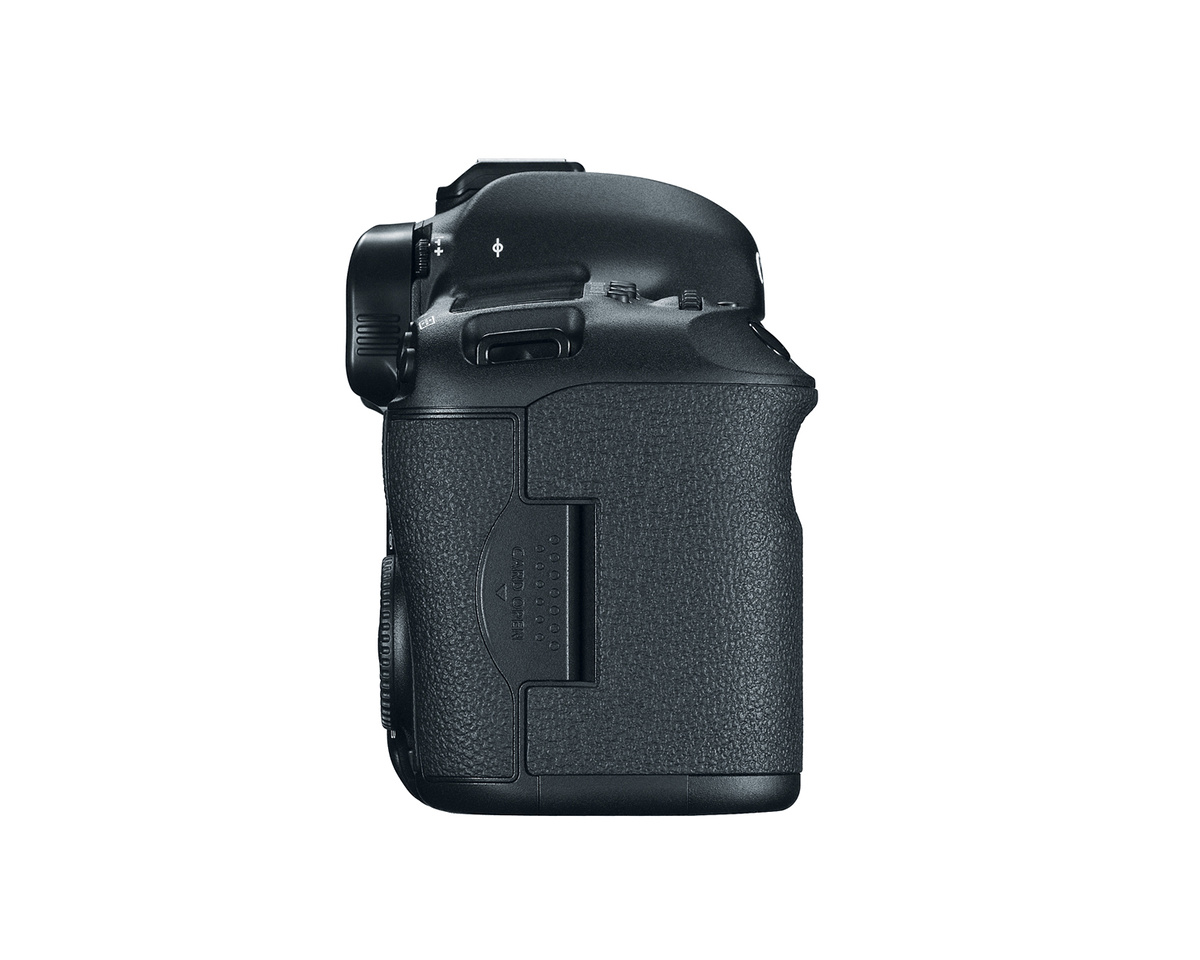
5D Mark III – Left Side

5D Mark III – Right Side
Now the new price does suck, but when you compare this price side by side for the outgoing 1Ds Mark III you'll find that it pretty much beats that camera in every category except for battery life. This is now a TRUE Pro body built for heavy duty pro use thanks to features like weather-sealing, dual memory card support, and a proper auto focus system. If I would have invested $6999 in a 1Ds Mark III I'd be pretty depressed right now as this camera just dropped the value of those to about $2000 - at best. Still, there’s lots of cool features including:
- New full frame (36x24mm), 22 megapixel CMOS sensor
- ISO range 100-25600, expandable to 104,200.
- 14-bit A/D conversion
- Shutter speeds 1/8000-30 seconds
- New 63-zone dual layer iFCL Metering
- Exposure compensation in +/- 5 stops in 1/3 or 1/2-stop increments
- New 61-point high-density reticular AF with up to 41 cross-type points
- New 3.2-inch LCD finder with 1.04 million dot resolution
- 1080p HD video capture in AVI, RAW, H.265, MOV and MPEG-4
- Manual exposure control and multiple frame rates in videos
- CF and SD card slots
- 6 fps burst rate
- HDR mode combining 3 exposures with adjustable settings
- Magnesium-alloy body, enhanced dust and weather resistance
- New customizable controls
- Electronic level
- Claimed shutter durability of 150,000 cycles
- Silent & Low vibration modes
Canon 600EX-RT (Radio Triggered) Flash


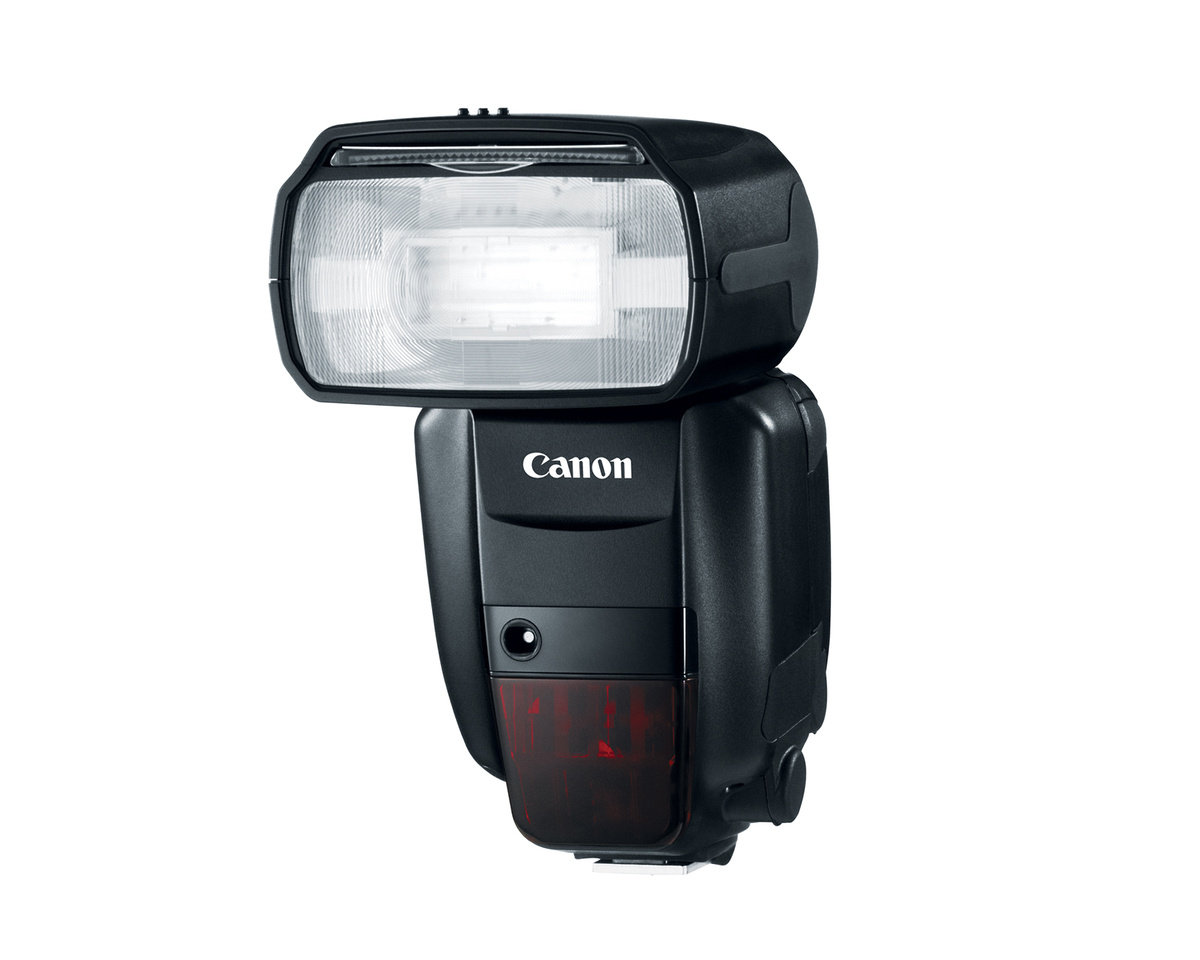
600EX-RT Flash
Another big announcement is the arrival of a new flash, this time with more power and radio-control support (i.e., no more Pocket Wizards / Radio Poppers required). This is about 5 years overdue, so it's a welcome addition. Of course this is just more money to blow this year, but hey that's the price of progress!
While my wallet can’t handle all of these cool product announcements, Bill Me Later will be glad to see me coming!
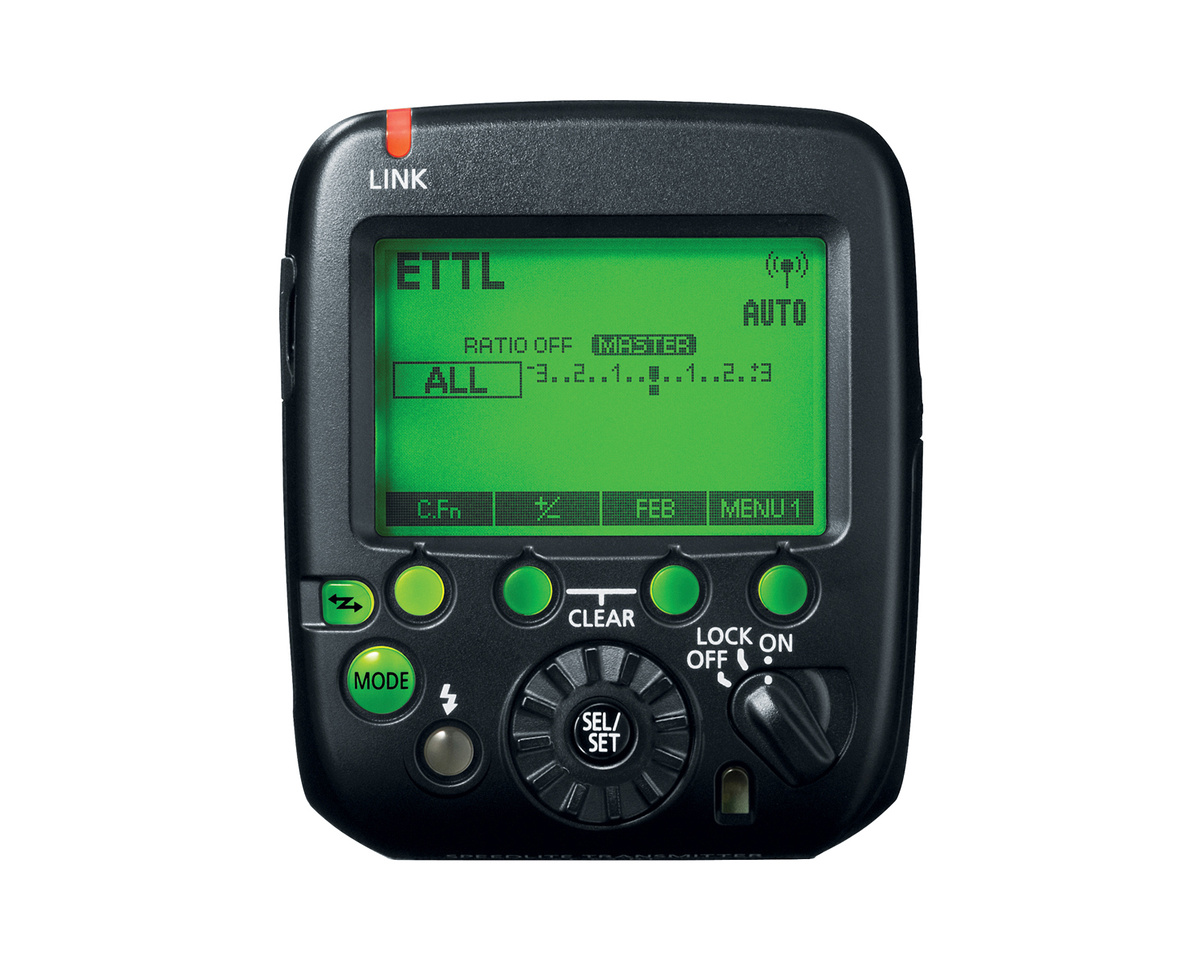
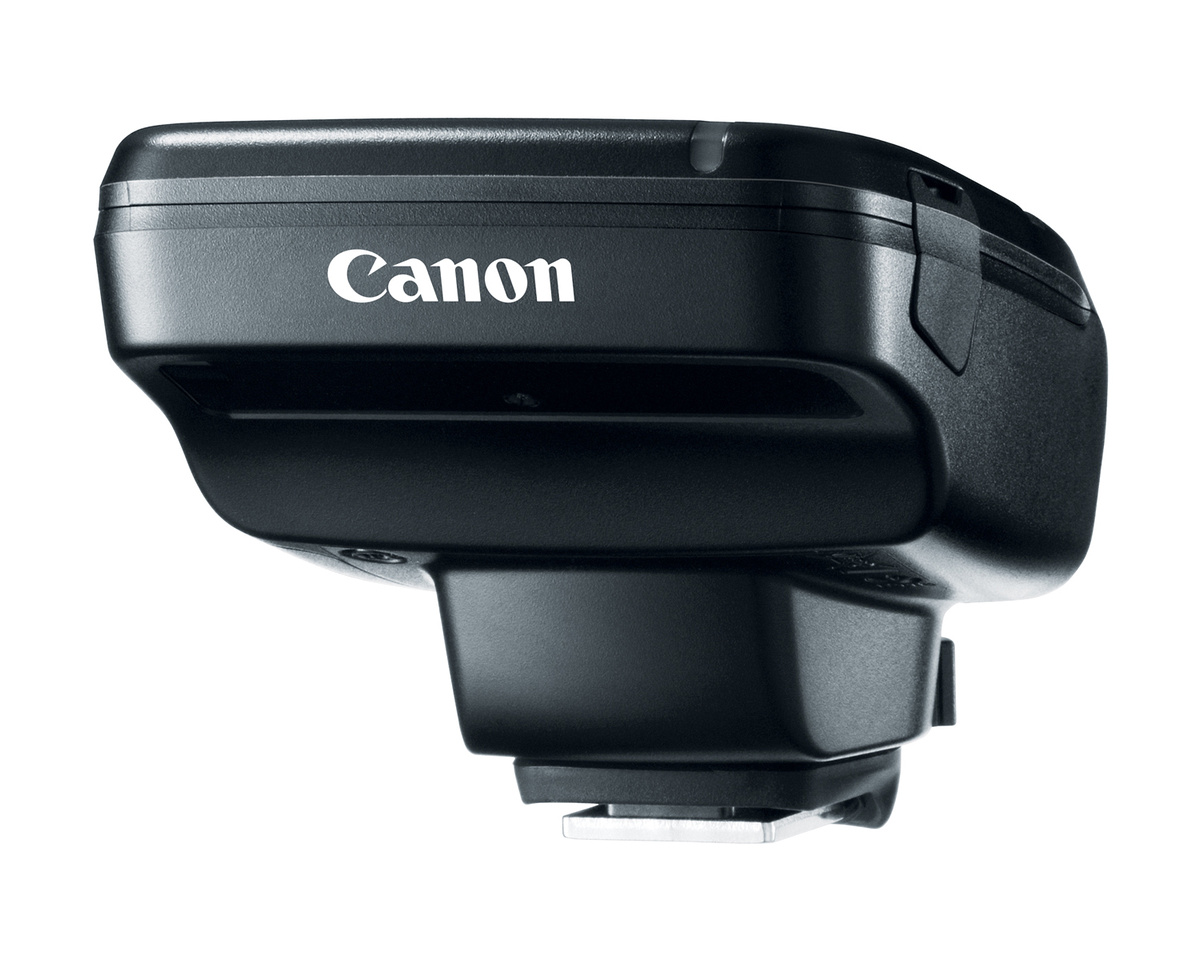
Speedlite Transmitter ST-E3-RT


For sophisticated wireless flash setups, there's nothing like the new Speedlite Transmitter ST-E3-RT*. Facilitating radio controlled, two-way wireless transmission up to 98.4 feet, among up to five groups or fifteen individual Speedlites, the ST-E3-RT represents the next generation in wireless flash systems. With operational controls similar to the new Speedlite 600EX-RT, including diverse flash metering options, and a number of flash modes, the Speedlite Transmitter ST-E3-RT makes complex lighting setups simple. With a compact design and highly reliable construction, combined with a clearly laid-out information panel and buttons with back lighting and more, the Speedlite Transmitter ST-E3-RT is an indispensible tool for advanced, professional flash photography.
*Because it does not have an optical transmission function, the Speedlite Transmitter ST-E3-RT is not compatible with earlier Speedlite models such as 580EX II.
Wireless File Transmitter WFT-E7A

Canon's new WFT-E7A makes wired and wireless data transfer setups simple and easy. Compatible with the EOS 5D Mark III DSLR camera, it supports IEEE 802.11 a/b/g/n for fast and secure connections over a LAN connection and supports Gigabit Ethernet for wired connections, too. For even more versatile connectivity, the transmitter has a built-in Bluetooth function that allows it to handle high-volume data wireless transfers. Its lightweight design makes the WFT-E7A a great addition to the professional photographers wireless workflow.
GPS Receiver GP-E2

For simple and accurate recording of time and location information, Canon's compact GPS Receiver GP-E2 is the perfect complement to the EOS System. The GP-E2 records location information such as longitude, latitude, elevation, direction and Universal Coordinated Time (UTC) as EXIF data, while also serving as an electronic compass on camera or off. Versatile connectivity options include USB and hot shoe connections with the EOS 5D Mark III and the EOS-1D X (USB connection only with the EOS 7D); smart design and rugged construction ensures reliability plus the ability to be used as a standalone GPS recorder. The newest GPS system designed specifically for the EOS system, the GP-E2 is an ideal tool for photographers on the move.
OFFICIAL PRESS RELEASE
LAKE SUCCESS, N.Y., March 2, 2012 – On the 25th anniversary of its world-renowned EOS System, Canon U.S.A., Inc., a leader in digital imaging solutions, is proud to announce its latest model, the new EOS 5D Mark III Digital SLR Camera. Positioned between the extremely popular EOS 5D Mark II and Canon's top-of-the-line professional EOS-1D X model, the EOS 5D Mark III delivers superb image quality, thanks to a new 22.3-megapixel full-frame Canon CMOS sensor, a high-performance DIGIC 5+ Imaging Processor, a 61-point High Density Reticular Autofocus (AF) System and six frames-per-second (fps) continuous shooting speed. Building upon the trailblazing success of the EOS 5D Mark II, the EOS 5D Mark III also incorporates enhanced video features for professionals in the fields of cinematography, television production and documentary filmmaking, including better noise reduction, longer recording times and a built-in headphone jack for audio monitoring. The EOS 5D Mark III is Canon's answer to hundreds of thousands of advanced amateurs and emerging professionals looking for a compact, high-quality camera system to help them achieve their artistic vision, whether it be through still or video imagery. The EOS 5D Mark III introduction coincides with Canon's 25th anniversary celebration of the EOS camera system. Canon's award-winning EOS system first debuted in March of 1987 with the introduction of the EOS 650 SLR camera and three EF lenses.
"We are extremely excited to announce the highly anticipated follow-up to our EOS 5D Mark II, a camera which has been called a 'game-changer' in most professional photography and videography circles. The EOS 5D Mark III will carry on that tradition, delivering better and more advanced features, helping our customers achieve excellent image quality for stills and video," stated Yuichi Ishizuka, executive vice president and general manager, Imaging Technologies and Communications Group, Canon U.S.A.
The EOS 5D Mark III inherits many features from Canon's recently announced flagship DSLR, the EOS-1D X, including a DIGIC 5+ Imaging Processor and a high-performance 61-point High Density Reticular AF array with up to 41 cross-type points and five dual cross-type points available, depending on the lens in use. The enhanced processing power enables fast continuous shooting of up to six fps, exceeding the speed of the EOS 5D Mark II model by more than 50 percent, and with improved weather resistance the EOS 5D Mark III is a serious option for sports and wildlife photographers.
EOS 5D Mark III Video: The Legacy Continues
The EOS 5D Mark II blazed the trail for EOS cameras and Canon to enter the professional video and cinema markets, paving the way for Canon's recent introduction of the Cinema EOS system of cameras and lenses. Now, the EOS 5D Mark III continues Canon's commitment to these new markets with new and requested features from cinematographers, television production professionals and independent filmmakers. This new model captures 1080p Full HD video at 24p (23.976), 25p, and 30p (29.97) fps; 720p HD recording at 60 (59.94) and 50 fps; and SD recording at 30 (29.97) and 25 fps, giving cinematographers and videographers more flexibility and options for video capture.
The EOS 5D Mark III includes new H.264 video compression formats to simplify and speed up post-production work: intraframe (ALL-I) compression for an editing-friendly format and interframe (IPB) compression for superior data storage efficiency, giving professionals options to help achieve their ideal workflow. Like the EOS-1D X, the 5D Mark III also includes two methods of SMPTE-compliant timecode embedding, Rec Run and Free Run, allowing video footage from multiple cameras and separate audio recordings to be synced together in post production.
The new full-frame CMOS sensor and DIGIC 5+ processor have enhanced the camera's image processing performance over the 5D Mark II, significantly reducing moir‚ and color artifacts in scenes with horizontal lines. The video footage produced will exhibit less moir‚ than seen in previous DSLR models, resulting in a significant improvement in HD video quality. Accommodating documentary filmmakers, and event videographers using EOS DSLR cameras, the 5D Mark III includes the ability to record video continuously up to 29 minutes and 59 seconds across multiple 4GB files. Long-form filmmakers will enjoy the camera's automatic file splitting in combination with the extended memory capacity offered by dual card slots.
The Canon EOS 5D Mark III also includes manual audio level control with 64 levels, adjustable both before and during movie recording. There is also an automatic audio level setting, or sound recording can be turned off entirely. A wind filter is also included. Sound can be recorded either through the internal monaural microphone or via an optional external microphone through the stereo mic input. Notably, the EOS 5D Mark III is the first EOS Digital SLR to feature a built-in headphone jack for real-time audio monitoring during video capture.
Newly Developed Canon CMOS Sensor
With its completely new 22.3-megapixel full-frame Canon CMOS image sensor, the EOS 5D Mark III becomes the highest resolution Canon Digital SLR released to date. It is eminently suitable for a wide variety of assignments including weddings and portraits, nature and wildlife, travel and landscapes as well as commercial and industrial photography. With a gapless microlens design, a new photodiode structure and improved on-chip noise reduction, the new sensor achieves higher sensitivity and lower noise levels for both RAW image data as well as in-camera JPEGs and EOS Movies compared to the 5D Mark II. The result is outstanding image quality in all shooting conditions, even low light. An eight-channel readout doubles the speed of image data throughput from the sensor to the DIGIC 5+ processor, resulting in better video image quality as well as six fps for still photos.
The low-light capability of the EOS 5D Mark III is evident in its incredible ISO range and image quality in poor lighting conditions. Adjustable from ISO 100 to 25,600 within its standard range, the new model also offers a low ISO 50 setting for studio and landscape photography and two extended ISO settings of 51,200 and 102,400, well suited for law enforcement, government or forensic field applications.
The new 5D Mark III is also equipped with Canon's EOS Integrated Cleaning System, featuring a Self Cleaning Sensor Unit with a fluorine coating that repels dust and dirt particles.
Canon-Exclusive DIGIC 5+ Imaging Processor
The EOS 5D Mark III's new DIGIC 5+ Imaging Processor is 17 times faster than the DIGIC 4.The EOS 5D Mark III uses that extra speed not only for improved image quality, but also to add no less than nine new features that do not exist on the 5D Mark II. These new features include six fps continuous shooting, HDR and Multiple Exposure modes, in-camera RAW processing, a comparative playback function, Scene Intelligent Auto mode, two forms of movie compression, and support for high-speed UDMA 7 Compact Flash memory cards.
Another extremely valuable feature enhanced by the DIGIC 5+ Imaging Processor is the EOS 5D Mark III's choice of reduced resolution M-RAW (10.5 megapixel) and S-RAW (5.5 megapixel) recording modes. These settings are particularly useful to wedding photographers for candid photos that do not require the EOS 5D Mark III's 22 megapixel full resolution, because they take up less space on the memory cards and speed up post-processing without losing the critical benefits of RAW image data, such as highlight and shadow control as well as white balance adjustment. M-RAW and S-RAW also preserve the full field of view rather than cropping the image or resorting to JPEG mode to reduce resolution.
High-Performance 61-Point High Density Reticular AF
For still photographers, Canon has included its new 61-point High Density Reticular AF System, originally introduced with the top-of-the-line EOS-1D X professional camera. A significant advancement over previous 5D-series AF systems, the new 61-Point High Density Reticular AF included in the EOS 5D Mark III is the most sophisticated SLR AF system Canon has ever released. All 61 points are manually selectable and sensitive to horizontal contrast with maximum apertures larger than or equal to f/5.6. The camera's twenty one focusing points in the central area are also standard precision cross-type and effective with maximum apertures larger than or equal to f/5.6. The center five points are ultra-high-precision diagonal cross-type points for maximum apertures larger than or equal to f/2.8. The 20 outer focusing points function as high-precision cross-type points with maximum apertures larger than or equal to f/4.0. Other innovations of the new 61-point High Density Reticular AF include expanded AF coverage area, superior focusing precision and low-light sensitivity to EV -2, and greater low-contrast subject detection capability compared to earlier EOS AF systems. (See image below for AF point configuration)

All AF functions now have their own menu tab for quick and easy access (formerly AF custom functions in previous EOS models). A new AF Configuration Tool allows for customized setting of tracking sensitivity, the acceleration and deceleration of tracking subjects, and AF point auto switching, all of which are easily accessed and adjusted via the new AF menu tab. A built-in Feature Guide advises photographers on which settings to use according to subject matter.
The EOS 5D Mark III uses the same high-performance AI Servo III AF tracking algorithm as the flagship EOS-1D X professional DSLR. This new feature works together with the 61-point High Density Reticular AF system to provide superb tracking performance that blends very well with the new camera's 6 frames-per-second high-speed continuous shooting capabilities.
Similar to the AF point selection options offered in the EOS 7D and EOS-1D X camera models, the EOS 5D Mark III offers six AF point selection modes: Spot, Single Point, Single Point with surrounding four points, Single Point with surrounding eight points, Zone selection and Automatic AF point selection.
iFCL Metering
Complementing the EOS 5D Mark III camera's 61-point AF system is Canon's 63-zone iFCL dual layer metering system. The 'FCL' stands for 'Focus, Color and Luminance,' and references the fact that the metering system not only measures color and luminance data, but also analyzes the data provided by each point of the AF system. Canon's iFCL metering keeps exposure levels stable from shot to shot, even as the light source changes. The camera's autofocus information is also used to help determine which area of the scene is of greatest importance in determining exposure.
HDR Mode
The EOS 5D Mark III camera features a built-in HDR mode, merging three images at various exposure levels into a single image, in-camera, for stunning photographs of landscapes and architecture with enhanced tonal gradation beyond the range of the naked eye. The exposure levels in the camera's HDR mode can be set to cover a range of up to ñ3 stops, in a choice of five settings: Natural, Art Standard, Art Vivid, Art Bold and Art Embossed providing unique visual effects. Individual source images can be saved as separate files, and the HDR mode has an optional automatic alignment function that can be useful for hand-held shooting. The EOS 5D Mark III's standard Auto Exposure Bracketing function has been upgraded to allow for up to seven exposures per sequence, and exposure compensation can now be set for up to +/- 5EV.
Multiple Exposure Mode
The EOS 5D Mark III is the second EOS Digital SLR after the EOS-1D X to feature Multiple Exposure capabilities with the ability to combine up to nine individual images into a single composite image, with no need for post-processing in a computer. Four different compositing methods are provided for maximum creative control, including Additive, Average, Bright and Dark. Compositing results can be viewed in real time on the camera's LCD monitor, and there is a one-step Undo command that allows photographers to delete an image and try again if desired. The EOS 5D Mark III camera's Multiple Exposure mode even allows photographers to specify a previously captured RAW image as the starting point for a new Multiple Exposure composite image, or shoot continuously when photographing moving subjects.
Comparative Playback
A new feature seen for the first time in the EOS System on the 5D Mark III is Comparative Playback allowing photographers to display two images side by side on the camera's 3.2-inch LCD screen. The images can be displayed with a histogram to check exposure levels, or magnified to check for focus or facial expressions.
Durability, Reliability and Other Features
The EOS 5D Mark III features a rugged camera body with magnesium alloy body covers and a stainless steel lens mount. The new camera also has dust- and moisture-resistant design with improved gaskets and seals. Although not quite as weatherproof as an EOS-1D-series camera, the EOS 5D Mark III does feature improved weather resistance over the EOS 5D Mark II model. The EOS 5D Mark III's newly developed shutter unit has a durability rating of 150,000 exposures, and shutter release lag time has been reduced to 59 milliseconds, making the shutter button very responsive. Canon's locking mode dial is standard on the new model and a new custom function allows photographers to shut off other dials to prevent inadvertent operation.
The EOS 5D Mark III uses the same LP-E6 lithium-ion battery pack as other popular EOS cameras like the 5D Mark II, 7D and 60D. Battery life is estimated at 950 exposures at normal temperatures, an improvement of 100 exposures more than the EOS 5D Mark II. The EOS 5D Mark III body weighs approximately 33.5 oz. with a battery installed, and the dimensions are approximately 6.0 x 4.6 x 3.0 inches.
The EOS 5D Mark III incorporates Silent shooting modes, available for low-speed continuous shooting as well as single exposures. This feature is ideal when photographing in quiet environments. For better file management especially when working with multiple cameras, the new model also supports custom file names. There is also a new image rating feature that lets photographers rank their photos from 1 to 5 stars for quick editing.
The EOS 5D Mark III features a 3.2-inch Clear View II LCD screen with 1,040,000 dot resolution. This is the same screen that's used in the top-of-the-line EOS-1D X. The camera's optical viewfinder has been upgraded to approximately 100 percent coverage, and it features an Intelligent Viewfinder display with an optional grid on demand. The EOS 5D Mark III also has a built-in Dual Axis Electronic Level that can be displayed on both the LCD screen and the optical viewfinder.
The EOS 5D Mark III accepts both Compact Flash Type 1 and SD/SDHC/SDXC memory cards in a dual card slot configuration. Three recording methods are supported: Record the same data to both cards, record different file sizes or types to each card, or automatically switch to the second card when the first card is full.
Accessories
The EOS 5D Mark III DSLR also has a number of new optional accessories, including the new Canon Wireless File Transmitter WFT-E7A featuring wireless LAN support for 802.11 a/b/g/n signal protocols for various network environments. The WFT-E7A connects to the camera through its USB port and includes a built-in gigabit Ethernet connection, time syncing for multiple cameras on the same network, FTP mode, EOS Utility mode, WFT Server mode and Media Server mode. With this new WFT model, professionals can synchronize clocks on multiple cameras and use the unit to support linked shooting when utilizing multiple cameras. In addition, Bluetooth-compatible equipment can be easily linked to the device as well.
The EOS 5D Mark III also has an optional Canon GPS Receiver GP-E2, which can be connected to the camera via the accessory shoe or a USB cable. With a GPS logging function built-in, the GP-E2 will log latitude, longitude, elevation, and the Universal Time Code - and allow viewing of camera movement on a PC after shooting. With its built-in compass, the GP-E2 receiver will also record camera direction when shooting, even when shooting vertically. The Canon GPS Receiver GP-E2 is compatible with the EOS-1D X and EOS 7Di as well as the EOS 5D Mark III.ii
Battery Grip BG-E11 is an optional accessory for the EOS 5D Mark III that accepts one or two LP-E6 lithium-ion battery packs or a set of six AA-size batteries. This new grip has a multicontroller and a multifunction (M.Fn) button together a with a full set of grip controls for easy operation when shooting portraits or other vertical format photos. The BG-E11 is made from sturdy magnesium alloy and has the same degree of weather resistance as the EOS 5D Mark III.
Speedlite 600EX-RT
In addition to the EOS 5D Mark III, Canon is also announcing the first professional Speedlite on the market with a built-in wireless radio transmitter, the new Speedlite 600EX-RT. The new Canon Speedlite 600EX-RT is the flagship model in the Speedlite line, ideal for wedding portrait and photojournalism. Compatible with all EOS Digital SLRs, this new model eliminates the need for accessory radio slave units and their inherent limitations. Speedlite 600EX-RT features Master-Slave two-way transmission, letting the photographer control the Speedlite settings directly from the "Master" camera.
Radio-based Wireless E-TTL can be performed with up to 15 Speedlite 600EX-RT "slave units", used off-camera up to 98.4 feet (30m) away, and triggered by either a "Master" 600EX-RT on-camera, or the optional new Speedlite Transmitter ST-E3-RT. Used with the EOS 5D Mark III or EOS-1D X, up to five groups of flashes can be completely controlled, independently, off-camera. And, it remains fully compatible with Canon's legacy optical-based Wireless E-TTL technology, for users already committed to existing EOS Speedlites. The Speedlite features enhanced weather-resistant construction - matching that of the EOS-1D X camera body - and a more reliable electrical contact. The flash head zoom range now reaches from 20mm to 200mm.The Speedlite also allows remote shutter release of a single EOS camera, or Linked Shooting (simultaneous firing of up to 15 cameras, when one "Master" camera is fired), and includes gelatin filters and a dedicated filter holder to help photographers match ambient light.
Speedlite Transmitter ST-E3-RT
Canon is also introducing the new Speedlite Transmitter ST-E3-RT. Providing full support of Canon's new radio-based wireless flash technology, the new ST-E3-RT can control up to five groups of flashes, up to 98.4 feet (30m) from the camera. The remote shutter release capability enables photographers to either fire a single camera remotely (by pressing a button on the ST-E3-RT), or to fire up to 15 EOS cameras with Canon's Linked Shooting feature. Making it easy to control and adjust, all of the Speedlite Transmitter features are accessible through the Flash control menu of the EOS-1D X and EOS 5D Mark III cameras.
Pricing and Availability
The Canon EOS 5D Mark III Digital SLR camera is expected to be available at the end of March 2012 and will be sold in a body-only configuration at an estimated retail price of $3,499.00. The EOS 5D Mark III will also be available with the EF24-105mm f/4L IS USM zoom lens in a kit for an estimated retail price of $4,299.00. The Wireless File Transmitter WFT-E7A is scheduled to be available by the end of April 2012 at an estimated retail price of $849.99. Availability for GPS Receiver GP-E2 is expected by the end of April 2012, with an estimated retail price of $390.00.Battery Grip BG-E11 is scheduled to be available at the end of April 2012 for an estimated retail price of $490.00. The Speedlite 600EX-RT and Speedlite Transmitter ST-E3-RT are also scheduled for end of March 2012 availability at estimated retail prices of $629.99 and $470.00 respectively.
Adorama is NOW taking Preorders for March Shipments

Canon EOS-5D Mark III Body Only & Kit with 24-105mm
B&H is NOW taking Preorders for March Shipments

Canon 5D Mark III Body Only and Canon 5D Mark III 24-105mm Kit, Canon Speedlite 600EX-RT from B&H and
Disclosure
I may make a commission if you make purchases using links in this article.