Showing posts with label 100-400mm. Show all posts

Friday, December 27, 2019

REVIEW: Fujifilm X-T30 with 18-55mm & XF 100-400mm Lens


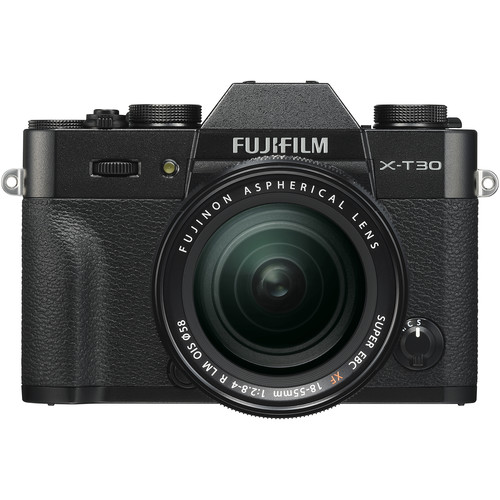
FUJIFILM X-T30 Mirrorless Digital Camera with 18-55mm Lens at B&H
FUJIFILM X-T30 Mirrorless Digital Camera with 18-55mm Lens

This summer I got to spend some quality time using the Fujifilm X-T30, and like always I can’t help but fall in love with Fujifilm’s brilliant in-camera color processing. However, the latest smart phones are getting “good enough” for most users needs, so would this camera wow me like the Fujifilm GFX 50s  or would it be another disappointment like the Canon EOS R?

Overall Thoughts
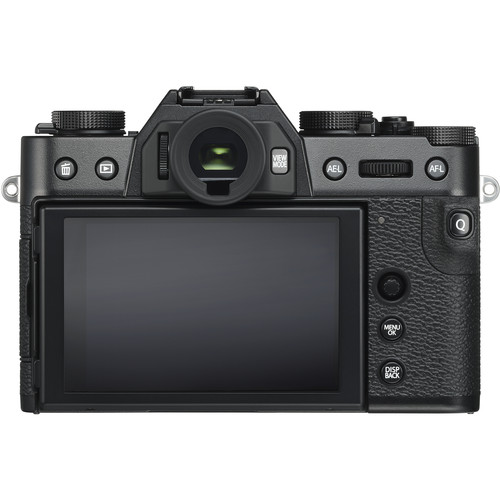
Rear View of the Fujifilm X-T30
The joystick is a departure from the traditional d-pad design found on other Fujifilm cameras, but I find it more user-friend and reliable

Generally speaking, Fujifilm is one of my favorite brand of camera bodies to use because of the ease of use of the physical knobs for aperture, shutter speed, drive mode and exposure compensation. This allows you to quickly switch between manual settings or auto for your creative controls without distracting you from the creative process of finding your desired composition for a given shot.
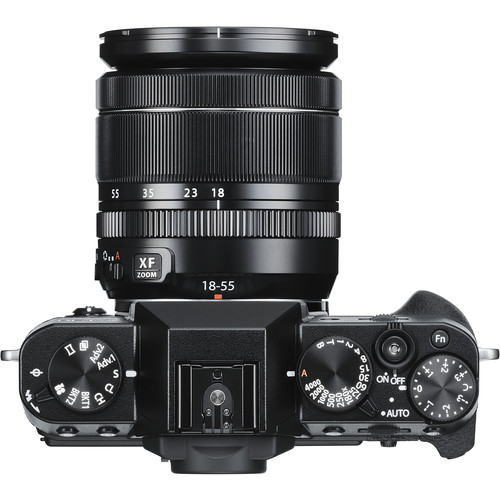
Top View of the Fujifilm X-T30

While I won’t bore you with all of the specs that can easily be read at B&H or elsewhere, I’ll say that the burst mode of up to 20 fps at 26.1 MP for up to 17 Exposures is more suited for casual use (vs a machine gun like the Sony a9 or Canon 1DX Mark II).  However, roughly $899 (body only as of Sept 2019) price of this camera is a lot cheaper so this camera is clearly targeting the value shopper looking for more creative control over the best smartphones.

I wasn’t blown away with the sensor quality of this camera, but those looking to enjoy images on large 4k displays or in print will see the advantage of this sensor over their smart phone images – at least I do compared to my iPhone XS.

The battery life and overall ease of use – for someone who is going to do more than stay in full auto mode – was great. My only complaint was that the touch screen got tapped by my nose quite often when I had my eye up to the the viewfinder which caused the focus point to be reset. That irritated me enough that I had to turn that feature off.

Features like eye tracking AF (with a choice between left, right and auto eye) are sure to please, and the gorgeous in-camera color of the in-camera processing of JPEG’s is sure to please the photographer who has no desire to do post-processing. Those who enjoy black and white photography are sure to be pleased with the built-in black and white presets as well.

Real World Shots

Like many of my reviews, I simply carried this camera during my life adventures with my family where I rarely have more than a minute to spend on a shot before I have to move on. None of these photos are staged – they are simply taken with most of the camera default settings except I’ll sometimes do exposure compensation or set the white balance, aperture or shutter speed to suit the scene. As such, I consider these typical shots that anyone can get and with additional effort much greater results are possible.

The photos shown below and in the gallery are the original in-camera JPEG’s with zero post-processing including no rotating or cropping, so what you see is what you can expect to get.

Here’s my thoughts about the results I got on a few select photos:


f/5 @ 55mm for 1/680 sec at ISO 160

Fujifilm’s strength is great natural colors with the default settings


f/2.8 @ 55mm for 1/340 sec at ISO 320

Eye focus wasn’t bothered by this hair so a spur of the moment snapshot turned out ok


f/10 @ 24mm for 1/200 sec at ISO 320

While f/10 turned out great…


f/16 @ 24mm for 1/75 sec at ISO 320

…Fujifilm X series seem to not be as heavily impacted by diffraction or being stopped down to large f-stop numbers as other brands


f/11 @ 41mm for 1/60 sec at ISO 320

Click to view full screen to appreciate the detail and beauty not possible with even the best smart phones


f/5 @ 107mm for 1/180 sec at ISO 160

The XF 100-400mm f/4.5-5.6 R LM OIS WR Lens was a nice step up from the kit lens…


f/5.6 @ 400mm for 1/500 sec at ISO 400

especially when at 400mm to see the picture within the picture (from the above scene)


f/4.5 @ 100mm for 1/400 sec at ISO 320

This sunset shot taken with the 100-400mm was one of my favorites as the in-camera processing captured a true to life image of just how awesome this sunset light was on this tree


f/8 @ 16mm for 1/420 sec at ISO 320

This was a beautiful scene, no doubt…


f/8 @ 16mm for 1/350 sec at ISO 160

…but being able to get an in-camera panorama of it made me feel like I was really there


f/5.6 @ 400mm for 1/900 sec at ISO 320

Nobody does great colors better than Fujifilm – period


f/5 @ 261mm for 1/850 sec at ISO 160

The full series of burst mode shots are in the gallery, but I must say I was very unimpressed with the image quality and auto focus performance of the 100-400 on this camera body


f/8 @ 17mm for 1/420 sec at ISO 200

Dynamic range was meh – I’ve definitely seen worse, but I’ve also seen a lot better – especially on the iPhone XS – but the color is definitely better on the X-T30


f/5.6 @ 16mm for 1/950 sec at ISO 200

Again, another no editing required result from the Fujifilm


f/11 @ 23mm for 1/75 sec at ISO 250

This was an amazing scene, but it also shows how great the in-camera HDR is on the iPhone XS which is frustrating when buying a a camera like this


f/5.6 @ 26mm for 1/250 sec at ISO 200

Still there were plenty of pixels and detail to satisfy me for many of my shots


f/8 @ 17mm for 1/420 sec at ISO 200

The articulating LCD made it much easier to get action shots of my daughter – something that would be nearly impossible with a smart phone


f/5.6 @ 31mm for 1/680 sec at ISO 200

Real bokeh vs fake iPhone bokeh (portrait mode) is always more enjoyable too


f/5.6 @ 16mm for 1/950 sec at ISO 200

I was impressed with the shadow details and the ability to focus on the eye of this Canadian Goose


f/8 @ 17mm for 1/240 sec at ISO 200

While a ColorChecker Passport would probably say that the colors are exaggerated, this camera captures scenes like this exactly the way the way my minds eye remembers them


f/5.6 @ 19mm for 1/750 sec at ISO 200

The kit zoom offers the ability to go wide as in the case with the beach scene here…


f/5.6 @ 53mm for 1/800 sec at ISO 200

…but still zoom in enough to bring you into the action


f/5.6 @ 100mm for 1/450 sec at ISO 200

Here’s another at 100mm, but below I zoom in…


f/5.6 @ 400mm for 1/340 sec at ISO 200

Zooming in to 400mm got me the scene I wanted
plus a bonus of noticing the person on top of the mountain!


f/8 @ 52mm for 1/85 sec at ISO 160

I failed to find a good angle for this amazing scene of these double falls, but the colors at sunset using Velvia film simulation were simply magnificent!


f/4 @ 34mm for 1/150 sec at ISO 320

This was a tough scene but it rendered it beautifully. Sure there would be more shadow details in cameras with better sensors, but creatively speaking this was spot on with nothing left to do but crop


f/22 @ 16mm for 1/160 sec at ISO 320

Sunset shots rendered nicely even though I had lots of schmutz on the lens


f/2.8 @ 16mm for 1/3200 sec at ISO 320

You have to view this one full size to appreciate it and the raw is even more spectacular

See a full gallery of unedited images taken for this review at https://photos.ronmartblog.com/fujifilm/x-t30.

Conclusion

As always, I really love the in-camera processing of Fujifilm X-Series cameras because I can call most shots done without ever editing them on the computer. It makes  a great travel camera with its biggest weakness is its noise at higher ISO’s compared to the competition, but Noiseware can address that difference.

In the end I enjoyed this camera and have no problems giving it a recommendation. Yes, it’s not in the same league as the latest cameras from Sony, but the fantastic in-camera colors are exclusive to Fujifilm so you have to decide where to make your tradeoffs.

Where to Buy?

CLICK HERE to learn more or buy today.

Other articles you may enjoy

If you enjoyed this article, you may also enjoy these:

Enjoy these and more on the Reviews tab as well as Ron's Recommendations.

Disclosure

If you make a purchase using links found in this article, I may make a commission. It doesn’t cost you a penny more, but it does help to support future articles like this.

Tuesday, February 3, 2015

REVIEW: Canon EF 100-400mm f/4.5-5.6L IS II USM Lens (SIGMA 120-300 & Canon 200-400 Compared)

Canon EF 100-400mm f/4.5-5.6L IS II USM Lens

I have been waiting for this lens for several years as I loved the original 100-400mm, but felt it was too soft for current generation sensors. With that said, I adored the previous generations reach and compact size – especially for motorsports. When Canon announced a new model, I was super excited so the second I got it in my hands I quickly started to review it. Please be sure to check out my article entitled First Look: Canon EF 100-400mm f/4.5-5.6L IS II USM Lens–The Wait Is Over!!! which contains a lot of my initial thoughts about this lens.

Amazing Image Stabilization

400mm at 1/13 sec - HANDHELD!
100% Zoom of the shot below - 400mm at 1/13 sec - HANDHELD!

I’ve got shaky hands after years of typing, yet without any tricks (FYI: I did not use this trick) I was able to pull off an astonishing 1/13 sec at 400mm – handheld! See the above image and click on the image to see the original. Much of the softness seen in this image is due to the ISO 1250 and f/8 aperture, not the lens. Yes, I was VERY impressed as that is the best I’ve personally ever been able to pull off at 400mm!


Here’s the full image from above - my focal point was the leaf
Canon EOS-1D X, f/8 @ 400 mm, 1/13, ISO 1250, No Flash


Canon EOS-1D X, f/8 @ 100 mm, 1/30, ISO 4000, No Flash

I was pretty far away from this log for both shots. This is the same type of shot at 100mm

I’m pretty certain that nobody is going to fault the IS performance of this lens – it is simply  incredible!

Bookshelf Test

My bookshelf tests are simple tests done on a tripod with stabilization turned off and both a timer and mirror lockup turned on. The images uploaded to the gallery are all the in-camera JPEG’s with Auto White Balance, Standard Picture mode and noise reduction set to low.  


Canon EOS-1D X, f/5.6 @ 100 mm, 15s, ISO 100, No Flash

While this lens isn’t as sharp as its 200-400mm sibling, it’s pretty darn close! When you consider that you have to spend $9600 more to get better results!

Upon close inspection you can pixel peep where it could do a little better, but it’s still excellent overall:

Copyright Ron Martinsen - ALL RIGHTS RESERVED
100% Crop of f/5.6 @ 100mm shot

Only the most hardcore landscape shooters who will be getting the future super megapixel cameras which triple the megapixels of the 1DX will possibly have a reason for a sharper lens like the 200-400mm. Personally, I think sports and wildlife shooters will be plenty happy with the sharpness of this lens. Make no mistake, this is a very sharp lens!


Canon EOS-1D X, f/8 @ 400 mm, 25s, ISO 100, No Flash

At 400mm f/8 is the sweet spot which is nice for wildlife shooters. This is a great focal length to have such sharpness. In fact, when I look closely at the blue book I get really good texture and the faint pattern on the spine is even clearly visible:

Copyright Ron Martinsen - ALL RIGHTS RESERVED
100% Crop of f/8 @ 400mm shot

I’ve only seen this level of detail show up a few times in my testing, so that’s super impressive. Of course, the focal length forced me to get a little closer to the bookcase than I normally like to do. However, this is still good detail that rarely shows up in photos even when cameras are much closer.

Things do drop off after f/8 for 400mm and after f/5.6 for 100mm, but overall it’s a pretty good lens up until f/11. After f/11 things get softer and there’s definitely more softness at 400mm than there is at 100mm. However, I think that is more diffraction related because my sensor has a low pass filter. If the newer models ditch the low pass filter, then this lens should be pretty amazing.

My test lens did have some minor back focusing issues at 400mm (only not 100mm). Normally I’d get addressed by sending the lens in with my camera for a quick calibration with Canon, but I can’t do that for a review. I’ve only had to do that with one lens since I’ve moved to DSLR’s in 2007 (my 24-70mm f/2.8L II), so I suspect this is because I have a first run copy. I wouldn’t expect this to be the normal behavior of these lenses from the factory.

Click here to see a full gallery of images from f/4.5 to f/32.

A Day at the Zoo


Canon EOS-1D X, f/5 @ 248 mm, 1/160, ISO 6400, No Flash

I probably could have shot this at 1/30 sec and in retrospect I wish I would have!
This lens is capable of very slow shutter speeds at any focal length thanks to the outstanding image stabilization (IS) performance

My article entitled At the Zoo with the Canon EF 100-400mm f/4.5-5.6L IS II goes into detail about my thoughts of this camera when photographing wildlife at the zoo. I give some initial impressions which still apply, but I do have one caveat – the trap door on the hood that allows you to rotate filters had a habit of getting bounced open while I was walk the zoo with my BlackRapid strap. A piece of gaffers tape is worth keeping in the bag for a rainy day like this!


Canon EOS-1D X, f/5.6 @ 400 mm, 1/160, ISO 3200, No Flash

Despite a pretty good rain (for Seattle), the AF worked flawlessly 99% of the time

Compared to the Canon 70-200mm f/2.8L IS II USM 


Canon EF70-200mm f-2.8L IS II USM , f/4 @ 200 mm, 10s, ISO 100, No Flash

To my eyes, I find the new 100-400 to be sharper than this benchmark lens. This was shocking and is really starting to make me disappointed in my 70-200 2.8!!!! Just kidding, I still love that lens but it’s awesome to see the new lenses blowing it away!

To see my review of this lens when I first got my hands on it in 2010, see First Look: Canon 70-200mm f/2.8L IS USM II – Perhaps Canon’s greatest lens!

Compared to the SIGMA 120-300mm


Sigma 100-300mm @ f/4 ~200 mm, 6s, ISO 100, No Flash

The SIGMA 120-300mm is a super sharp lens, but the 100-400 feels slightly sharper to me. It was definitely closer than I thought which reminded me how sharp this lens was. However, the stabilization and autofocus of this SIGMA lens were nowhere even close to the being in the same league as the Canon 100-400.

To see my review of this lens, check out my article entitled REVIEW: SIGMA 120-300mm f/2.8 DG OS HSM | S with the Canon 1D X at the Zoo (vs 200-400mm).

Compared to the Canon 200-400mm 


Canon EF200-400mm f-4L IS USM, f/4 @ 200 mm, 8s, ISO 100, No Flash

Surprisingly this mega expensive 200-400mm lens is just slightly sharper, but only if you really pixel peep. This is definitely not a $9600 sharper lens, but if you need a constant f/4 and built-in extender then perhaps it’s worth it to you. The 200-400mm is a phenomenal lens, but I’d save the $9600 and get the 100-400 plus other toys if I had nearly $12k to spend!

To see my review of this lens, check out my article entitled REVIEW: Canon EF 200-400mm f/4L IS USM Lens with Internal 1.4x Extender.

Real World Images

The following images come straight from in-camera JPEG’s using the low noise reduction settings. Most camera settings are the default with the exception of RAW+JPEG, a desired White Balance (only Shade or AWB), and a desired focus point. , The default creative style was used for all of these photos.

Click here for a full gallery of unedited images.

All images are copyright Ron Martinsen – ALL RIGHTS RESERVED. You may not save, print, edit, modify or otherwise use any images featured in this article or the gallery without expressed written permission.


Canon EOS-1D X, f/5 @ 135 mm, 1/100, ISO 12800, No Flash
, Handheld
Outdoor shooters will appreciate that even at high ISO’s
there’s enough sharp detail that you can save a shot as shown here


Canon EOS-1D X, f/5 @ 158 mm, 1/100, ISO 10000, No Flash
, Handheld
You don’t get much bokeh at f/5, but what you get isn’t too bad


Canon EOS-1D X, f/22 @ 100 mm, 0.5s, ISO 400, No Flash
, Tripod
Focused on the foreground rock on the left side. Net result?
I probably wouldn’t consider this a strong landscape lens but I’m
jaded after my SIGMA 50mm and Otus 55mm tests!


Canon EOS-1D X, f/8 @ 100 mm, 10s, ISO 100, No Flash, B+W VND MAX Position

Same shot as above with a variable neutral density filter, and equally unimpressive
See COMPARISON: Variable Neutral Density Filters (Singh-Ray, B+W, Hoya, Tiffen & Bower)


Canon EOS-1D X, f/8 @ 100 mm, 1/6, ISO 100, No Flash
, Tripod
Focused on the tree in the back but a pretty inconclusive result

I’ll admit these shots kinda suck but I was so smitten with the a6000 I was testing at the same time that I didn’t get as many test shots as I should have. I actually enjoyed photographing moving objects with this lens much more, which is why I did the zoo test. Be sure to see the full zoo article for more shots.

Click here to see the complete gallery of test shots.

Conclusion

Ultimately I love this lens and strongly recommend it. While I do wish it was sharper at 400 and my unit definitely needs calibration, nothing I noticed during testing gave me cause for concern. The AF was brilliant for everything except one shot (see the wolf peeking shot in this review) and I loved the new hood design. I do think the new tripod foot sucks – badly, but I don’t expect Canon really gives a hoot what we think about that. While your existing brackets for tripod feet will work, I would advise one custom made for this new foot design for best results.

With sharp images, brilliant image stabilization and fast/quiet AF, there’s really nothing to say but order now and be prepared for a long wait – this lens is going to be in serious demand for quite some time.

After having spent time with this lens, I’m wishing I had the money to buy one for myself. If I had the available funds, I’d definitely buy this lens.

Where to order

Click here to learn more or order on the B&H web site.

Other articles you may enjoy

If you enjoyed this article, you may also enjoy these:

Here’s more Canon related articles too:

Disclosure

If you make a purchase using links found in this article, I may make a commission. It doesn’t cost you a penny more, but it does help to support future articles like this.

Wednesday, January 21, 2015

At the Zoo with the Canon EF 100-400mm f/4.5-5.6L IS II–Unedited Photos

New IS Mode 3 - Saves battery and nausea when shooting fast paced action
Canon EF 100-400mm f/4.5-5.6L IS II USM Lens

I’m still reviewing the new Canon EF 100-400mm f/4.5-5.6L IS II USM Lens, but I must admit that I’m loving every minute of it! What a great lens!

Yes, I’d love to own the amazing Canon 200-400mm f/4L IS with 1.4X Extender, but it’s just way out of my budget. The good news is that this lens is a pretty good compromise and a hell of a lot closer in performance than I expected! Sadly the weather hasn’t cooperated, so I haven’t had an available day to shoot when the weather was nice. In fact, for this day at the zoo the weather was about as nasty as I can tolerate:

clip_image001
Miserable day, but still the zoo was crowded! Only in Seattle!!!

I love my readers so I endured this mess for you, but thanks to such a great lens I actually enjoyed my day out shooting animals that had no desire to be photographed – ha, ha!

Real World Shots

Compositionally speaking, I got nothing but throwaway shots for my miserable day at the zoo. However, this is a great lens and despite the high ISO’s you can get a good idea of just how sharp this lens really is. In fact, the distractions of rain, fences, and animals that were in no mood to cooperate made me appreciate the lens more than I probably would have on a more successful outing.

The full gallery of images begins here, and all are unedited in-camera JPEG’s taken HANDHELD with my Canon 1D X.  At no time was any form of support used for these shots.


Canon EOS-1D X, f/9 @ 100 mm, 1/160, ISO 3200, No Flash

There should be bears frolicking in the water, but instead it’s just a barren landscape shot. This is a heck of a lot sharper than the old 100-400mm could do!


Canon EOS-1D X, f/5.6 @ 400 mm, 1/160, ISO 3200, No Flash

Despite a pretty good rain (for Seattle), the AF worked flawlessly 99% of the time


Canon EOS-1D X, f/5 @ 300 mm, 1/125, ISO 2500, No Flash

Pay attention, this is one of only a few shots without a fence in the background – ha, ha


Canon EOS-1D X, f/5 @ 248 mm, 1/160, ISO 6400, No Flash

I probably could have shot this at 1/30 sec and in retrospect I wish I would have!
This lens is capable of very slow shutter speeds at any focal length thanks to the outstanding image stabilization (IS) performance


Canon EOS-1D X, f/5.6 @ 400 mm, 1/160, ISO 4000, No Flash

These guys were a real challenge for SIGMA 120-300mm as I just couldn’t get the AF to work very well, but the new 100-400 had no problems while they were standing. I did had trouble even with spot AF trying to get a shot like this (taken with this lens), but that was the only hiccup of the day


Canon EOS-1D X, f/5.6 @ 400 mm, 1/160, ISO 4000, No Flash

This is kinda how I felt – a real yawner of a day, but at least they were sharp boring shots with nice fence detail right? Ha, ha!


Canon EOS-1D X, f/5.6 @ 400 mm, 1/160, ISO 2000, No Flash

This is where the uncropped reach of the amazing 200-400mm earns its markup from this lens (see a comparison shot), but with cropping this isn’t half bad – especially since it is shot through a chain link fence in the rain!


Canon EOS-1D X, f/5.6 @ 227 mm, 1/160, ISO 6400, No Flash

This was taken through filthy dirty Plexiglas with lots, but aside from the color cast it wasn’t too bad straight out of the camera


Canon EOS-1D X, f/5.6 @ 400 mm, 1/160, ISO 4000, No Flash

The detail of the feathers and raindrops give you a good idea as to how sweet this lens really is


Canon EOS-1D X, f/5 @ 164 mm, 1/125, ISO 4000, No Flash

With this guy lifting his tail on such a bad day, I kept waiting for this to happen. Fortunately it didn’t!


Canon EOS-1D X, f/5 @ 234 mm, 1/160, ISO 6400, No Flash

This is how pathetic things started to get at the end of the day – I was shooting birds on the ground dead center – ha ha!


Canon EOS-1D X, f/4.5 @ 100 mm, 1/160, ISO 8000, No Flash

Like the duck, nice feather and water droplet detail made me appreciate this lens – even at ISO 8000!

See the full gallery at http://photos.ronmartblog.com/lens/canon/100-400mmii

Conclusion

I don’t shoot motorsports or much stuff that requires 300-400mm anymore, so I probably won’t buy this lens. However, I’m really lusting for it as it is so good and so darn fun to use!

It is extremely sharp and the AF performance has been excellent so far. What’s more, the IS makes you feel like a human tripod when you have stationary objects. I’m still doing testing, but I’ve pulled off shutter speeds as low as 1/15 sec at 400mm that look tripod solid without having to resort to my special handheld trick. Using that trick a few more stops would be possible with this excellent IS system, so now I’m starting to dream for Canon to make a 70-200mm f/2.8L IS III lens as my II seems outdated!!!!

Be sure to check out my article entitled First Look: Canon EF 100-400mm f/4.5-5.6L IS II USM Lens–The Wait Is Over!!! I give some initial impressions which still apply, but I do have one caveat – the trap door on the hood that allows you to rotate filters had a habit of getting bounced open while I was walk the zoo with my BlackRapid strap. A piece of gaffers tape is worth keeping in the bag for a rainy day like this

I should also point out, despite the lens getting soaked repeatedly – and zooming in and out – I had ZERO issues with water or dust getting in this lens so far.

Simply put, I LOVE THIS LENS so far! Donations accepted so I can buy one – ha ha!

More to come in my final review article.

Where to order

Click here to learn more or order the B&H web site.

Other articles you may enjoy

If you enjoyed this article, you may also enjoy these:

Disclosure

If you make a purchase using links found in this article, I may make a commission. It doesn’t cost you a penny more, but it does help to support future articles like this.