Showing posts with label Sigma. Show all posts

Thursday, March 22, 2018

WPPI 2018 - Las Vegas Highlights

This past February I had the opportunity to go out to Las Vegas for the WPPI Conference & Expo for Wedding & Portrait Photography where I got to catch up on some of the latest offerings in the industry.

Below are a few highlights of what caught my eye at this years show.

Sony A7 III

Sony a7 III at B&H

By far one of the biggest hits of the show was the announcement of the Sony a7 III which features much of the goodness of the incredible Sony a9 that I loved, but at a fraction of the price.

Basically you lose the higher resolution viewfinder & display, flicker free faster burst mode and a little on video performance, but not too much more. What you get in return is an incredible camera for (barely) under $2000 USD, so it's a fair trade off.

Given what I saw, and the incredible performance of the a9 and a7R III that I loved, I expect this to be a very popular camera.

Sony a7 III at B&H - Rear View

Oh and yes, early reports are that it does feature noticeably  improved dynamic range performance over its predecessor. However, you'll have to wait for my review before I can confirm that to be true or not.

Canon 470EX-AI

The surprise show stealer for me was the revolutionary Canon Speedlite 470EX-AI which made me the most excited I've ever been for a flash before! This auto self adjusting flash head finds the best bounce angle on its own and ensures a pro caliber flash shot nearly every time - or so it's told.

In practice, I did find it to be quite good but I was in an environment with incredibly high ceilings so I couldn't get a proper bounce without the assist of someone holding something above my head to bounce off of.

Yes, it works - very well so I can't wait to get one of these to review!

This is no gimmick - enjoy the couple of videos I did here to show how it really does work!

CLICK HERE to learn more


Canon M50

Canon M50 at B&H

While there was much buzz on the web about the announcement of the Canon M50, I was highly unimpressed at what I saw.


Canon M50 at B&H

Sigma 14-24mm f/2.8 DG HSM Art

Sigma 14-24mm Art at B&H

I've been a big fan of the Sigma Art series primes, but the zooms haven't impressed me nearly as much. As a owner of the amazingly awesome Canon 11-24mm, I couldn't help but be interested in seeing what Sigma had to offer with its new 14-24mm zoom to compete with the legendary Nikon 14-24mm.

The price is right and it's definitely got great build quality, but I couldn't really do much with it at the show. It definitely has promise, so I may have to check this one out.

See my other SIGMA Art series reviews:

Do It Yourself Book Printing on Epson SureColor Printers?

Dual Sided Epson Paper? It Might Happen!

Epson SureColor printers have been a big hit and their quality on the Epson Legacy Series and Epson Signature Worthy is second to none.  However, if you've wanted double-sided printing or a book you've had to go elsewhere.

Epson is considering changing that and they are looking for your feedback, so leave me some comments if you think they should do this.

They are considering a double-sided paper as shown above, plus partnering with third parties on some software like the one shown below:

IMG_8155

To help stick it all together, they'll work with some third party products like this one:

CoverBind: Bindomatic Accel Flex Thermal Binding Machine at Amazon

The early prototypes showed promise, but there's definitely some kinks to work out before this is ready to replace your current book provider. However, the idea has merit and I'm excited about it.

Are you? Share your thoughts in the comments below.

PLEASE NOTE: You only need to post once and your comment WILL NOT appear until I've approved it. This is to avoid the massive amount of spam posts I get. As such, any comments with links will automatically get rejected.

ON1 Photo RAW 2018.1

on1-photo-raw-2018.1-now-available-1024x576

My friends at ON1 showed me the latest improvements in 2018.1 and I've got to say that it's really starting to come together for this product. When they first made the switch to the Photo RAW series product it felt like it had lost a lot from its predecessor products, but it's making incredible strides to not only catch up with Lightroom but to leap frog it!

on1-photo-raw-2018-overview-1024x576

Check out this video to see overview to see what I mean:

Click here to learn more - and my discount will automatically be applied to ensure you'll get the lowest price possible!

Conclusion

While there definitely seems to be a down turn in photo editing software products at the show, there was still plenty to see and enjoy. Even if you aren't a wedding photographer, this is a fun and worthwhile show to attend to learn more about the latest new products. There's also a ton of great images to see from some very talented photographers, so if you are looking for an excuse to visit Las Vegas (and who isn't?!!!) in February, then save a spot on your calendar for WPPI 2019 next year!

Where to Buy?

CLICK HERE to learn more or buy today.

Other articles you may enjoy

See more reviews on the Reviews tab as well as links to my favorite products on Ron's Recommendations.

Disclosure

If you make a purchase using links found in this article, I may make a commission. It doesn’t cost you a penny more, but it does help to support future articles like this.

Sunday, January 14, 2018

REVIEW: Canon 85mm f/1.4L IS USM - Sigma Art Killer?


Canon 85mm f/1.4L IS USM

The Canon 85mm f/1.2L was legendary for its buttery smooth bokeh, but I absolutely hated its electronic (vs traditional mechanical) focus ring. I also couldn't deal with its slow focusing (even in the improved II model) and the unusable minimum focus distance of 3.12' (95 cm).

Despite all of that, I was a bit sad to hear that Canon's newest 85mm L would be a f/1.4 instead of a f/1.2, but then I remembered something - the Sigma 85mm f/1.4 Art  was one of my favorite lenses I've ever reviewed - and the only lens to get two dedicated articles (here and here). At that point it became clear that the target for this lens was the Sigma Art, and you only needed to look at the minimum focus distance of the two - which is exactly 2.79' (85 cm) to know that is exactly Canon's target.

I also found myself with the Canon 85mm f/1.2L (which I've owned - twice) and Sigma 85mm Art that I rarely found a practical use for anything wider than f/1.8 because it's just too shallow to be practical. As such, I quickly got over my concerns about this lens not being an f/1.2 and judged it on its own merits.

The Perfect Portrait Lens?

85mm is famous for being a great lens for shooting portraits of people thanks to its ability to slim down your subject and bring the background in closer than wider lenses like the 50mm and 35mm. However, some people, myself included still think it's not long enough because it can still make your subject look wider (thus the old saying that the camera adds 15 pounds). Here's a shot of a very thin model who looks wider here than she appears in real life or in other photos taken with longer lenses (see here):


f/1.8 @ 85mm for 1/100 sec at ISO 125

This has always been my frustration with 85mm's, but they have the advantage that the lenses are still small enough that doing a f-stop smaller than 2.8 is still possible. This creates a benefit allowing you to creative things like keeping one eye in focus while letting the other eye go out of focus. The advantage of this is that you create a more intimate connection with the subject that creative types love yet OCD types hate.

The shot below illustrates what you'd likely get on a typical 70-200mm f/2.8 at 85mm where much more of the scene is in focus. If the scene is interesting this can be a good thing, but if it isn't then it can also be a bother:


f/2.8 @ 85mm for 1/100 sec at ISO 400

Another advantage of f/2.8 over f/1.4 is that the subject doesn't have to be on the same exact plane as the lens to be in full focus. In this shot I had the model tilt her head back to illustrate the flexibility you get with f/2.8 vs the dangers of going to smaller f-stop numbers as illustrated in the f/1.8 shot above.

In the end it is a creative decision and the beauty of this lens is that you can do both. With your 70-200mm f/2.8 zoom you are stuck with f/2.8 and can't separate your subject any better unless you stand closer at which point minimum focus distance challenges start to kick in.

All of these reasons combined are why the Sigma 85mm Art and 135mm Art have been such popular lenses with portrait photographers looking for something sharper than a zoom lens.

The Image Stabilization Difference

f/2.8 @ 85mm for 1/6 sec at ISO 100 - handheld

Using ambient light from overhead, I was able to easily do 1/6 sec handheld which is quite impressive for a shaky hand guy like me with arthritis and carpal tunnel syndrome. Here's the shot from above zoomed to 100%:

image
100% zoom of f/2.8 @ 85mm for 1/6 sec at ISO 100 image

I did get a usable shot at f1/4 sec, but it wasn't as sharp as this one or the very sharp 1/20 sec shot, so I declared 1/6 sec my practical minimum shutter speed for my hands with this lens. Obviously those with more steady hands are easily going to be able to beat me here.

I think this is really where things get interesting since the Sigma 85mm Art is slightly sharper.

If your going to be shooting moving subjects none of this matters as you'll need faster shutter speeds. If you are shooting on a tripod it doesn't matter either since you'd turn IS off. However, if this is going to be your walk about lens in normal lighting conditions this advantage could mean the difference between a crisp shot and a blurry one so that Sigma Art advantage would go away.

Given the recent ban on tripods in Zion and elsewhere,  IS could be the game changer that makes the difference between getting the shot and not.

Sidebar: Impact of Shooting Shallow DOF

While I shooting for this review I took some photos of my son riding his bike on one of his favorite local trails:


f/2.8 @ 85mm for 1/640 sec at ISO 500

It took a few attempts for me to get everything exactly the way I wanted it for this shot since I was shooting handheld, but I eventually got it. As I was taking the shot I did one series with him pedaling away and thought it would be fun to share the impact of using a shallow depth of field (f/2.8 in this case) for a scene. Here's the first frame:


f/2.8 @ 85mm for 1/800 sec at ISO 640

and the last of the 10 frames in this series:


f/2.8 @ 85mm for 1/800 sec at ISO 640

You can step through them yourself here.

Good Bokeh vs Bad Bokeh

One of the great things about lenses with f-stop below 2.8 is that you get some really smooth bokeh, but is too much bokeh a bad thing? Consider this shot:


f/1.4 @ 85mm for 1/1000 sec at ISO 100

This lens makes such smooth bokeh that I found myself hating shots like the one above because the context of the scene was totally lost. What's more, any lens that is wide open (at its smallest f-stop number) is going to be softer than when stepped down. In the shot below, the scene itself had more contrast and the subject is sharper thanks to using f/1.8 instead:


f/1.8 @ 85mm for 1/800 sec at ISO 200

That said, I still think a shot like this is better suited for f/2.8 or perhaps even more to give more context about the surroundings. However, if I'm much closer to my subject such as is the case in this shot:


f/1.8 @ 85mm for 1/800 sec at ISO 200

f/1.8 removes distractions as would a little cropping if this wasn't a review using unedited photos. In this case the bokeh is a great thing as the busy background becomes smooth and the blur on the shirt and hands forces your eyes back to the main subject - the face. This is good bokeh and a great use of f/1.4 to f/1.8. Generally speaking, you'll get best results at f/1.8 - f/2.2 on any f/1.4 lens, so the decision to do f/1.8 results in a sharper face yet still offers the benefit of very good bokeh elsewhere to avoid distractions.

Consider this scene where choosing f/1.8 on a subject that isn't close by results in a clear understanding of what the subject is - the chairs:


f/1.8 @ 85mm for 1/400 sec at ISO 100

However, if you zoom in on it you'll notice that the fence, chairs, and tree aren't all of equal sharpness so you could go as high as f/4 and still improve the sharpness of the foreground subjects yet still take advantage of the distance of the objects in the background to have them less sharp and distracting:


f/4 @ 85mm for 1/80 sec at ISO 100

This is what I'd classify as good bokeh, but where less is more.

In the shot below is a nasty dirty window from the kids and the primary subjects are the pianist eyes and fingers. By choosing f/1.8 and carefully focusing it's possible to keep the primary subjects in focus and remove distractions in the background (mostly - it still would have been better to clean that nasty window - ha ha).


f/1.8 @ 85mm for 1/800 sec at ISO 1600
 - In-Camera Monochrome Creative Style

Again, I'd classify this as good bokeh. Because I chose to use an in-camera picture style that made the image black and white, this is a shot that I'd be happy to say is done in-camera with no additional work.

Here's another example where f/1.8 gives a super sharp rose with some sense of depth into the rose while still removing everything else from the scene in a sheet of creamy bokeh:


f/1.8 @ 85mm for 1/500 sec at ISO 5000
 - In-Camera Monochrome Creative Style

The decision to use the monochrome creative style along with the choice of f/1.8 leaves a photo that has a clear subject without distractions from noise (ISO 5000) or other elements in the scene (well except that glowing thing at 11:00 - ha ha).

None of these are unique to this lens, but for those reading this article wondering what the big deal is about a f/1.4 lens is - this is it. It's a great tool that allows you to create images that set your subject apart from the scene and dial in enough details to set context when desired or completely eliminate it.

The great bokeh of this lens really helps to accomplish this goal, so I can no longer see a reason why I'd ever want to even borrow the old Canon 85mm f/1.2L II. It was great for its day, but I think Canon made the right choice to go with f/1.4 as the minimum f-stop as anything below that is really too much and this leaves room for f/1.8 to really shine.

More Unedited Real World Shots

Just like all of the photos in this article, this section includes more 100% unedited shots taken with a Canon 1D X Mark II. The in-camera JPEG's are taken straight from camera and only renamed, but otherwise unmodified so click the photos to see the originals.

Unless noted, all photos were handheld without any support aids.

All photos are copyright Ron Martinsen - ALL RIGHTS RESERVED. You may view the photos while your browser is open to this article, but afterwards you must close and delete any copies on your machine. You may not edit, print, publish, save, link to, embed, video or otherwise use any photos from this article without written consent from Ron Martinsen.

You can find the full gallery of unedited images here,  and/or you may click the photos in this article to see them exactly as they came out of the camera.


f/2.8 @ 85mm for 1/500 sec at ISO 1250

Because you must get closer to your subject, f/2.8 blurs out a lot more of the scene than one would experience with a 70-200mm f/2.8 at 200mm. It can be used to an advantage to make unsightly backgrounds like this look more appealing 


f/1.4 @ 85mm for 1/200 sec at ISO 100

The challenge with f/1.4, in addition to being softer than f/1.8, is that if your subject isn't entirely on the same plane as the lens then you are going to lose the focus on an eye as you see here. Sometimes it can be just want you want, and other times in a shot like this it is more distracting as one would expect the camera right eye to be in focus.


f/1.8 @ 85mm for 1/500 sec at ISO 800

This lens focuses fast and was able to keep up with the rapid and unpredictable movements of an 8 year old hunting for and throwing rocks


f/1.8 @ 85mm for 1/500 sec at ISO 500

When reviewing images, I kept going back to the f/1.8 versions as they offer incredible sharpness of the subject yet still allow the background to vanish. In scenes where there's lots of contrast, like here, the context is still preserved without it being distracting


f/5.6 @ 85mm for 1/500 sec at ISO 2500

I shot this at several different f-stops, but f/5.6 made it clear that the boat was my subject but the birds and mountains weren't just smeared out of the scene. I loved f/5.6 on this lens too!


f/2.2 @ 85mm for 1/125 sec at ISO 640

f/2.2 was my preferred f-stop for the f/1.2L because that's where things got crazy sharp yet details in the background still vanished. f/2.2 is a great choice with this lens too as you can see here


f/7.1 @ 85mm for 1/100 sec at ISO 6400

Going up to f/7.1 and the distance of the background from the subject still eliminates distractions in the background, so I found it to be a good choice for when I wanted to provide more context (in this case, show off the beach). This is the beauty of this lens for portraits because it's easy when working near the minimum focus distance to go either way as demonstrated by the two photos above


f/5.6 @ 85mm for 1/125 sec at ISO 6400

If I had to knock this lens for one thing is that it isn't as naturally warm as the f/1.2L or the 16-35mm f/2.8L II. Those lenses were legendary for their nice contrast and warmth, but this lens seems to have lost a little bit of that advantage (or disadvantage if you didn't like it)


f/1.8 @ 85mm for 1/200 sec at ISO 1000

Busy backgrounds like rocks create a swirling effect, but if used properly the results can still work to your favor like the image above


f/1.4 @ 85mm for 1/13 sec at ISO 100
- handheld!!!
Yes, this is a handheld shot of a 8 year old who photobombed my long exposure shot. Fortunately he didn't move so I thought this was a fun shot. What was even more interesting though is that you can clearly see the focus area of a scene and the swirling pattern in the rocks again

Conclusion

At the time this article was written, this Canon lens was $400 more than the sharper Sigma 85mm Art that lacks image stabilization. Depending on the work you do without tripods using natural light, this could give the Canon lens a big advantage. However, if you are shooting landscapes on tripods or using a flash then that difference goes away, so the Sigma 85mm Art seems like the better deal. I'd definitely buy either over the dinosaur 85mm f/1.2L II or the pricy manual focusing Zeiss Otus 85mm.

With that said, I can recommend this lens for those who want a sharp 85mm with stabilization to compensate for shaky hands when shooting handheld. For everyone else, the Sigma 85mm Art series is still the lens to beat and my king of the 85mm's.

Where to Buy?

CLICK HERE to learn more or buy today.

Other articles you may enjoy

If you enjoyed this article, you may also enjoy these:

Enjoy these and more on the Reviews tab as well as Ron's Recommendations.

Disclosure

If you make a purchase using links found in this article, I may make a commission. It doesn’t cost you a penny more, but it does help to support future articles like this.

Saturday, November 11, 2017

Guest Blog: PhotoPlus New York - 2017 Trip Report

by Natalia Stone - Travel and Landscape Photographer
http://nataliastone.com & http://instagram.com/natalia_stone

Nikon's D850

Out of the gate, the Nikon D850 comes with a ton of firepower. D850 boasts a 45.7MP Sensor,
7fps burst shooting - great for action photography, the newest EXPEED 5 high performance image processor which should handle the increased megapixels while still retaining the fast write speed.

If you are into time lapses, the D850 has a built-in 4K time lapse creation. If you love shooting
video, it has 4K/30p or 1080/120p slow-motion capabilities while still retaining high performance.

All in all a very impressive beast of a DSLR camera.

Click here to see Ron's Review of the Nikon D850.

Sony’s A7RIII

Sony ‘s A7 series has been on top of the mirror less camera game and the new Sony A7Riii doesn't disappoint. As an owner of a now older model Sony A7Rii, I couldn’t wait to play around with the next iteration and boy was it awesome. Sony has made a multitude of improvements - much better focusing, 10 fps continuous shooting not to mention the 15 EV dynamic range that rivals that of Nikon’s D850. A7Riii also comes with a Pixel Shift Multi Shooting mode which produces very high detail raw files. Not going to lie, I walked away thinking Ill be upgrading soon.

Click here to learn more at B&H.

Lenses, Lenses, Lenses

So many new releases at the show this year, some of the highlights:

Zeiss Milvus 25mm f/1.4

This all new manual focus lens would be a great addition for a landscape photographer. Amazing
at capturing every crispy detail with edge to edge quality, perfect for those massive prints and the
‘wow’ effect. Any astrophotographer would very excited about a maximum aperture of 1.4 when
every stop of light makes a huge difference in producing the best images when shooting at night.

Click here to learn more at B&H.

Sigma 135mm f/1.8 DG HSM Art Lens

Sigma announced the new Ultra-fast 135mm f/1.8 DG HSM Art Lens – super sharp with minimal
distortion - perfect for the high megapixels DSLRs like Nikon D850 I checked out earlier. If you
are a portrait photographer, you definitely want to check this one out!

Click here for Ron's Review.

Rokinon announces AF 35mm f/1.4 FE

I’ve using Rokinon manual lenses for night photography for a long time and absolutely love them
so it’s exciting for the company to be releasing more autofocus ones like the new AF 35mm f/1.4 FE .

This lens is perfect for full frame mirror less cameras, comes in a Sony E-mount for anyone
sporting an A7 series body from Sony and would be great for either portrait, landscape or astrophotography!

Click here to learn more at B&H

Epson SureColor P8000 – “Print your legacy”

Speaking of printing your work – check out this beast of a printer from Epson.
SureColor P8000 doesn't just look impressive, once you see the prints, they take your breath
away. Not for those on a shoe string budget, but worth the money for a serious professional.

Click here to learn more at B&H.

Conclusion by Ron Martinsen

I'd like to thank Natalia for covering for me in New York this year. While I was too busy to make it, I was fortunate enough to have already reviewed a couple big products that headlined the show. I've also got the Sony A7RIII in the pipeline for review, so it looks like I'll be featuring the best of the show here after all!

Other articles you may enjoy

If you enjoyed this article, you may also enjoy these archives from previous shows:

Enjoy these and more on the Reviews tab as well as Ron's Recommendations.

Disclosure

If you make a purchase using links found in this article, I may make a commission. It doesn’t cost you a penny more, but it does help to support future articles like this.

Tuesday, October 24, 2017

REVIEW: Nikon D850 with 24-70mm f/2.8E ED VR & SIGMA 135mm f/1.8 DG HSM Art

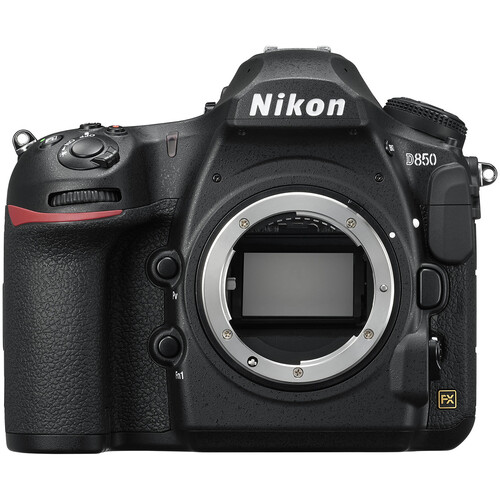
Nikon D850 from B&H
Nikon D850 Camera Body

I'm no stranger to the Nikon D850 after having spent a fair amount of time reviewing the D800 and D810, but neither model impressed me enough to give it a highly recommend rating. Would this be the one to change my mind?
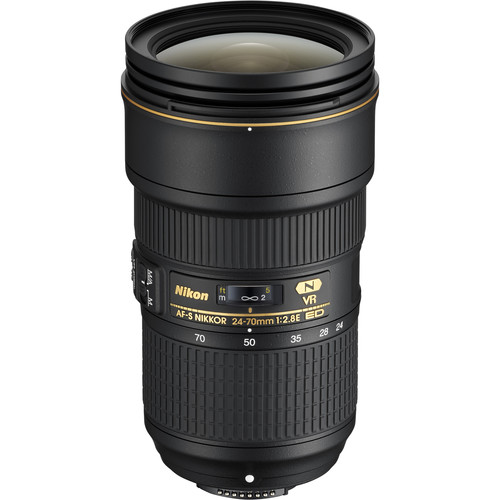
Nikkor 24-70mm f/2.8E ED VR from B&H
Nikkor 24-70mm f/2.8E ED VR

To make this camera look its best, I decided to pair it with two fantastic lenses - the Nikon Nikkor 24-70mm f/2.8E ED VR and the hot new SIGMA 135mm f/1.8 DG HSM Art. Both are razor sharp and have their strengths to make the most of what this 45.7MP sensor has to offer!
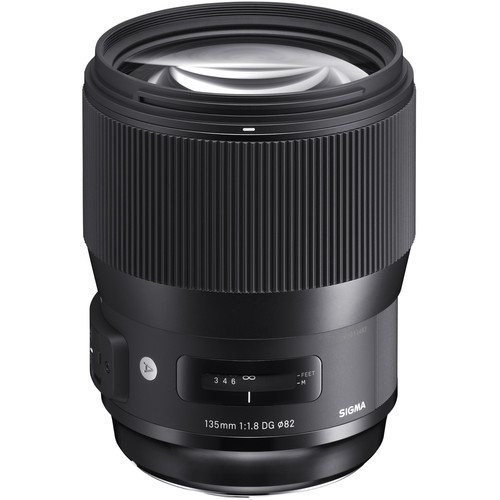
Sigma 135mm f/1.8 DG HSM Art
SIGMA 135mm f/1.8 DG HSM Art

In my Nikon D810 review, the Zeiss Otus 55mm & SIGMA 50mm Art Series went head to head and the SIGMA came out victorious thanks to its AF advantage. Would the 135mm Art series be just as impressive?

Introduction

While the D800 & D800E failed to impress me, I did take a liking to the D810 thanks to the great lenses I was able to test with it. With that said, I wasn't really motivated to get one because the additional shutter speed required to get a sharp shot. This coupled with the unimpressive high ISO performance made it unpractical for most scenarios. As a result,  so best images required a tripod or studio lights which made it impractical for my needs.

Since I did my D810 review, I've had the pleasure of using the incredible Sony a7R II, the Canon 5Ds and 5Ds R, and the impressive but lesser megapixel a9 which many believe to be a preview of what is to come in the highly anticipated a7R III.

With a lot more reference products to demonstrate that the technology definitely exists to improve upon the D810, would the third time finally be a charm? Would this be the Sony a7R II killer that some were predicting it would be? Is it really worthy of DxO's #1 sensor ranking?

Body Thoughts

Ergonomics-wise, this is typical Nikon which is a good thing since there's plenty of buttons with many of them being programmable. The body design is far superior than what you get on a Canon or Sony, so even though there's no meaningful changes beyond the removal of the the built-in flash for the sake of better weather sealing, and a handy tilt screen which will make macro photographers happy.

Yes, there's improvements like the trick Focus Shift feature which makes collecting shots to use with your focus stacking software much easier, but it offers no in-camera magic. There's also the highly useful built-in intervalometer which makes Time Lapse photography much easier. In fact, Nikon even went the extra mile to let you make a 8k video out of these captured images which is pretty slick.

That said, there's not much else to say. Nikon has been making one of the most useful camera bodies for years, and this is a very easy and enjoyable to use camera body - nuff said.

Studio Shots

These first two shots were taken under my Elinchrom studio lights with a clamshell setup. I use a Lastolite Triflector with gold and silver stripe panels that caused a warm tone when used with the Auto0 Auto White Balance setting of the D850.

The photos shown are 100% unedited from the in-color camera JPEG, but if you click the links under and view them in Google Chrome browser you'll see color corrected versions made from the NEF file in Lightroom CC Classic using the new Version 4 Camera Standard profile with lens corrections. White balance was achieved in the NEF converted versions using the far left portrait Creative Enhancement Target of the X-Rite ColorChecker Passport Photo


Sigma 135mm Art at f/9 for 1/200 sec at ISO 100

(Full Size Color Corrected from NEF - ProPhoto RGB JPEG Version)

image
100% zoom of camera right eye from Sigma shot above

image
100% zoom of camera right eye from Nikon shot below


Nikkor 24-70mm f/2.8E ED VR - f/9 @ 70mm for 1/200 sec at ISO 100

(Full Size Color Corrected from NEF - ProPhoto RGB JPEG Version)

These are two great lenses, so I was surprised at how well the 24-70 faired against the Sigma, but to my eyes the Sigma still has the clear advantage in terms of sharpness and detail resolution.

Outtake Shot of Kai
Outtake shot of Kai using the Sigma 135mm - f/8 @ for 1/250 sec at ISO 100
100% crop - click for full size shot

For fun I also included this unedited Nikon 24-70mm f/2.8E ED VR outtake shot done under the same studio lighting and the Auto2 white balance:


f/9 @ 70mm for 1/200 sec at ISO 100

For those who haven't used a camera with a resolution this high, you will have to make changes in the way you have historically worked in the studio. Depth of field is a challenge just like medium format cameras as even f/8 and f/9 exhibit shallow depth of field challenges between the iris and eye brow, especially visible above for subjects with deep inset eyes. The net result is that it is not possible to get both in sharp focus like you can with lower megapixel cameras, unless you stop down your aperture to a larger f-stop number. With that said, a clear advantage of the extra megapixels is a significant reduction of specular highlights on the nose and forehead compared to those found with lower resolution cameras.

In the studio, I love the D850 - especially with a great lens like the Sigma 135mm Art.

Real World Shots

The following are 100% unedited shots that link to the original in-camera JPEG. All of the shots featured were taken handheld using either Aperture Priority with the Faster ISO sensitivity setting for Auto ISO or in Manual with Auto ISO.  All camera settings were set to their default including the picture control (Auto) and the white balance was set to personal taste (typically Auto2 or Shade):


f/2 @ 135mm for 1/250 sec at ISO 900

Camera shake is a huge challenge with this camera, but if you can keep the camera rock solid as I did here by having my elbow on the table, you can get a sharp shot without having to do 3x+ the reciprocal of the focal length (e.g., 1/400+ in this case)


f/2.8 @ 70mm for 1/500 sec at ISO 2500

Despite the distraction of the fingers, the auto 3D Face Tracking AF did a good job of finding Kai's eye and doing what I wanted the camera to do


f/2.8 @ 70mm for 1/250 sec at ISO 560

With the 24-70, I got an interesting and colorful shot...


f/2.8 @ 135mm for 1/200 sec at ISO 320

but I enjoyed having the 135mm where even at f/2.8 I could get in closer to my subject and bask in the buttery smooth bokeh I get from this excellent lens


f/5 @ 135mm for 1/200 sec at ISO 400

Zoom in and you'll see how this many megapixels helps to you resolve flaws on the car and details on the leaves. I used 1/200 sec as a shutter speed to try to limit motion blur in the leaves


f/13 @ 135mm for 1/60 sec at ISO 100
(tripod)
This shot was impressive because of the tonal range on the boat and sky even with the in-camera JPEG. By using the RAW, you can do some really cool processing on this shot.


f/2.8 @ 135mm for 1/2000 sec at ISO 72

I pulled over on the side o the road and took a quick snap of these paragliders just to see how the camera would resolve the detail on them. It's impressive to see how much you can seem when you really zoom in! Click the image and see for yourself!


f/2.8 @ 135mm for 1/320 sec at ISO 500

The 135 was just so fun to shoot with and the dynamic range of this camera helped to get the specular highlights at bay despite Sierra's unpowered skin


f/4 @ 50mm for 1/800 sec at ISO 100

I'm used to good in-camera JPEG from Sony, Fujifilm and Canon cameras, but this is a great example of why Nikon shooters should always keep their NEF RAW files around
Notice how bad the pumpkin looks and how overblown Kai's face is with the in-camera JPEG


f/4 @ 50mm for 1/800 sec at ISO 100

Thankfully with just some tone adjustments, it's easy to recover from the NEF file to get a much more usable image, so the in-camera JPEG's leave you wanting for more with orange tones on this camera compared to other brands I've tested - including the iPhone 7!


Without In-Camera HDR

To address the above problem you could turn to in-camera HDR which is useful for shots like this


With In-Camera HDR

Notice how it takes advantage of the great dynamic range of this camera to come up with a much better result in mixed light, but it comes at the expense of motion blur when your subjects are alive vs ones that are dead - ha ha


With In-Camera HDR on - oops!

This is proof that the HDR mode really is taking and combining multiple exposures even though you only hear what sounds like two exposures


f/2.8 @ 48mm for 1/200 sec at ISO 7200

High ISO performance is drastically improved over the D800 as this ISO 7200 image definitely impresses


f/2.8 @ 32mm for 1/125 sec at ISO 2000

Auto focus performance was quite good and the VR helped to get a lot more keepers with the 24-70 than I got with the 135mm


f/4 @ 70mm for 1/160 sec at ISO 25600

ISO 25,600 - are you kidding me?
This is a huge improvement over the D800 and I think a big improvement over the D810 as well


f/4 @ 70mm for 1/320 sec at ISO 16000

ISO 16,000 was downright sharp in reasonable lighting conditions


f/2.8 @ 52mm for 1/1000 sec at ISO 5600

This is only one of a series I took in burst mode with continuous AF, but I found that if you have enough light for 1/1000 or faster you have an AF system that can handle active subjects


f/2.8 @ 135mm for 1/1000 sec at ISO 100

For fun I thought I'd see how much detail could be resolved in this fake webbing. It was quite impressive!


f/3.2 @ 135mm for 1/640 sec at ISO 900

How can you not love the 135mm Art? Wonderful bokeh and crispy sharp detail!


f/4 @ 135mm for 1/500 sec at ISO 4500

This would have been a good time to play around with the focus stacking, but sadly I was handheld this day. That said, this is pretty good for handheld at f/4 and ISO 4500!


f/4 @ 135mm for 1/500 sec at ISO 1800

Once you start shooting flowers with this lens, it gets addicting in a hurry.
The D850 makes for a nice file that captures gobs of detail


f/4 @ 135mm for 1/500 sec at ISO 3600

Yes, a needless shot but look at the detail of the fabric in the face - ha, ha!
Just wait, if you get a D850 you'll be doing this too (especially if you have a killer lens like the 135!!!)


f/1.8 @ 135mm for 1/640 sec at ISO 4000

Despite using my handheld technique on this shot (the only one in this article), I still found it tricky to get precise focus on the eye. As a result, I think I needed to use the USB Dock to fine tune the AF calibration of  this lens to this camera

For more review photos, see http://ronmartinsen.com/nikon/d850.

Please note that all photos are copyright Ron Martinsen - ALL RIGHTS RESERVED. You may view these photos only while your web browser is open to this article, but you must delete them when done. No printing, linking, editing, or reuse of any kind is permitted without expressed written consent.

One Edited Shot

Typically I don't include edited shots in my reviews because I want readers to see what the camera can do, not what I can do with Photoshop. However, I'm making a rare exception in this case as the positive feedback I got from this edited shot was so overwhelming from my pro photographer friends (names you'd recognize) that I decided to share it here.

Lost in the Music by Ron Martinsen on 500px.com

The photo above is hosted on 500px where you can learn more about it, but the original was in color. The color version actually shows off a better job with the dynamic range of the underexposed subject and the background - details which get lost in the above post-processing.

While I wanted to hate the D850 for the technical things about it that drive me crazy, there is an indisputable fact that the dynamic range of this camera led to me capturing some interesting shots that I was quite pleased with. While it may not perfect, it's definitely a nice piece of photography equipment!

Compared to the Canon 5Ds, 5Ds R, and Sony a7R II

If someone set the Nikon D850 down in front of me along side the Canon 5Ds, 5Ds R, and Sony a7R II and told me I could have anyone one that I want plus $5000 for lenses to go with it, I'd still probably go for the Sony a7R II. While the D850 is my favorite Nikon D8** series camera, it's not as easy to pull off hand held shots like what I could get with the Sony or even the Canon's for that matter. This camera has a sensor that performs much closer to the Sony, than the Canon, but when all things are considered I still prefer the Sony - despite its freaking horrible menus. With that said, the a9 showed a lot of promise in addressing the things I hated about the Sony body so there's hope that finally might have something magical for us in its next release.

Conclusion

For most existing Nikon users with an investment in Nikon lenses, the D750 is a much better investment for everyday use. However, the tonal range advantage of the D850 - especially in specular highlight areas - makes it tough to pass on. In fact, if you are a Nikon shooter who is looking for a specialized body to give you the best studio and landscape shots that the platform offers, then look no further - this is the camera you want.

While it definitely pays to bump up the ISO sensitivity settings of Auto ISO to the Faster setting to ensure that your shutter speeds stay up when you are in aperture priority. Even with VR turned on, I was surprised at how easy it was to get shots where the eyes of my subjects clearly had motion blur despite them holding perfectly still. Part of it was the depth of field challenge previously mentioned, but I also believe the lack of a precision spot auto focus feature that Canon offers or the eye tracking feature of Sony & Fujifilm.

With those gripes out of my system, I can finally highly recommend this camera - for Nikon shooters. As for lenses, there's lots of good choices, but if it were me I'd be investing in the Sigma 85mm and Sigma 135mm Art. These two incredible lenses have impressed the heck out of me and really made me a Sigma fan - when I used to be a Sigma hater.   

Where to Buy?

CLICK HERE to learn more or buy the Nikon D850.

CLICK HERE to learn more or buy the Nikkor 24-70mm f/2.8E ED VR.

CLICK HERE to learn more or buy the SIGMA 135mm f/1.8 DG HSM Art.

Other articles you may enjoy

If you enjoyed this article, you may also enjoy these reviews:

Enjoy these and more on the Reviews tab as well as Ron's Recommendations.

Disclosure

If you make a purchase using links found in this article, I may make a commission. It doesn’t cost you a penny more, but it does help to support future articles like this.