The Canon 85mm f/1.2L was legendary for its buttery smooth bokeh, but I absolutely hated its electronic (vs traditional mechanical) focus ring. I also couldn't deal with its slow focusing (even in the improved II model) and the unusable minimum focus distance of 3.12' (95 cm).
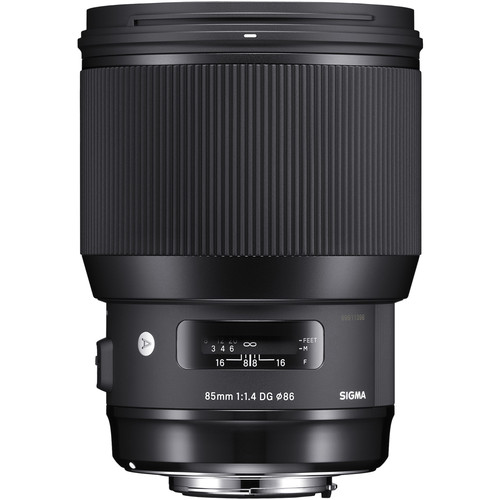
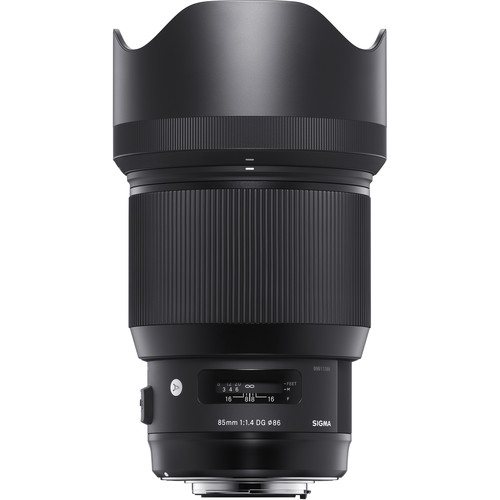
Despite all of that, I was a bit sad to hear that Canon's newest 85mm L would be a f/1.4 instead of a f/1.2, but then I remembered something - the Sigma 85mm f/1.4 Art was one of my favorite lenses I've ever reviewed - and the only lens to get two dedicated articles (here and here). At that point it became clear that the target for this lens was the Sigma Art, and you only needed to look at the minimum focus distance of the two - which is exactly 2.79' (85 cm) to know that is exactly Canon's target.
I also found myself with the Canon 85mm f/1.2L (which I've owned - twice) and Sigma 85mm Art that I rarely found a practical use for anything wider than f/1.8 because it's just too shallow to be practical. As such, I quickly got over my concerns about this lens not being an f/1.2 and judged it on its own merits.
The Perfect Portrait Lens?
85mm is famous for being a great lens for shooting portraits of people thanks to its ability to slim down your subject and bring the background in closer than wider lenses like the 50mm and 35mm. However, some people, myself included still think it's not long enough because it can still make your subject look wider (thus the old saying that the camera adds 15 pounds). Here's a shot of a very thin model who looks wider here than she appears in real life or in other photos taken with longer lenses (see here):
f/1.8 @ 85mm for 1/100 sec at ISO 125

This has always been my frustration with 85mm's, but they have the advantage that the lenses are still small enough that doing a f-stop smaller than 2.8 is still possible. This creates a benefit allowing you to creative things like keeping one eye in focus while letting the other eye go out of focus. The advantage of this is that you create a more intimate connection with the subject that creative types love yet OCD types hate.
The shot below illustrates what you'd likely get on a typical 70-200mm f/2.8 at 85mm where much more of the scene is in focus. If the scene is interesting this can be a good thing, but if it isn't then it can also be a bother:
f/2.8 @ 85mm for 1/100 sec at ISO 400

Another advantage of f/2.8 over f/1.4 is that the subject doesn't have to be on the same exact plane as the lens to be in full focus. In this shot I had the model tilt her head back to illustrate the flexibility you get with f/2.8 vs the dangers of going to smaller f-stop numbers as illustrated in the f/1.8 shot above.
In the end it is a creative decision and the beauty of this lens is that you can do both. With your 70-200mm f/2.8 zoom you are stuck with f/2.8 and can't separate your subject any better unless you stand closer at which point minimum focus distance challenges start to kick in.
All of these reasons combined are why the Sigma 85mm Art and 135mm Art have been such popular lenses with portrait photographers looking for something sharper than a zoom lens.
The Image Stabilization Difference

Using ambient light from overhead, I was able to easily do 1/6 sec handheld which is quite impressive for a shaky hand guy like me with arthritis and carpal tunnel syndrome. Here's the shot from above zoomed to 100%:
100% zoom of f/2.8 @ 85mm for 1/6 sec at ISO 100 image

I did get a usable shot at f1/4 sec, but it wasn't as sharp as this one or the very sharp 1/20 sec shot, so I declared 1/6 sec my practical minimum shutter speed for my hands with this lens. Obviously those with more steady hands are easily going to be able to beat me here.
I think this is really where things get interesting since the Sigma 85mm Art is slightly sharper.
If your going to be shooting moving subjects none of this matters as you'll need faster shutter speeds. If you are shooting on a tripod it doesn't matter either since you'd turn IS off. However, if this is going to be your walk about lens in normal lighting conditions this advantage could mean the difference between a crisp shot and a blurry one so that Sigma Art advantage would go away.
Given the recent ban on tripods in Zion and elsewhere, IS could be the game changer that makes the difference between getting the shot and not.
Sidebar: Impact of Shooting Shallow DOF
While I shooting for this review I took some photos of my son riding his bike on one of his favorite local trails:
f/2.8 @ 85mm for 1/640 sec at ISO 500

It took a few attempts for me to get everything exactly the way I wanted it for this shot since I was shooting handheld, but I eventually got it. As I was taking the shot I did one series with him pedaling away and thought it would be fun to share the impact of using a shallow depth of field (f/2.8 in this case) for a scene. Here's the first frame:
f/2.8 @ 85mm for 1/800 sec at ISO 640

and the last of the 10 frames in this series:
f/2.8 @ 85mm for 1/800 sec at ISO 640

You can step through them yourself here.
Good Bokeh vs Bad Bokeh
One of the great things about lenses with f-stop below 2.8 is that you get some really smooth bokeh, but is too much bokeh a bad thing? Consider this shot:
f/1.4 @ 85mm for 1/1000 sec at ISO 100

This lens makes such smooth bokeh that I found myself hating shots like the one above because the context of the scene was totally lost. What's more, any lens that is wide open (at its smallest f-stop number) is going to be softer than when stepped down. In the shot below, the scene itself had more contrast and the subject is sharper thanks to using f/1.8 instead:
f/1.8 @ 85mm for 1/800 sec at ISO 200

That said, I still think a shot like this is better suited for f/2.8 or perhaps even more to give more context about the surroundings. However, if I'm much closer to my subject such as is the case in this shot:
f/1.8 @ 85mm for 1/800 sec at ISO 200

f/1.8 removes distractions as would a little cropping if this wasn't a review using unedited photos. In this case the bokeh is a great thing as the busy background becomes smooth and the blur on the shirt and hands forces your eyes back to the main subject - the face. This is good bokeh and a great use of f/1.4 to f/1.8. Generally speaking, you'll get best results at f/1.8 - f/2.2 on any f/1.4 lens, so the decision to do f/1.8 results in a sharper face yet still offers the benefit of very good bokeh elsewhere to avoid distractions.
Consider this scene where choosing f/1.8 on a subject that isn't close by results in a clear understanding of what the subject is - the chairs:
f/1.8 @ 85mm for 1/400 sec at ISO 100

However, if you zoom in on it you'll notice that the fence, chairs, and tree aren't all of equal sharpness so you could go as high as f/4 and still improve the sharpness of the foreground subjects yet still take advantage of the distance of the objects in the background to have them less sharp and distracting:
f/4 @ 85mm for 1/80 sec at ISO 100

This is what I'd classify as good bokeh, but where less is more.
In the shot below is a nasty dirty window from the kids and the primary subjects are the pianist eyes and fingers. By choosing f/1.8 and carefully focusing it's possible to keep the primary subjects in focus and remove distractions in the background (mostly - it still would have been better to clean that nasty window - ha ha).
f/1.8 @ 85mm for 1/800 sec at ISO 1600 - In-Camera Monochrome Creative Style

Again, I'd classify this as good bokeh. Because I chose to use an in-camera picture style that made the image black and white, this is a shot that I'd be happy to say is done in-camera with no additional work.
Here's another example where f/1.8 gives a super sharp rose with some sense of depth into the rose while still removing everything else from the scene in a sheet of creamy bokeh:
f/1.8 @ 85mm for 1/500 sec at ISO 5000 - In-Camera Monochrome Creative Style

The decision to use the monochrome creative style along with the choice of f/1.8 leaves a photo that has a clear subject without distractions from noise (ISO 5000) or other elements in the scene (well except that glowing thing at 11:00 - ha ha).
None of these are unique to this lens, but for those reading this article wondering what the big deal is about a f/1.4 lens is - this is it. It's a great tool that allows you to create images that set your subject apart from the scene and dial in enough details to set context when desired or completely eliminate it.
The great bokeh of this lens really helps to accomplish this goal, so I can no longer see a reason why I'd ever want to even borrow the old Canon 85mm f/1.2L II. It was great for its day, but I think Canon made the right choice to go with f/1.4 as the minimum f-stop as anything below that is really too much and this leaves room for f/1.8 to really shine.
More Unedited Real World Shots
Just like all of the photos in this article, this section includes more 100% unedited shots taken with a Canon 1D X Mark II. The in-camera JPEG's are taken straight from camera and only renamed, but otherwise unmodified so click the photos to see the originals.
Unless noted, all photos were handheld without any support aids.
All photos are copyright Ron Martinsen - ALL RIGHTS RESERVED. You may view the photos while your browser is open to this article, but afterwards you must close and delete any copies on your machine. You may not edit, print, publish, save, link to, embed, video or otherwise use any photos from this article without written consent from Ron Martinsen.
You can find the full gallery of unedited images here, and/or you may click the photos in this article to see them exactly as they came out of the camera.
f/2.8 @ 85mm for 1/500 sec at ISO 1250
Because you must get closer to your subject, f/2.8 blurs out a lot more of the scene than one would experience with a 70-200mm f/2.8 at 200mm. It can be used to an advantage to make unsightly backgrounds like this look more appealing

f/1.4 @ 85mm for 1/200 sec at ISO 100
The challenge with f/1.4, in addition to being softer than f/1.8, is that if your subject isn't entirely on the same plane as the lens then you are going to lose the focus on an eye as you see here. Sometimes it can be just want you want, and other times in a shot like this it is more distracting as one would expect the camera right eye to be in focus.

f/1.8 @ 85mm for 1/500 sec at ISO 800
This lens focuses fast and was able to keep up with the rapid and unpredictable movements of an 8 year old hunting for and throwing rocks

f/1.8 @ 85mm for 1/500 sec at ISO 500
When reviewing images, I kept going back to the f/1.8 versions as they offer incredible sharpness of the subject yet still allow the background to vanish. In scenes where there's lots of contrast, like here, the context is still preserved without it being distracting

f/5.6 @ 85mm for 1/500 sec at ISO 2500
I shot this at several different f-stops, but f/5.6 made it clear that the boat was my subject but the birds and mountains weren't just smeared out of the scene. I loved f/5.6 on this lens too!

f/2.2 @ 85mm for 1/125 sec at ISO 640
f/2.2 was my preferred f-stop for the f/1.2L because that's where things got crazy sharp yet details in the background still vanished. f/2.2 is a great choice with this lens too as you can see here

f/7.1 @ 85mm for 1/100 sec at ISO 6400
Going up to f/7.1 and the distance of the background from the subject still eliminates distractions in the background, so I found it to be a good choice for when I wanted to provide more context (in this case, show off the beach). This is the beauty of this lens for portraits because it's easy when working near the minimum focus distance to go either way as demonstrated by the two photos above

f/5.6 @ 85mm for 1/125 sec at ISO 6400
If I had to knock this lens for one thing is that it isn't as naturally warm as the f/1.2L or the 16-35mm f/2.8L II. Those lenses were legendary for their nice contrast and warmth, but this lens seems to have lost a little bit of that advantage (or disadvantage if you didn't like it)

f/1.8 @ 85mm for 1/200 sec at ISO 1000
Busy backgrounds like rocks create a swirling effect, but if used properly the results can still work to your favor like the image above

f/1.4 @ 85mm for 1/13 sec at ISO 100 - handheld!!!
Yes, this is a handheld shot of a 8 year old who photobombed my long exposure shot. Fortunately he didn't move so I thought this was a fun shot. What was even more interesting though is that you can clearly see the focus area of a scene and the swirling pattern in the rocks again

Conclusion
At the time this article was written, this Canon lens was $400 more than the sharper Sigma 85mm Art that lacks image stabilization. Depending on the work you do without tripods using natural light, this could give the Canon lens a big advantage. However, if you are shooting landscapes on tripods or using a flash then that difference goes away, so the Sigma 85mm Art seems like the better deal. I'd definitely buy either over the dinosaur 85mm f/1.2L II or the pricy manual focusing Zeiss Otus 85mm.
With that said, I can recommend this lens for those who want a sharp 85mm with stabilization to compensate for shaky hands when shooting handheld. For everyone else, the Sigma 85mm Art series is still the lens to beat and my king of the 85mm's.
Where to Buy?
CLICK HERE to learn more or buy today.
Other articles you may enjoy
If you enjoyed this article, you may also enjoy these:
- Sigma 85mm Art
- Zeiss Otus 85mm
- Sigma 135mm Art (on a Nikon D850)
- Sony a7R III with the Sony FE 90mm f/2.8 Macro G OSS
- Canon 5D Mark IV
- Canon 5D Mark IV vs 1D X II - an unscientific comparison
- Canon 5Ds
- Canon 5DsR
- Canon 6D (vs Canon 5DM3 & D600)
- Canon 6D Mark II
- Canon 7D Mark II
- Canon 70D (Part II)
- Canon Rebel T6s/760D
- Canon 600EX-RT Flash First Look (ST-E3 RT)
- Canon 40mm f/2.8 STM Pancake Lens
- Canon 8-15mm f/4L Fisheye Zoom
- Canon 11-24mm f/4L
- Canon 16-35mm f/2.8L III (NEW)
- Canon 16-35mm f/4L vs 16-35mm f/2.8L II
- Canon 24-70 f/2.8L II (vs 24-70 f/4L IS Comparison)
- Canon 24-105mm f/4L IS II USM (NEW)
- Canon 70-200mm f/2.8L IS II USM First Look
- Canon 70-300mm f/4-5.6L IS vs 70-300 f/4.5-5.6 DO
- Canon 100-400m f/4.5-5.6L IS II USM
- Canon 200-400mm f/4L IS with 1.4X Extender
- Canon 300mm f/2.8L IS II at the Zoo
- Canon PRO-1000 17" Professional Printer
- Canon PRO-2000 Large Format Printer
- Tripod Recommendations
Enjoy these and more on the Reviews tab as well as Ron's Recommendations.
Disclosure
If you make a purchase using links found in this article, I may make a commission. It doesn’t cost you a penny more, but it does help to support future articles like this.