Showing posts with label 18-135mm. Show all posts

Friday, June 5, 2015

REVIEW: Canon Rebel T6s/760D with 18-135mm f/3.5-5.6 IS STM Lens (Part II of II)

Click to learn more
Canon EOS Rebel T6s/760D DSLR Camera (Body Only)

In the first part of my review, entitled REVIEW: Canon Rebel T6s/760D with 18-135mm f/3.5-5.6 IS STM Lens (Part I of II), I covered pretty much everything except for my bookshelf shots. As a result, I’d encourage you to read that now if you haven’t already.

In this installment I’ll finish up with a few more unedited real world snapshots and the bookshelf shots and give my final verdict.

Real World Snapshots Part II of II

As usual, these are all in-camera JPEG’s that have not been modified in any way outside of the camera beyond the filename and metadata. No changes have been made to the crops or color, so click to see the full-size originals to see exactly what you could expect if you took these photos.

You may view these photos for informational purposes, but you may not print, edit, upload, share, display, etc… these images for any reason without my expressed written and signed consent. ALL RIGHTS RESERVED!

Most of these shots are taken using camera default settings in Aperture Priority mode and Auto White Balance with no flash unless otherwise noted.

For more, click here for the first part of my review OR click here to view the full gallery.


f/5 @ 50mm for 1/1600 sec at ISO 100

The kit lens is sure to please beginners and those who have never had premium lenses


f/5.6 @ 18mm for 1/40 sec at ISO 400

f/5.6 is the sweet spot of this lens so my lack of a tripod on this trip forced me to settle for a lot of f/5.6 shots to keep my ISO as low as possible. For static subjects like this the image stabilization performed well.


f/5.6 @ 85mm for 1/125 sec at ISO 1000

Aspiring photographers will appreciate the easy access to exposure compensation via the Quick Mode Dial (not found on the T6i) to help with shots like this


f/5.6 @ 35mm for 1/60 sec at ISO 200

Pinch to zoom on the touch screen is super handy to do a quick verification to make sure you got the shot for handheld images like this with lots of detail


f/5.6 @ 27mm for 1/160 sec at ISO 320

The on-camera flash isn’t as bad as some that I’ve seen, so its better than nothing in a pinch


f/5.6 @ 18mm for 1/40 sec at ISO 160

Like all Canon’s, the default settings give great results with healthy warm skin tones that aren’t too far from reality (vs Nikon where they are more accurate but make people look ill unless you adjust the white balance away from the default setting)


f/5.6 @ 18mm for 1/160 sec at ISO 100

Since the kit lens doesn’t come with a hood, flare can be problematic. As a result, I’d highly recommend purchasing the hood to avoid unwanted flare.


f/7.1 @ 74mm for 1/640 sec at ISO 100

Under the right conditions this lens is sure to please…


f/5.6 @ 27mm for 1/30 sec at ISO 6400

But indoors is where both the lens and sensor will most likely disappoint parents 

For more, click here for the first part of my review OR click here to view the full gallery.

Bookshelf Test

Using a tripod, mirror lockup and a timer with camera default settings, I take these bookshelf shots to show off how a camera and/or lens performs under controlled testing. In this test, the 18-135mm kit lens performed very well at 18mm, but not so well at 135mm. The sharpest results are shown below for 18 & 135mm respectively.


f/5.6 @ 18mm for 8 sec at ISO 100

Click the above image to see it full size and zoom around. What you’ll notice is that it is laser sharp in the center and then it starts to get softer (blurry) with text the farther you get out to the edges. This happens due to the distortion which is common at 18mm, yet this lens seems to have quite a bit of distortion.


f/8 @ 135mm for 15 sec at ISO 100

Click the above image to see it full size and zoom around. What you’ll notice is that it is reasonably sharp, but not nearly as good as 18mm. This is typical of zooms – especially ones that span so much zoom range. There is some distortion even at 135mm, so I’d classify this as a lens worthy of its price. It’s not great, but it doesn’t suck either.


f/5.6 @ 18mm for 1/8 sec at ISO 6400

At its sharpest setting, this is showing the highest ISO I’d feel comfortable using. ISO 6400 is reasonably good, but 12,800 is only for emergency use. This is relevant because most parents photograph their kids indoors in very low light (typically lamps), and that requires high ISO’s to get the shutter speeds you need for the images to not be blurry when your kid is sitting mostly still.

Click the image above and zoom in to see how much digital noise you’ll see at ISO 6400 and the impact of the in-camera noise reduction (detail is lost during noise reduction). These results aren’t horrible, but there are other cameras out there that perform better than this.

18-135mm STM vs 11-24mm f/4L

The 11-24mm f/4L is one of the sharpest lenses Canon has ever made, so for kicks and giggles I thought I’d compare to see how this lens at 18mm f/8 compares with the 11-24mm f/4L. Nobody buying a T6s could ever afford the 11-24mm f/4L, so this is purely an academic comparison to show how sharp it is in the center but how that goes away quickly at the edges due to distortion.

(left) 18-135mm STM vs 11-24mm f/4L (right)
Center sharpness
Click image to zoom

In the shot above, I’ve zoomed in to show how the kit lens is extremely sharp in the center. You can click that image for a larger view, but it definitely is impressive in the center with these settings – especially since the lens on the right cost $3000 USD!!!

(left) 18-135mm STM vs 11-24mm f/4L (right)
Sharpness away from center
Click image to zoom

Now notice above that as you go to the you can see how the kit lens starts to get less sharp. Take notice of the words “Japanese Woman” and see how it feels like you need to put glasses on when you look at the left side, but the right is sharp. This is expected given the price difference of the lens, but this softness at the edges is something to consider when taking photos with this lens at 18mm.

Where you really see the difference is in the distortion you get with the kit lens as shown below:

(left) 18-135mm STM vs 11-24mm f/4L (right)
Distortion
Click image to zoom

Now before you start thinking that the 18-135mm lens is “just as good” as a $3k lens, keep in mind that this comparison is done with the best image I could get with the kit lens in controlled conditions. When you start to zoom or change apertures, the quality of the kit lens deteriorates quickly.

The lesson here is that if you need ultimate sharpness with the kit lens, f/5.6 or f/8 at 18mm is going to serve you well.

Conclusion

Overall this is a fun and easy camera to use that offers a little more functionality for people wish to go beyond the keeping the camera in full auto mode all of the time. The top LCD and Quick Mode Dial both make the T6s worth the extra money over the T6i if you can afford it. However, if you are never going to take the camera out of auto mode then don’t bother as these features are only for those interested in advanced shooting techniques.

I was very disappointed in the auto-focus (AF) performance of the STM kit lens, so those seeking something better should to look at my lens recommendations. Unless you are doing primarily video where STM is necessary, a non-STM lens is going to offer better AF performance. Even a slightly softer 24-105mm (which is easily found at a reasonable price on the used market) will offer much faster autofocus speed based on my real world testing.

I’d recommend this camera for amateur photographers, but I’d advise against it for parents. The Nikon D7200 is going to be a better investment for parents with a few hundred extra to spend. See my recommendations page for my latest advice.

Product Advisories

There always seems to be some white disc conspiracy theory with every camera that comes out these days, so camera makers are getting used to it. Canon has quickly issued an advisory and free repair offer for impacted customers should this happen to you, but I didn’t see this problem during my testing.

SIGMA has also issued an update to the firmware for their lenses when using Live View with T6x models. Click here to learn more.

Where to order

Click here to learn more or order on the B&H web site.

Other articles you may enjoy

If you enjoyed this article, you may also enjoy these:

Disclosure

If you make a purchase using links found in this article, I may make a commission. It doesn’t cost you a penny more, but it does help to support future articles like this.

Tuesday, August 21, 2012

REVIEW: Canon EF 40mm f/2.8 STM–Pancake Schmancake?


Canon EF 40mm f/2.8 STM Pancake Lens
Buy now from Adorama or B&H

When Canon announced its new 40mm pancake lens speculation quickly picked up about Canon entering into the mirrorless market (which materialized with the EOS M). However, detailed observers quickly noticed that this was an EF lens – not an EF-S or the new EF-M style lens. What this means is that this lens can be used on both full-frame as well as cropped sensor cameras by Canon.

Now why would Canon release a tiny lens like this for a big bulky full-frame camera? Well that’s where the other new moniker on this lens comes into play – the STM designation. STM stands for “Stepping Motor” but what this really means is that it’s a new motor mechanism that is quieter and seemingly faster than Canon’s Ultrasonic Motor (USM) found on most of its lenses. The reason why they did this is that when you do video on a DSLR those big USM lenses would make noise that was audible in the videos audio track, so when Canon added full-time continuous autofocus to the Canon T4i they needed a lens that could keep up with the performance demands without making too much noise.

Crunchy Pancakes?

Now a logical person would naturally think that because of STM and the tiny size of this lens that it would be super quiet right? Well oddly enough the unit I tested was audible from an arms length away while its much larger cousin – the EFS 18-135mm IS STM (see here) – is actually is near impossible to hear at a hand length away. So in the noise department this lens left me rather disappointed. Granted, it did outperform even nice L lenses with USM in terms of output noise, but I wouldn’t call this a super quiet lens.

Is this lens as sharp as everyone says it is?

It’s been a tough summer for bloggers so I suppose many are looking for the next hot thing to boost their incomes, but I’ve got a good day job that pays the bills so I’m here to tell you the truth about this lens. The truth that I experienced with this lens is that it’s about what you’d expect for a $199 prime lens – it’s super sharp in the center, but the quality quickly fades from there as you can see in this blur index from my favorite lens analysis site – slrgear.com:

Canon EF 40mm f/2.8 STM Pancake Lens Blur Index
Full details at http://slrgear.com/reviews/showproduct.php/product/1523/cat/10

If you aren’t used to reading one of these things then let me point out that 0 is pink which is the sharpest you can get and the scale on the right goes up from there in color to the most extreme blur of 12. Blur isn’t all bad because it can be desirable in a portrait lens, but better lenses typically have great edge to edge sharpness once you get them to f/8. With that fact in mind, you’ll see that this lens is really sharp in the center but quickly fades into a less sharp area and then gets inconsistent at the edges. This is common for cheaper or older designed lenses, and given the price of this lens isn’t that bad.

What this blur index tells me is that this is a better portrait lens than it is a landscape lens (where you typically want good edge sharpness). Now compare that to Canon’s 24-105mm f/4L IS USM lens at f/8 (and 35mm because there’s no 40mm mark on the lens):

Canon EF 24-105mm f/4L IS USM Blur Index
Full details at http://slrgear.com/reviews/showproduct.php/product/145/cat/11

What this tells me is that the 40mm pancake lens is going to be sharper in the dead center but the 24-105mm is going to be better at the edges which you can clearly see in these bookshelf test images:


Canon EOS 5D Mark III, 40mm STM, f/8 @40 mm, 13s, ISO 100 (Click for original)
Notice how the center is super sharp, but the white text on the pea green
book on the far right is soft compared to the image below?


Canon EOS 5D Mark III, 24-105mm, f/8 @40 mm, 13s, ISO 100 (Click for original)
Notice how the center is softer, but the white text on the pea green
book on the far right is much sharper compared to the image above?

You have to view both images at full-size and pixel peep to see the differences, but you’ll notice the blur index is pretty accurate. The center of the image is sharper for the pancake lens and the edge is sharper for the 24-105mm just like the blur index indicates.

Now to be fair the pancake lens does a good job considering the fact that it’s 1/5th the cost of the 24-105mm and it’s sharper in the center. Perhaps this is what all of the fuss is about, but honestly this lens just didn’t impress me in real life. It’s build quality reminded me more of the super cheap nifty fifty than it’s better built 50mm f/1.4 sibling. This on top of the aforementioned noise (something also found with the nifty fifty) made less than impressed with this lens right from the start.

You can’t always judge a book by its cover so I figured I must be missing something about so I took it out and shot hundreds of shots with it. I expected to be dazzled like I was when I first used the 50mm f/1.4, but the real result was that I was left with a lot of soft shots that failed to impress. Of course there were some successes like the flower shot at the beginning of this article, but they were few and far between. When using it on the camera it was made for – the Canon T4i – I was even more disappointed. As you can see below:


Canon EOS REBEL T4i, 40mm STM, f/8 @ 40 mm,13s, ISO 100
Click for a full-size original

Conclusion

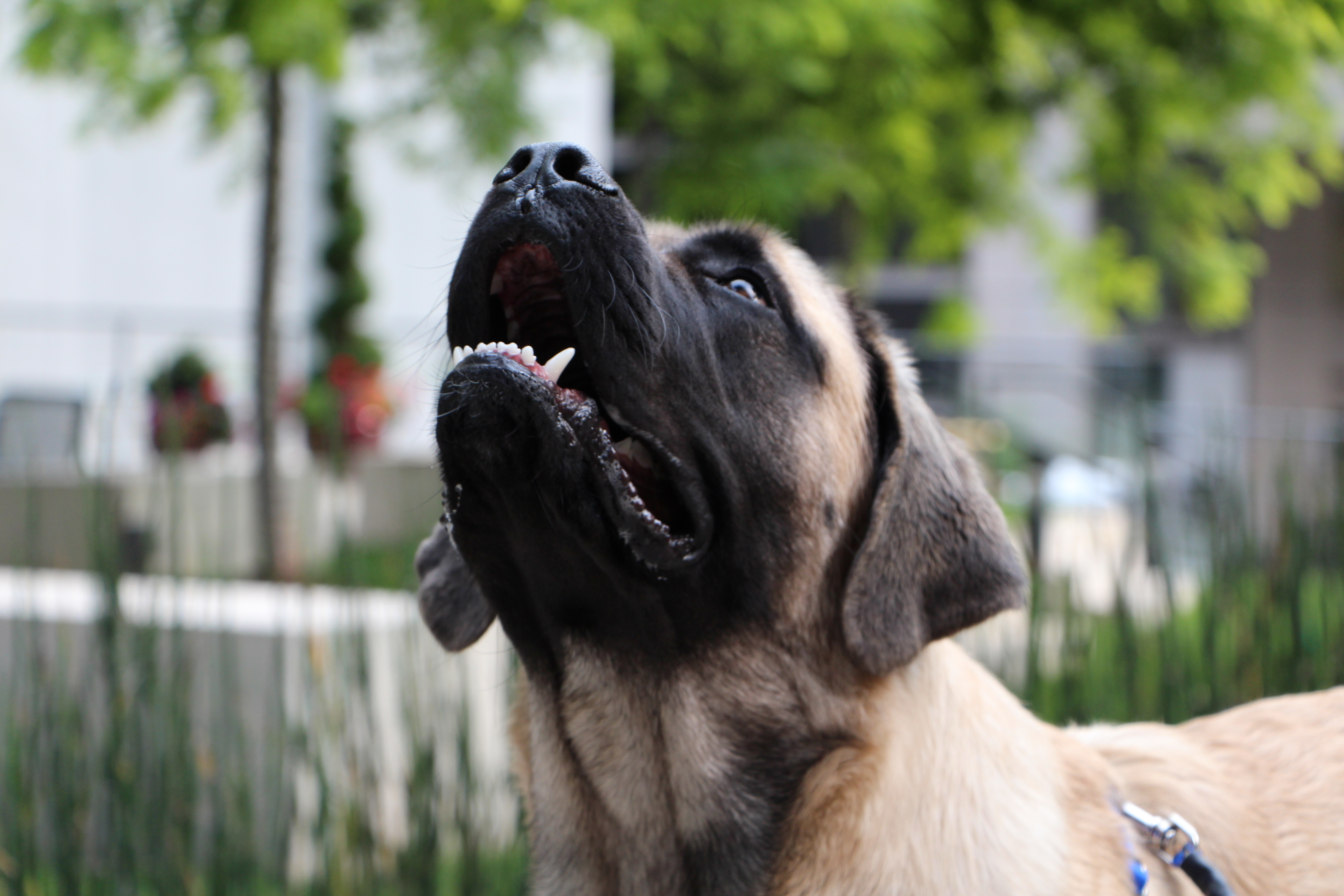
You can use the data from the blur index here and on SLRGear.com to judge for yourself, but overall this lens left me underwhelmed. Sure, it’d be a decent lens if you’re going to shoot a portrait with them in the center like this mastiff puppy:


Canon EOS REBEL T4i, 40mm STM, f/3.2 @40 mm, 1/160, ISO 100

However, you typically want a longer lens for portraits (I prefer at least 100mm and ideally 200mm+). This makes it too short for portraits, too noisy for video, too slow for sports. Honestly, I’m pretty unimpressed!

In real life I found that this lens performed so poorly that I most often preferred shots with the EF-S 18-135mm f/3.5-5.6 IS STM (like this or this) instead.

The other STM lens – EF-S 18-135mm f/3.5-5.6 IS STM

There’s actually several STM lenses, but the EF-S 18-135mm f/3.5-5.6 IS STM is one you can get as part of the kit for the T4i. As you can see from the blur index below, this lens is closer to the L than the pancake lens:

Canon EF-S 18-135mm STM Blur Index
Full details at http://slrgear.com/reviews/showproduct.php/product/1522/cat/11

Of course, the blur index doesn’t show you the reality that the 18-135mm has much more chromatic aberrations than the pancake or 24-105mm lens. It also doesn’t show you that the images from the pancake lens didn’t have the same warmth I’d get from 18-135 STM. However, this zoom lens actually impressed me much more because it’s a zoom that is quieter and performs quite well as a travel lens (especially with landscapes).

For video there was no comparison as the 18-135 STM significantly outperformed the 40mm 2.8 pancake by a significant margin.

The Bottom Line

If money is burning a hole in your pocket and you think the 40mm STM is for you, then buy it. However I’d caution you to open it carefully, treat it gingerly and save the box as I suspect that once the thrill wears off many will quickly become bored with this limited use lens. I’d suggest considering the 50mm f/1.4, 24-105mm or Sigma 85mm  as better alternatives. If you’ve gotta get a STM lens, then go for the T4i kit.

Ordering Information

Please support this blog by ordering from B&H who loaned me this gear so I can bring you articles like this:

Other articles you might enjoy

If you enjoyed this article, you might enjoy these as well:

Disclosure

I borrowed the 40mm STM, 18-135 STM and T4i from B&H with their permission for this review and returned it afterwards.

If you make a purchase using links found in this article, I may make a commission.

Monday, August 20, 2012

Canon T4i Review–Part II–Image Quality and Video


Nice depth of field and bokeh
f/4 @ 40 mm (pancake lens),1/125, ISO 100
Manual single focus point inside the flower

See my article entitled “REVIEW: Canon Rebel T4i with Real World Photos & STM Lenses” for the first part of my review. In this article I discuss additional details about image quality, performance and video that were not addressed in the first article.

A word about the EFS 18-135mm STM kit lens

Honestly, most kit lenses – especially on entry level cameras – usually suck, so it’s rare that I have much good to say about them. While the optics of the EFS 18-135mm STM kit lens aren’t going to come close to what you’d find in a Canon L lens, I was surprised to find that it was quite usable as a starter lens.

In my testing I found the EFS 18-135mm STM kit lens (B&H and Adorama) to outperform the 40mm pancake (B&H and Adorama) in many ways on the T4i (more on that in another article). As a result, I feel like this is a kit lens worth using until you can afford some better glass. I also feel like it’s worth keeping for doing video simply because of the fast and silent focusing it can do automatically when mounted to a T4i. In this respect, I found the STM lenses to outperform their L lens counterparts in terms of video continuous autofocus usability.

Compared to the Sony NEX-7 and Fujifilm X-Pro1

Once upon a time I never would have even dreamed of discussing a non-DSLR camera in a review of a DSLR, but the competition is improving so it’s worth mentioning now. I also still think that if your long-term strategy is to grow into better DSLR’s or use the great lenses offered by the major DSLR platforms of Canon and Nikon, then you should always start with a DSLR.

Now if you read my Sony NEX-7 review then you know that I think it beats the pants off the X-Pro1 and is competitive with DSLR’s. In testing the T4i against the NEX-7, I’d have to give the Sony the nod  as being the better camera. I’ve been a long time fan of the Rebel series so I never thought this day would come, and apparently Canon didn’t either.

The Rebel T4i is a great camera in many ways, but it’s days of stomping the compact cameras has officially ended. Of course the T4i is cheaper so if your budget is tight you can still find solace in having a great camera that is a good starting point for growing into the Canon system. However if your objective is just to buy a camera that takes great images and you don’t plan on investing in many lenses, then the Sony NEX-7 is going to give you better images in a smaller form factor for sure.

Does sensor quality make a difference? (A 5D Mark III comparison)

Now nobody in their right mind should think that I’m saying that would be T4i buyers should get a 5D Mark III because it has a better sensor. For well over $2000 more, it should! However, I think it’s helpful to do a side by side comparison just to inform people on what the differences are so you can level set your expectations when using a entry level camera. As much nonsense as there is on the web (and from electronics store sales people) you’ll hear people say things like “just as good” when discussing how the Rebel T4i compares to it siblings. However, there is a measurable difference that I think you should be aware of so you don’t go nuts thinking that your lens is back focusing or you have a defective camera. You get what you pay for, and while I think think the T4i is a great camera – it doesn’t really come with a high-end sensor.

I’ve included images below. You should click each image to see full size versions of each image and compare them in two separate browser windows. For beginners who might not see the differences right away, let me help orient you on the similarities and differences:

  1. If you are going to just put small images on the web or print 4x6 prints then it’s going to be tough to notice the difference between the result you get with a T4i vs a high end camera like the 5D Mark III. The reason why is because detail is lost when you make an image small, so all of that data loss starts to put them on a much closer level. However, you’ll look at see that the 5D Mark III image (bottom) has a broader range of colors. At first it may seem that the T4i is better because its brighter, but that’s only because it can’t capture the range of color tones (called Dynamic Range) found in the 5D Mark III image. Where this becomes most obvious is in the shadow areas where upon close inspection you’ll see more shades of browns and black. People typically can’t  place their finger on this difference other than to say that the 5D Mark III image just feels richer.
  2. Notice how that both images use the same identical lens, but the T4i requires a 15 second exposure to get a correct exposure whereas the 5D Mark III only needs 10 seconds. This is a characteristic of a better sensor that translates into faster shutter speeds (which means lower ISO’s needed), so you have less noise in your images – it also often means less motion blur in the automatic modes of the camera. Since the most common complaints of new DSLR owners are noisy and blurry images, it’s easy to see here why that happens because the lesser sensor gives you a double dose of trouble – even if you use the same exact pro lens. If you use cheap kit lenses then problem is compounded even worse, so when not using a tripod typically you’ll find many higher end sensors just give you a sharper image with less noise.
  3. Now one advantage (or disadvantage – depending on your intent) of the smaller sensor of the T4i is that you have a deeper depth of field. To see this below look at the front of the bookshelf at the bottom of both photos and notice how the 5D Mark III image is kind of blurry. To the beginner the greater depth of field of the T4i is preferable as that is what we are used to in our point and shoots. However, blur isolates a subject so it can come in handy and can be harder to get in the smaller sensor. Where this really comes into play is on the edges of the image where the T4i’s smaller sensor will only use the sharpest part of the lens, so it’s sharpness on the text of the books on either edge of the frame will be better than the 5D Mark III. All of these points are advantages shared by all cropped sensors (including the 60D, 7D, etc…) so some landscape photographers find the cropped sensor to be preferable, whereas portrait photographers typically prefer the full frame as edge blur is more desirable in portraits.


T4i f/8 @100 mm, 15s, ISO 100 on a tripod using the 70-200mm II lens.
Click for original


5D Mark III with the same lens and settings
but the camera indicated 10 seconds for a correct exposure

There’s other differences like distance from the subject that favor the cropped sensor, but I’ve excluded that from this comparison to give you a better set of images to explore for other characteristics.

Here’s a 100% crop of images from both cameras so you can see some of the differences previously discussed. The T4i does a great job, but the larger sensor of the 5D Mark III is just going to give you more detail and color (for both raw and in-camera jpeg).

image

image

If you look at the two images above and struggle to see the differences, or simply don’t care about the differences, then your money is best spent on a entry level camera like the T4i. The same is true if you’ll never print large images (13x19” or greater) as small prints are very forgiving and rarely show much of the extra details of the larger sensor. You will see a difference, but it will be subtle at smaller sizes. At larger sizes there’s no comparison – the larger sensor is mandatory. It’s also worth noting that magazines and most prints sold are letter size or smaller, so they typically won’t benefit much from the better sensors. Good post-processing can typically narrow the gap so that it’s indistinguishable even to most trained eyes.

It’s also worth noting that if you were to take previous generation cameras (especially full frame sensors of two generations back), you’d probably find that the T4i is as good or better in some cases. The reason why is that technology has improved drastically so the detail possible on a smaller sensor is better than ever.

The lesson here – don’t become obsessed with pixels and sharpness. If your budget is stretched buying a T4i then don’t stress – it’s a decent camera that will give most normal users fantastic results. It’s not “as good as”, but it’s still pretty darn good.

Real World Video

Okay, I’m not a videographer so this is really more like really bad video (think Blair Witch Project bad). However, it’s the stuff that any parent typically has hours of sitting on their hard drive (or on old tapes). These are all done with auto ISO in manual mode at 1/30 sec and f/3.5 to 5.6 using the camera defaults. I found the AF FlexiZone Multi mode to be the most effective with my son, but you need to pay attention and occasionally tap the touch screen LCD to help the AF system focus on the right place for the best results. In these videos I did NOT do this so this is what the camera did all on its own. The single zone is the most accurate, but is useless with kids. The face tracking did terrible in my experiments so I’ve spared you the blurry videos it gave me.

As I mentioned previously, the STM lenses are worth their weight in gold when doing video as they outperform non-STM lenses by a large factor. From a nice short minimal focus distance to fast and silent continuous auto focus – they offer the best results I’ve seen from a DSLR. A cheap camcorder or point and shoot will outperform in terms of focus performance, but the image quality of a DSLR blows them away. Manual focus is still the way to go for proper video, as is having better stabilization that isn’t found on any DSLR.


13 seconds - follow movement with kit lens


1:26 - circle subject and zoom in and out with kit lens


20 seconds – backlit with 40mm pancake lens


1:11 – indoors at dusk with kit lens
This is what you could expect from typical birthday party scenarios

As much as I hate doing video, what I saw in the T4i is promising for the future of DSLR’s. It’s offering of continuous AF is a Canon first that isn’t even found on the 1D X or 5D Mark III. It’s certainly usable to video kids birthdays if you don’t mind the occasional out of focus moment (as you can see in my videos above).

I’m no fan of the 40mm pancake lens for video

The 40mm pancake lens really let me down while shooting video. Nearly all of the videos I shot were blurry and out of focus as the lens failed to keep up with moving action. If I manually focused or had a stationary subject it would be fine, but forget about using it with kids. It was also much noisier than the kit lens (by a significant amount), but I never noticed it making that much of a difference on the video itself.

The kit lens performed reasonably well as you can see from the videos above. It’s not perfect, but it’s much more usable (and beats full time manual focusing of moving action).

Sound Quality

A lot of noise was made in the press release about the sound quality improvements in the T4i, but you be the judge. Honestly, I thought the sound sucked and was more muffled. Perhaps internal sound proofing was added to help with keeping camera focusing noise out of the video, but the sounds in the audio felt very muffled to me. In short, pick up an external mic if you care about sound quality.

More Real World Sample Images

A dirty little secret for a long time in the world of reviews was that many reviewers were afraid to show their out of camera shots for fear of being judged. After all, any great photo you’ve seen is typically processed to give it that perfect crop, vibrant color, perfect exposure and amazing sharpness. In some cases this was all done in-camera by gifted photographers with great lighting and exciting subjects.

Many consumers seeing these amazing shots would think that they only needed to buy that camera and/or lens and get those great shots. However, when they did they were often disappointed with their dull, lifeless shots because that’s not real world. I touch on this point on my other blog in the article entitled “Let the eyes tell the story”.

I have broken that trend – intentionally – and I’m happy to see that other major sites are starting to follow (to a lesser degree). What you see on this blog in my camera reviews are shots that normal people would take (i.e., family shots) under real world conditions (crappy lights, environments, backgrounds, etc…) without any post-processing. I share the in-camera JPEG’s so you can see exactly what you’d expect to get with some basic knowledge of photography. In short, these are the worst “keepers” (meaning that obvious user error shots are often excluded) you could expect to get from a T4i:


Decent Dynamic Range
f/4.5 @42 mm (kit lens), 1/50, ISO 100, No Flash, AWB
The RAW file can be used with Viveza or the 7 Point System
to brighten the dark area at the bottom of the sculpture


Great Zoom (216mm effective) from the 18-135mm kit lens
f/5.6 @135 mm, 1/200, ISO 160
Taken from the same spot as below


Great wide angle (28.8mm effective) from the 18-135mm kit lens
f/3.5 @18 mm, 1/800, ISO 100
Taken from the same spot as above


Good detail and bokeh from the kit lens
T4i, f/5.6 @135 mm, 1/320, ISO 1250


Decent autofocus
f/5 @ 69 mm,1/160, ISO 250


Unless you enjoy beatings, don’t use the in-camera flash on your spouse!
Invest in a 430 EX II or
600EX-RT instead
f/5 @ 74 mm,1/125, ISO 100, Flash Fired


Can’t afford an external flash? Find good light and let the T4i do it’s job
f/4.5 @35 mm, 1/125, ISO 200

T4i in-camera HDR is pretty lame, so plan to get HDR Efex Pro 2 instead
In-camera HDR chooses three different exposures and combines them (originals not preserved)
Compare to below with no HDR


Program (P) Mode Exposure – NO HDR
f/6.3 @40 mm, 1/320, ISO 400
Polarizers are helpful for reflective glass


Kit lens does well at f/11
f/11 @18 mm, 1/50, ISO 800


Noiseware or Dfine come in handy to remove noise indoors
f/3.5 @18 mm, 1/125, ISO 3200
Willing to pay a lot more for better results indoors? Read this!

See the full gallery at http://ronmart.zenfolio.com/t4i for more images. Read my review of Zenfolio to see why I prefer to store my pictures there.

See my article entitled “REVIEW: Canon Rebel T4i with Real World Photos & STM Lenses” for the first part of my review where I have my conclusion and other thoughts.

Where to buy

Here’s where I recommend purchasing from:

  • Order now from B&H
  • Canon EF 40mm f/2.8 STM
  • Canon Rebel T4i Body Only
  • Canon Rebel T4i w/18-55 IS
  • Canon Rebel T4i w/18-135 IS STM
    ORDER NOW from Adorama
  • Canon T4i Body ONLY
  • Canon Rebel T4i with EF-S 18-55 IS II lens
  • Canon Rebel T4i with EF-s 18-135 IS STM
  • Canon EF 40 F2.8 STM lens
    Other articles you may enjoy

    Disclosure

    If you make a purchase using links found on this blog, I may make a commission. I appreciate your support and thank you for using my links or sharing links from this blog on your own favorite forums.

    I was provided a loaner camera and lenses from B&H so I could bring this article to you.

  • Thursday, June 7, 2012

    PRESS RELEASE: Canon Rebel T4i, EF-S 18-135mm f/3.5-5.6 IS STM and EF 40mm f/2.8 STM lenses

    Canon Rebel T4i
    Order now at Adorama

    UPDATE: Please see my article entitled “REVIEW: Canon Rebel T4i with Real World Photos & STM Lenses” for more info on this camera and these lenses.

    The New EOS Rebel T4i DSLR Camera Puts The Power And Creativity Of DSLR Stills And Video At Your Fingertips

    Silent and Continuous Autofocus in Video, The EOS Rebel T4i Lets People Re-Live Magic Moments Through Stunningly Crisp Video and Incredible Stereo Sound

    LAKE SUCCESS, N.Y., June 8, 2012 – Canon U.S.A., Inc., a leader in digital imaging, today announced a new flagship model in its most popular EOS Rebel line, the Canon EOS Rebel T4i Digital SLR Camera. The new EOS Rebel T4i features incredible image quality with an 18-megapixel CMOS (APS-C) sensor, DIGIC 5 Image Processor that helps capture all the action with high-speed continuous shooting of up to five frames per second (fps) and an extended ISO range of 100-12800 (expandable to 25600 in H mode) that gives photographers the opportunities to take the EOS Rebel T4i into more shooting situations than ever before.

    The camera includes a revolutionary new autofocus (AF) system to help achieve fast, sharp focus and smooth HD video. The new AF system includes a nine-point all cross-type sensor array, and new Hybrid CMOS AF which achieves fast focus when shooting stills or video in Live View mode. Much to the pleasure of aspiring student filmmakers and parents everywhere, the Rebel T4i features Canon's new Movie Servo AF providing a quiet, continuous AF during HD video recording when using one of Canon's newly introduced Stepping Motor (STM) lenses. The silent continuous autofocus when shooting HD video helps ensure the camera only captures the sounds of the scene being recorded. When combined with the camera's new Vari-angle Touch Screen 3.0-inch Clear View LCD monitor II and intuitive "fingertip" controls, touch-menu and advanced still and video capabilities, the EOS Rebel T4i stands as Canon's most "consumer-friendly" DSLR to date.

    "Our Rebel line of cameras bridges the gap between the casual photographer and someone looking to advance their photography and capture moments in new and creative ways. The EOS Rebel T4i boasts full HD video with AF and touch-screen navigation, inspiring even more photographers and videographers to explore the creative options made possible with DSLR cameras and lenses," said Yuichi Ishizuka, executive vice president and general manager, Imaging Technologies & Communications Group, Canon U.S.A.

    New AF Capabilities

    One of the most significant upgrades to the EOS Rebel T4i is a dramatically upgraded AF system including a nine-point all cross-type AF array, with a high-precision dual-cross f/2.8 point at center. The EOS Rebel T4i is the first Canon camera to feature the new Hybrid CMOS AF system which increases AF speed by reducing the camera's need to "hunt" for focus. The result is fast continuous AF when shooting photos and movies in Live View. Because the camera's cross-type AF points have two-dimensional contrast detection, the EOS Rebel T4i provides highly accurate focus regardless of your shot composition and ensures great focus no matter where the subject is located in the frame. The addition of the dual-cross point in the center allows for much faster and precise focusing for photographers using high-speed f/2.8 lenses.

    Using the touch panel, parents can select their child on the LCD screen and the camera will remain focused on that child while they stay in-frame, ensuring sharp focus in crowds and group shots. The new AF system enables Touch Focus for shooting photos and movies in Live View. To make capturing photos even easier, a Touch Shutter function can also be enabled, whereby selecting a subject on the LCD screen, the camera will instantly take a photo, once focus is locked.

    Continuous AF during HD Video Recording

    For the first time in a Canon EOS DSLR, the EOS Rebel T4i includes Canon's new Movie Servo AF for recording video. When used with Canon's new EF and EF-S STM lenses, the camera can provide smooth and quiet continuous AF while recording video. This technological breakthrough enables the new EOS Rebel T4i to achieve AF while still retaining a DSLR camera's signature background blur and image quality, producing stunning videos of parties, events, summer vacations or graduations.

    When shooting video with Canon's STM lenses, AF also remains silent, helping ensure you only capture the sound of the scene being recorded. The EOS Rebel T4i features a built-in stereo microphone, a first for the Rebel line, that includes an attenuator function to reduce audio distortion in extra loud situations.

    Canon's First Touch-Screen DSLR

    Another Canon first, the EOS Rebel T4i includes a best-in-class Vari-angle Touch Screen 3.0-inch Clear View LCD monitor II featuring 1.04 million dot resolution for unparalleled, clear viewing. The electro-static touch-panel screen is the most advanced that Canon has released to date with multi-touch capabilities allowing photographers to use familiar gestures such as "pinch-to-zoom" and "swiping" to scroll between pictures. Camera operation has been simplified through this feature allowing for Touch Focus or Touch Shutter controls via the vari-angle touch-screen. The vari-angle touch-screen flips out to the left and rotates 180 degrees forward and 90 degrees backward, making tough above-the-head and low-to-the-ground shots easy, and allowing improved views during photo or video capture. That means the overhead shot taken in a crowd or at a graduation march just got a little easier to shoot.

    Improved Imaging Performance Features

    The EOS Rebel T4i helps novice photographers capture great images and video, even in low-light with a range of new and upgraded modes:

    • Handheld Night Scene
    • Video Snapshot
    • HDR Backlight Control
    • Scene Intelligent Auto
    • Multi-Shot Noise Reduction

    Canon's new shooting modes (Handheld Night Scene, HDR Backlight Control and Multi-Shot Noise Reduction), take multiple pictures, and combine them - in camera - to help capture a wider dynamic range, minimize the image grain or noise, and produce more vivid colors so landscapes and city scenes are as breathtaking as when seen in person.

    Families have enjoyed coming home from a vacation or outing with a fun, short Video Snapshot highlight reel shot on their Canon camera to share the full story of their adventure. Now with the EOS Rebel T4i users will also have the option to delete, cut or re-order the clips before exporting the Snapshot album to post or share.

    Canon's Scene Intelligent Auto mode - the "green" mode on the dial - analyzes the scene being shot, taking into account faces, colors, brightness, movement and contrast, to select appropriate camera settings and help produce the best possible image. This mode has been enhanced to deliver the best possible exposure, particularly when shooting in low-light.

    New STM Lenses and Accessories

    To leverage the unique, new shooting functions of the EOS Rebel T4i, such as EOS Full HD Movie with continuous AF, Canon is introducing two new unique lenses, the new EF-S 18-135mm f/3.5-5.6 IS STM lens and new EF 40mm f/2.8 STM lens. Both new STM lenses includes Canon's new Stepping Motor technology, which allows the lenses to smoothly and silently focus, and when used in combination with Canon's new EOS Rebel T4i Movie Servo AF feature, achieve continuous AF while recording video. The new stepping motor technology in both lenses quietly focuses allowing the EOS Rebel T4i's stereo microphone to only record the sounds of the scene being shot.

    The versatile EF-S 18-135mm f/3.5-5.6 IS STM lens offers the right combination of size, weight, image stabilization and focal length, allowing photographers to capture wide-angle or telephoto photographs and video. This lens is a great option for photographers who may only want to carry one lens with them for both wide landscapes, and close-ups. Appearing for the first time in a Canon EF lens is Dynamic IS (Movie Shooting Mode only) that uses a wide image stabilization correction range to help ensure steady video even when shooting while walking.

    The new EF 40mm f/2.8 STM lens offers an ultra-slim, lightweight design that helps photographers avoid overwhelming their subjects with a large lens and to remain discreet in sensitive shooting situations without compromising performance. The "pancake-style" lens boasts an aperture of f/2.8 making it an ideal lens for capturing portrait stills or stunning video. The lens is under an inch thick when attached, making it easy to carry and fit conveniently into a purse or pocket.

    The EOS Rebel T4i is also compatible with Canon's previously introduced GP-E2 GPS Receiver that can be mounted to the camera's accessory shoe. The GPS unit was created to serve outdoor photographers; it records shooting locations including latitude, longitude and altitude, as well as camera direction. A Logging function can tell how far a photographer has traveled as well.

    Availability

    The EOS Rebel T4i Digital SLR camera will be available at the end of June for an estimated retail price of $849.99 for the body alone; $949.99 bundled with an EF-S 18-55mm f/3.5-5.6 IS II lens kit and a Movie Kit bundle for $1199.00 with the new EF-S 18-135mm f/3.5-5.6 IS STM lens.

    The new EF 40mm f/2.8 STM lens and the new EF-S 18-135mm f/3.5-5.6 IS STM will also be available separately at the end of June at an estimated retail price of $199.99 and $549.99 respectively.

    PRE-ORDER NOW from Adorama
    • Canon EF-S 18-135 f/3.5-5.6 IS STM $549

    Pre-order now from B&H

    Disclosure

    If you make a purchase using links in this article, I may make a commission.