Showing posts with label a6000. Show all posts

Friday, January 27, 2017

REVIEW: Sony a6500 (Part II of II) - Good camera but not with the FE 24-70 f/2.8 G Master Lens


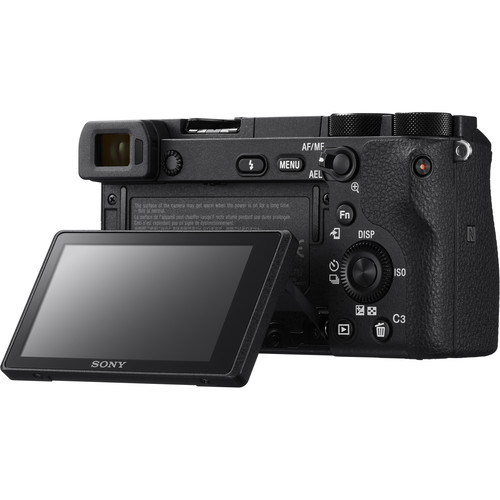
Sony Alpha a6500 Mirrorless Digital Camera (Body Only)

If you haven't already, please check out part one in the article titled REVIEW: Sony a6500 & 24-70 f/2.8 GM (Part I of II) as this review picks up where that left off.

Random Camera Body Thoughts

This camera features the same articulating display as the a6300 that is better than nothing but doesn't allow for selfie shots (a good thing?) and often doesn't do what you want when you find yourself wanting an adjustable LCD.

What I did often do was accidentally change the focus point when I brought my eye up to the viewfinder as my house would bump the screen and move the focus point. This irritated me quite bit, but I got used to it.

The annoying Sony menus are just as bad as ever, despite some minor changes that some suggest are improvements but for me it's much of the same.

The excellent eye tracking AF still requires you to set the camera to continuous autofocus and press a button to engage it, but it still works very well as did its predecessor. In this shot I gave it a spontaneous test and it successfully found his eye and not those of the distractions in the background:

Copyright Ron Martinsen - ALL RIGHTS RESERVED
f/4 @ 25mm for 1/250 sec at ISO 4000
Eye AF still works great

Unfortunately this image was softer than expected which was due to the performance of my test lens and being at f/4 with it. Given a sharper lens, this should would have only been better as the eye AF worked brilliantly.

All the rage about this camera body has been about its improved burst mode performance, but I'm a Canon 1DX Mark II owner so if I care about burst mode I go grab that camera. As a result, I didn't do much burst mode  shooting. I did confirm that it can quickly bang out 110 frames before the buffer fills, but it takes quite some time for it to flush that buffer even using a fast SanDisk 64GB Extreme PRO SDXC UHS-I Memory Card. I also had mixed results with the accuracy, but given then fully frame (FE) lens (vs a cropped E-mount) I was using I decided not to explore this feature in depth.

Copyright Ron Martinsen - ALL RIGHTS RESERVED
f/5 @ 35mm for 1/60 sec at ISO 200
Even shooting on a snowy day for a couple hours, the battery performed very well

Finally, battery life was excellent in my testing (even in the cold) and Sony's excellent focus peaking worked extremely well as usual but I still wish they'd offer more color choices.

Bookshelf Test

For my bookshelf shots I always clean the lens, reset the camera to factory default, turn off stabilization (Steady Shot), use a single small AF point focused around the world tolkien on the red book, set the camera level on a tripod and then use the timer on aperture priority to get a clean shot. I've done this hundreds of times, but this time I was shocked at the results.

If you missed the first part of this review, the lens being tested with this camera is the Sony FE 24-70mm f/2.8 GM Lens.

The worst lens I've tested in years? Huh?!!!!!

Click to see full-size JPEG created from original RAW
f/2.8 @ 24mm for 25 sec at ISO 100 - 1st attempt
See here for the 2nd attempt shot

Thinking I must have obviously done something wrong, I repeated the entire process again and even used a new cleaning cloth on the lens - again the same results. The reason for my concern was extreme softness when wide open as shown here:

image
Cheap kit lens results were not what I expected from a $2000+ USD lens

To give the Sony every benefit of the doubt, I couldn't show you the JPEG's like I normally would because they were just too bad. Instead, I used the RAW files with the latest version of Lightroom and chose Camera Standard for the Camera Calibration Process 2012 Profile and I enabled Profile Lens Corrections.

I've never given a camera this much advantage in my testing, but I felt this camera needed it given what I was seeing with this lens.

I can only conclude that this could be one of three issues:

  1. Despite using a ziploc, perhaps condensation occurred when shooting in the snow and some inner element is smudged.
  2. I've got a bad lens that wasn't assembled properly or got dirty when assembled.
  3. This lens simply isn't as good as many people says it is when paired with this camera.

DxO test with the a6000 using this lens seem to indicate that it is much softer than when paired with the phenomenal Sony a7R Mark II, but no kidding right? Still, could it be this much worse?

Unfortunately Imaging-Resource lens test (formerly slrgear.com) didn't exist for this lens, so I have to assume #1 & #2 which is unfortunate as I won't likely have a chance to retest this lens / camera combo.

UPDATE: 24-70mm GM on the Sony A7R Mark II 

As promised, I decided that the results from this lens were so bad that I wanted more verification if it was the lens or the camera. Thanks to Jeff Goldner who generously loaned me his A7R Mark II so I could do this. Please note that I didn't want to reset all of Jeff's settings so these shots have DRO Off which is why they feel darker.

After some testing tonight, I've concluded that the problem is definitely the lens - and that's sad given both its price and the hype about it. Here's the f/2.8 bookshelf shot:

Click to see full-size original JPEG
f/2.8 @ 24mm for 1.6 sec at ISO 100
It's not the camera, it's the lens - it's just soft at f/2.8 when you view the original

When you zoom into 100% (and click below to see the true 100% image) you see that even the mighty A7R Mark II confirms this lens is just soft at f/2.8.

Better camera - same result

For fun, I included the 70mm here which shows the same bad results:

Click to see full-size original JPEG
f/2.8 @ 70mm for 2.5 sec at ISO 100
Things don't get much better at 70mm either

Better camera - same result

So I have to say that I'm very unimpressed with this lens, so unless I have a really bad copy I  wouldn't sink $2000 USD into this lens.

it should be noted that this lens, like all lenses does get much better at a couple stops past wide open so f/5.6 looks pretty good. See later in this article for those results and click here to see the full gallery of bookshelf shots with the Sony A7R Mark II with the 24-70mm GM lens.

For reference, to see what the Sony A7R Mark II is capable of, check out the results possible with the 90mm G Master lens - http://photos.ronmartblog.com/lens/sony/90mm.

Moiré pattern issue

image[5]

The moiré pattern issue I highlighted in part II of my a6000 review was present in a big way which was very disappointing given the fact that there wasn't incredible sharpness that typically comes with other cameras that have this issue (most frequently due to the lack of a low pass filter),

It should be noted that the Sony A7R Mark II does not show this problem (but the Mark I did slightly on occasion).

f/5.6 & f/8 didn't suck as much (of course)

Click for full size
f/5.6 @ 24mm for 10 sec at ISO 100
Better, but I still prefer the 16-24mm Zeiss results

Click for full size
f/8 @ 24mm for 20 sec at ISO 100
Also better and about the same as above


Sony a7R Mark II f/5.6 @ 24mm for 8 sec at ISO 100
While there is more distortion, the image quality is good - not stellar - but good

Comparing at 100% with the a6300

Maybe my eyes are just used to looking at the Canon 1DX Mark II with the Sigma 85mm Art series lens, but I expected more out of this lens at this price point:

f/8 @ 24mm for 20 sec at ISO 100

In fact, if I look at 16-24mm Sony Zeiss lens I tested with here you can see that it's much better:

Sony a6300 f/8 @ 70mm 100% View
Sony a6300 f/8 @ 70mm for 20 sec at ISO 100 
using the Sony Vario-Tessar T* E 16-70mm f/4 ZA OSS Lens

This is a heavy weight this lens that comes it in at 81 grams heavier than the Canon 24-70mm f/2.8L II and just 14 grams lighter than the Nikon 24-70 f/2.8G ED). When you couple this with its huge 82mm filter size and 5.35" 136mm) length that exceeds the Canon & Nikon, it definitely seems like the Zeiss 16-70mm might be the better way to go!

Oh and if you are wondering what this lens is like at 70mm or higher ISO's, then be sure to check out the full gallery of images at http://photos.ronmartblog.com/sony/a6500.

ISO Testing

While you can view a lot more bookshelf shots here, here's a quick look at the noise found at ISO 6400:

f/5.6 @ 24mm for 1/6 sec at ISO 6400 - RAW PROCESSED in Lightgroom
ISO 6400 from RAW processed in Lightroom (no noise reduction)
(Camera Standard and Lens Correction)
Click the image for a full size version of the thumbnail
(or
click here for the full size image)

The RAW processed 6400 ISO version, even in Lightroom, looks a lot better than expected. However, the standard in-camera default noise reduction destroys the image as shown below:

f/5.6 @ 24mm for 1/6 sec at ISO 6400 - Unedited In-Camera JPEG)
Screen capture of in-camera JPEG for the raw file above
Default noise reduction destroys details pretty bad!

UPDATE: Sony FE 90mm f/2.8 Macro G OSS Lens
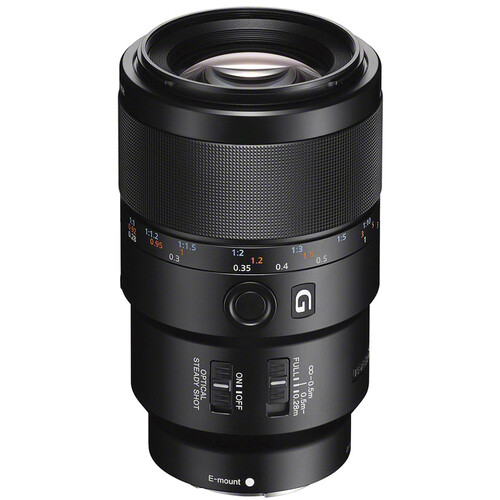
Click to learn more about this lens at B&H
Sony FE 90mm f/2.8 Macro G OSS Lens

Good news boys and girls, thanks to my friend Jeff Goldner, I was able to test the a6500 with a proper lens - the Sony FE 90mm f/2.8 Macro G OSS. This lens shows what this camera is really capable of, and it was a lot more than the lame 24-70mm GM was showing us.

While it naturally doesn't have the dynamic range and detail of the flagship A7R Mark II (90mm tests shots here), the results are very sharp and detailed:

image
Click for the full in-camera JPEG original of this image

I also upload more in the gallery here, but this validates my original concerns. I'm glad about that because this is a camera that I've loved, even if the need for it is reaching its end of life given all the great choices on the market these days.

More Real World Shots

See the first part of this article for a bunch of real world shots and more info about my methodology, but here's a few more:

Copyright Ron Martinsen - ALL RIGHTS RESERVED
f/4 @ 42mm for 1/200 sec at ISO 100
Standard Creative Style does a good job, but...

Copyright Ron Martinsen - ALL RIGHTS RESERVED
f/4 @ 42mm for 1/250 sec at ISO 100
Landscape Creative Style is still my favorite - I love the color I get with it!

Copyright Ron Martinsen - ALL RIGHTS RESERVED
f/9 @ 42mm for 1/80 sec at ISO 200
Assuming I had a good lens, I wanted to do some depth of field tests at f/9,
but in retrospect the only value of this shot was the detail on the close snow covered leaf

Copyright Ron Martinsen - ALL RIGHTS RESERVED
f/3.2 @ 42mm for 1/200 sec at ISO 100
When I compare the subject sharpness at both open and closed down apertures, the results favored f/9 over f/3.2 for detail in the foreground subject

Conclusion

Sadly, it turned out to be one of the worst camera/lens combos I've tested and really the first Sony camera and lens combo to let me down in quite some time. In fact, It made me wished I had chosen a different E Mount lens as this combo had me doing a lot of duplicate testing in the hope that I could pinpoint the problems to something I could fix instead of this camera I wanted to love.

Since I loved the a6000 and a6300 using the the Sony Vario-Tessar T* E 16-70mm f/4 ZA OSS Lens, I'm going to give Sony the benefit of the doubt and suggest that users go with that combo over the more expensive Sony FE 24-70mm f/2.8 GM Lens tested here. I suspect/hope that would give results closer to that I'm used to seeing from Sony these days.

UPDATE: The results with the 90mm G Master prove my point above, so when paired with a good lens this camera is still a decent camera. That said, the remainder of my conclusion still remains mostly unchanged...

I do find the $1398 USD price tag of this camera (at the time this was written) to be quite expensive for what you get - especially since I'm not seeing huge improvements over the a6000 (currently $548 USD) and a6300 (currently $998 USD).

Unless you need the video or burst mode improvements, I'd suggest going with one of the previous aX00 models over the a6500. I'd also prefer an easier to grip and full-frame sensor of a a7 II  (see my a7 review) over a cropped sensor at this price point, so it also seems a better choice if the incredible a7R II is out of your reach.

My once most heavily recommended camera has moved to my look elsewhere list. It's not that it's a bad camera (when paired with a great lens), it's just that it's moved into the full DSLR price range. The 7D Mark II and excellent Nikon D610  offer much more in terms of dynamic range and platform benefits with the range of lenses and flash accessories without a huge penalty in weight / size, so I think the need for this camera has faded away.

Where to Buy?

CLICK HERE to learn more or buy today.

Other articles you may enjoy

If you enjoyed this article, you may also enjoy these:

Disclosure

If you make a purchase using links found in this article, I may make a commission. It doesn’t cost you a penny more, but it does help to support future articles like this.

Friday, April 22, 2016

REVIEW: Sony a6300 with Sony 16-70mm f/4 Lens (Part II of II)–The Best Camera for Parents on a Budget

Sony Alpha a6300 Mirrorless Digital Camera

Click here to get it now via Amazon Prime

The Sony a6300 is an impressive camera, no doubt, which is why I couldn’t contain my praise in the first part of my review entitled REVIEW: Sony a6300 with Sony 16-70mm f/4 Lens (Part I of II)–The best Sony AF ever?.

The more I used it, the more I liked it. What’s more, my wife even started asking me if we could get one as she loved the size and performance. Given the great 4k video, it’s not out of the question that I might invest in one of these for my personal use as it is a heck of a lot of camera for this price.

Video Review

Here’s a short video that gives you some basics about what I like about this camera and shows off some of its cool features:


Video Sample

Despite my disdain for doing video, I couldn’t help but share at least one 4k video that gives you a basic idea of how good it is:


You must view full screen via here on a 4k display like the NEC PA322UHD to see the full 4k

Be sure to view the “stats for nerds” by right clicking on the video to ensure you are really seeing 4k – you may have to play it again to see the full 4k video.

Here’s a 4k frame grab from YouTube that illustrates what you should see if you are really viewing the 4k version:

image
Click the photo to see the full size 4k screen grab of the 4k video playback in YouTube

Bookshelf Test / ISO Performance


f/8 @ 70mm for 20 sec at ISO 100

Even up to f/8, the image quality is super sharp

100% View of f/8 using ISO 100
100% View  of shot above

Personally I found ISO 6400 to be my comfortable maximum ISO as shown here:

ISO 6400

Click here to view over 20 bookshelf shots that you can download and view in full resolution to see how this camera performs at various ISO’s and apertures.

The results here are definitely better than some lower end DSLR’s I’ve tested, so don’t let the small size fool you – this is a highly capable cameral for photographers of all skill levels.

Real World Shots

People don’t read manuals and they rarely take time to learn how to use their cameras, so when I test I like to have a combo of brain dead shooting (like many would do with cell phones) sprinkled with some serious shooting where I actually dial in all settings manually. This results in what I call real world shots because they are unplanned, unedited shots that just occur during the course of everyday life.

I hope you enjoy them compared to the heavily processed shots found elsewhere as they more closely represent what real people will really get out of this camera if they were to take it home and use it themselves.

The shots below and elsewhere in this article are completely unedited in-camera JPEG’s that feature camera defaults unless otherwise noted. These images may be viewed when reading this article, but you may not print, edit, modify, redistribute, etc… any of these images in any way. They are copyright Ron Martinsen – All Rights Reserved.

Click the photos to see full-size, unedited original in-camera JPEG’s.


f/4 @ 70mm for 1/250 sec at ISO 6400

Not too shabby for ISO 6400!!!


f/4 @ 70mm for 1/250 sec at ISO 400

While this may not have been the best lens, it still did a decent job and offered some respectable bokeh it was summoned such as was the case in this shot


f/4 @ 20mm for 1/200 sec at ISO 100

Kids don’t stay still, and Kai is no exception. I was happy with the face detection that still gave me a decent focus on the face even when Kai was totally random and unpredictable. I couldn’t have got this shot with most high end DSLR’s


f/4 @ 59mm for 1/400 sec at ISO 4000

I stuck my camera in a log and took a shot without even seeing where my son was. While this may not be the most perfect shot, I was impressed that it still came away with a relatively decent focus on the eye – especially since my Kai was running


f/4 @ 18mm for 1/250 sec at ISO 100

Lens flare is inevitable for a shot like this, but that green flare at the bottom was something I wish wouldn’t have happened. Perhaps a better lens like the Sony FE 24-70mm f/2.8 GM would have avoided doing that.


f/5.6 @ 70mm for 1/125 sec at ISO 125

My eyes couldn’t spot the two moose in the 9 o’clock position but fortunately the camera could and it got decent focus, so this was something that made my wife a fan of the AF system


f/4 @ 23mm for 1/1250 sec at ISO 1000

You won’t confuse this for the a7R Mark II when it comes to dynamic range, but its images will be better than you think on your display than they appear through the viewfinder LCD.


f/4 @ 70mm for 1/125 sec at ISO 800

The in-camera noise reduction smears textures too much, but this camera gets the shot and it’s RAW images give you the option to try using a third any noise reduction product like Noiseware


f/5.6 @ 70mm for 1/640 sec at ISO 100

Default in-camera processing with auto white balance is a little bland, but it often gets the shot that gives you something that will clean up nicely during the photo editing process


f/4 @ 70mm for 1/500 sec at ISO 125


f/4 @ 64mm for 1/500 sec at ISO 500

Look carefully at the tallest flower and you’ll notice some speck on it. If you zoom to 100% of the full-size file you’ll see that it’s actually a bug – that’s pretty decent resolution!


f/4 @ 61mm for 1/500 sec at ISO 200

Great sharpness on the subject and butter smooth bokeh elsewhere – you’ve gotta love it!


f/4 @ 56mm for 1/80 sec at ISO 1000

If your settings are dialed in properly, the built-in stabilization will increase your chances of a sharp shot even if you have a shaky hold like I do!


f/4 @ 70mm for 1/500 sec at ISO 320

Shooting into the sun with a dark subject, but the AF did great and the meter was spot on for an accurate exposure


f/4 @ 70mm for 1/500 sec at ISO 100

You sacrifice some sharpness for this bokeh as you can see in the f/5.6 shot


f/4 @ 70mm for 1/500 sec at ISO 200

Click here to get a full gallery of images taken while I was reviewing this camera..

Conclusion

With outstanding autofocus featuring brilliant eye tracking, excellent 4k video support, impressive burst mode speed and all the features any serious photographer would really want – this is a camera that I can easily give my highest recommendation.

Yes, this is a serious camera for serious pro photographers so if you can justify it then get even better results by skipping this lens in favor of the Sony FE 24-70mm f/2.8 GM Lens and go for the Zeiss Batis 18mm f/2.8 Lens if you need a pro quality wide angle lens.

Where to order

Click here to learn more or order at the B&H web site, or click here to buy it at Amazon.

Need to edit your photos?

Click here for info about the best free software on the web that used to cost over $800, but Google has made free.

Interested in something even better? Check out my What plug-ins should I buy? article.

Other articles you may enjoy

If you enjoyed this article, you may also enjoy these:

Disclosure

If you make a purchase using links found in this article, I may make a commission. It doesn’t cost you a penny more, but it does help to support future articles like this.

Wednesday, April 6, 2016

REVIEW: Sony a6300 with Sony 16-70mm f/4 Lens (Part I of II)–The best Sony AF ever?

Sony Alpha a6300 Mirrorless Digital Camera (Body Only)

I really loved the a6000, so when I heard the 6300 would add a significantly improved autofocus system, a viewfinder with twice the resolution, 4k video and an improved burst mode I got excited – very excited.


f/4 @ 51mm for 1/200 sec at ISO 100

Unpredictable subjects are no problem for the a6300 – with eye AF lock, it just gets the shots with no hassle or skill required

You can see the full-comparison with the a6000 here at B&H, but the biggest thing that caught my attention was the improved AF. I won’t beat around the bush as I can’t hold back my enthusiasm – yes, this AF system is legit – the hype is justified. In fact my favorite feature on the a7R II was it’s incredible AF but it still had its flaws. So far in my early testing, this cameras AF system seems to have leap frogged all other Sony cameras I’ve tested – including the a7R II which is saying a lot.


f/4 @ 70mm for 1/640 sec at ISO 100

My eyes also perceive a better dynamic range for the shots I’ve taken so far.There are rarely hot spots and even tough colors like bright yellow and red render faithfully to what my eyes witnessed in real life – much like (but to a lesser extent) than I observed with the a7R II

In the hand everything feels pretty much the same as the a6000, so if you want my thoughts on any of that see my a6000 review. Suffice it to say, this s a very small camera but usable – although I still find myself wishing it had one more dial and a joystick.

A Good Lens Returns

Sony Vario-Tessar T* E 16-70mm f/4 ZA OSS Lens

I was very satisfied with this lens in my a6000 review so I decided to stick with it again. I have no regrets with that decision as the OSS performed admirably and the AF system performance didn’t seem to be hampered by this lens in any way.

Real World Shots

People don’t read manuals and they rarely take time to learn how to use their cameras, so when I test I like to have a combo of brain dead shooting (like many would do with cell phones) sprinkled with some serious shooting where I actually dial in all settings manually. This results in what I call real world shots because they are unplanned, unedited shots that just occur during the course of everyday life.

I hope you enjoy them compared to the heavily processed shots found elsewhere as they more closely represent what real people will really get out of this camera if they were to take it home and use it themselves.

The shots below and elsewhere in this article are completely unedited in-camera JPEG’s that feature camera defaults unless otherwise noted. These images may be viewed when reading this article, but you may not print, edit, modify, redistribute, etc… any of these images in any way. They are copyright Ron Martinsen – All Rights Reserved.

Click the photos to see full-size, unedited original in-camera JPEG’s.

Click here to get a full gallery of images taken while I was reviewing this camera..


f/4 @ 70mm for 1/1600 sec at ISO 100

Literally my first shot with camera default settings seconds after it was unboxed. I think the fly was vibrating too much for the 1/600 sec shutter speed, but it nailed the focus otherwise. Oh and how about that dynamic range and color!!


f/4 @ 34mm for 1/160 sec at ISO 1600

Seconds later with full auto mode, again perfect eye focus – this is cell phone easy to operate – and look how clean for ISO 1600!!!


f/4 @ 17mm for 1/160 sec at ISO 400

With a baby waving a toy around and Ara’s slender Asian eyes at an angle, I figure there was no chance of acquiring focus so I went to full auto (aka “mom”) mode – it nailed it


f/4 @ 44mm for 1/80 sec at ISO 2000

I’ve taken this shot thousands of times when unboxing new cameras to review, and with zero time to get to know this camera it nails a perfect shot thanks to the eye tracking auto focus


f/4 @ 34mm for 1/250 sec at ISO 800

Ara pretty much sums up about how I feel about the Sony eye tracking autofocus – WOW! All cameras should have this! How on earth it can track her squinting Asian eyes?!!!!


f/4 @ 19mm for 1/640 sec at ISO 100

The viewfinder accurately represented what I captured, but it was a little washed out compared to the luscious saturated image I got using default settings and auto white balance


f/4 @ 19mm for 1/800 sec at ISO 100

Puke – I went to shade white balance and vivid and almost barfed when I saw the result! This is definitely no Fujifilm in this respect, so I’ll be sticking with auto white balance and standard


f/4 @ 70mm for 1/1250 sec at ISO 100

Look at how sharp this is? It’s one of those “remind me why I need a DSLR anymore” shots that makes me feel stupid for not switching over to the Sony camp!
Pixel peepers might like this version better.


f/4 @ 44mm for 1/320 sec at ISO 100

No flash, no manual adjustments to exposure or metering – it just handles backlighting brilliantly


f/4 @ 35mm for 1/200 sec at ISO 100

The trees in the background are blown out a little more than I would have hoped for but that’s only because this camera was doing so well everywhere else I started mentally comparing it to the a7RII which definitely isn’t fair. This is a testimony to how good the a6300 is though that I would even consider them to be in the same league!


f/4 @ 51mm for 1/250 sec at ISO 100

Dappled light is usually creates unrecoverable hotspots for cameras of this price range, but even the in-camera JPEG wasn’t entirely blown out. In fact the hottest hot spots in this shot were only 242 on the threshold layer in Photoshop – that’s HDR composite performance!


f/4 @ 25mm for 1/200 sec at ISO 100


f/4 @ 39mm for 1/125 sec at ISO 100

For fun I decided to test f/4 vs f/5.6 vs f/11 vs f/22. See below for the others.


f/5.6 @ 39mm for 1/60 sec at ISO 100

Sharp with slightly more depth of field, the f/5. shot was probably the best of the bunch


f/11 @ 39mm for 1/60 sec at ISO 400

Despite the sensor size, f/11 does extremely well. I’d definitely  consider this a usable aperture on this camera, which is more than I can say for some DSLR’s with similarly priced lenses.


f/22 @ 39mm for 1/60 sec at ISO 1600

Diffraction and lens softness result in a f/22 shot that feels more like f/4 but without the sharpness. I’d probably never go past f/11 in real world usage of this camera and lens combo.


f/4 @ 21mm for 1/100 sec at ISO 100

The a6300 holds it own with any APS-C class sensor out there and in many ways exceeds the competition. Even wide open, the sharpness at the edges and smooth bokeh was admirable.


f/11 @ 20mm for 1/60 sec at ISO 500

Again at f/11 and this is a very solid shot with great depth of field and sharpness that beats many camera and lens combos costing twice as much


f/4 @ 35mm for 1/100 sec at ISO 100

This camera kept taunting me as it performed very well at pretty much everything I threw at it on my first real day of testing.I kept thinking “wow, I’d love one of these”

Click here to get a full gallery of images taken while I was reviewing this camera..

Conclusion

Click here to read part II and my conclusion.

Where to order

Click here to learn more or order at the B&H web site.

Other articles you may enjoy

If you enjoyed this article, you may also enjoy these:

Disclosure

If you make a purchase using links found in this article, I may make a commission. It doesn’t cost you a penny more, but it does help to support future articles like this.