Showing posts with label RX100 III. Show all posts

Thursday, September 14, 2017

A Point and Shoot Beats Most DSLR Portfolio Shots

All of the following photos were taken with a point and shoot (and no, it wasn't a Leica) which I serve up as evidence that it's more about the photographer than camera (although this is a pretty damn good camera too).

All images are Copyright Douglas Dubler 3 - ALL RIGHTS RESERVED. You may click to view full size versions in Google Chrome, but you may not save, print, download, link to, repost, etc... any without written consent.


"Summertime Boy" - 1/1250 at f/5 ISO 100 (-1 1/3 EV)


“Peruvian Jungle Lily” - 24mm at the closest focusing distance ( less than 8 inches) At f5.6


f/6.3 for 1/40 sec at 24mm (-1 EV)


"Lilies" - 24mm (widest) end of the zoom lens. At f4.5 at almost the closest focusing distance

And the camera was...
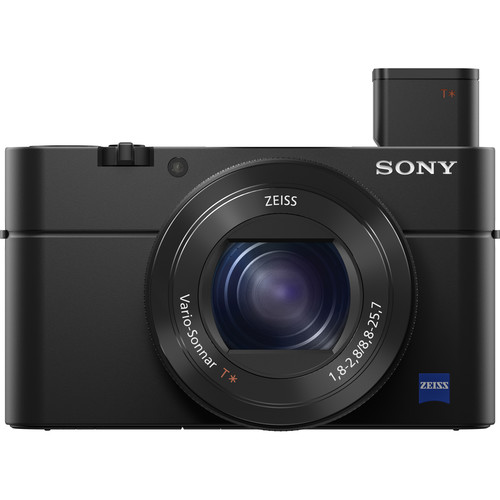

Sony RX100 IV  at B&H (review)
Also on available at Amazon

Yes, the Sony RX100 IV was used for all of those shots except the first one which was actually taken with he Sony RX100 III!

Of course, to be fair these were taken by one of the greatest living photographers of our time, Douglas Dubler (website). This legendary photographer has shot more magazine covers than most photographers have (or will have) portfolio caliber shots in their lifetime. He's also been the featured photographer for the launch of major products from Nikon, Epson and so many more. Simply put, these weren't taken by a mere mortal, but it does show off what this camera can do.

In Douglas Dubler's own words


24mm for 1/160 sec at f/8 ISO 100 (-1 EV)

Many people who are familiar with my work most likely associate me with high resolution capture and large format gallery prints. Much of this work is/was done on medium format digital backs or high megapixel DSLRs. Lately I have been exploring a different direction. Several years ago I purchased a Sony RX100 III for my girlfriend and began giving her photography lessons. As her photography progressed I noticed a look that I began to admire. 


24mm for 1/80 sec at f/5.6 ISO 100 (-1 EV)

They were done mainly at the 24mm focal length at the closest focusing distance (around 4 or 5 inches ). The small sensor gave her more than adequate depth of field at modest apertures (f4-5.6).  The wide angle lens gave just a little distortion which enhanced the subject. My best description is a hybrid of environmental and semi Macro.


24mm for 1/60 sec at f/5 ISO 100 (-1 EV)

Inspired, I began to emulate the effect with my A6500 and larger A7RII. Even with the APS-C sized sensor in the A6500 with various focal length lenses from the Sony 12-24mm ( on the A6500, a 18-36mm), to many different Zeiss,Sony and Sigma prime lenses I couldn’t get the look.  If I was shooting flowers to get the depth of field I would end up with a shutter speed that was too slow (wind vs. flowers!).  So I borrowed her camera and spent a few days at the New York Botanical Garden seriously photographing flowers. It took me one day to work out my approach but I was very happy with the beginning results.


"Maleficent Tree" - 24mm for 1/160 sec at f/5.6 ISO 100 (-1 1/3 EV) RX100 III

The next step was to make some prints, the whole point of photography.  With a little editing in my favorite Capture One V10 and of course B&W conversion done with Nik’s Silver EFex Pro 2 I was ready for the litmus test..  With my Epson P5000 and Epson’s new Legacy Platine paper I made prints that rivaled the best silver-gelatin prints.   As a test, at the beginning of one of my classes I had the students look carefully at one of  the prints and guess what camera I had used. Unanimously they declared a high resolution professional DSLR or mirrorless camera. I showed them the diminutive Sony and at first they thought I was joking. I assured them I wasn’t.


24mm for 1/60 sec at f/4 ISO 100 (-1 EV)

Since then I went out and purchased a MarkIV model which is around my neck whenever I leave my house. Even on my bike I can easily carry it in a small bag around my waist. Now no one even looks at me and I blend in with the iPhoners. I hand hold almost all of the images and as a result am able to shoot many more images. It doesn’t mean I will abandon my abstract Macro studies with the larger cameras and tripod but I have a feeling I will always have this camera hanging around my neck…

Douglas Dubler's thoughts on a couple shots


Black Dahlia - 24mm@f5.6@1/80sec, ISO 100, exp.comp.-1.3 stops

I found these two blossoms in perfect juxtaposition, full face and profile, which I am always looking for. They were the last shots out of 250 exposures that I did during my B&W class at NYBG last week.

I was actually on my way out of the garden and, in exiting, revisited the flowers I had shot earlier at around 6 P.M. I was tired after a long day of teaching but instinctively knew that those last few minutes of sublime light (exactly 7:11 P.M.) reward those who are patient. 

Processed in Capture One V10 and B&W conversion done in Nik Silver Efex Pro 2.


“Empress Lotus”

I have been trying for quite some time to get a good shot of a lotus blossom. For me that meant getting directly over the flower. Not so easy when you consider they grow in water, in this case, water that is over 5 feet deep. I surveyed all of the lotus in bloom and decided this was aesthetically my favorite. All I had to do was wait for the best light.  At around 7:10 P.M. the sun was no longer directly on the flower but was creating a beautiful soft illumination that seemed to be emanating from within the flower.

With some help from my friend Steve Titus (shown below) I was able to get an almost vertical camera angle and with the advantage of the articulating LCD could precisely compose the shot. It still took over 40 shots to get this precise uncropped composition.

Post processing, I had my friend Irfan Yonac do some digital enhancement using an “analog film” technique. It was the final step in the evolution of this photograph. Shot at 28mm@ 100 ISO @ f5.6 @ 1/200 sec, exp.comp.-1.0 stops.

Processed in Capture One software available at B&H.

Here's a funny behind the scenes shot of what it took to get this shot...


Conclusion

My review shows what mere mortals will get with this camera, but it's fun to see that in the hands of an X-Rite Coloratti Master like Douglas what is possible!

I really hope you enjoyed this guest blog from as much as I did. If so, please leave comments and check out more of Douglas's work on Instagram, Facebook,  or his website. Here's a couple more guest blogs from Douglas with his amazing work:

And here's one where Douglas breaks out the big camera that will really blow your mind:

Thanks Douglas!

Sincerely,
Ron Martinsen

Want to do a workshop with Douglas?

Contact me if you are interested in working with Douglas or doing a workshop with him in New York City.

Other articles you may enjoy

If you enjoyed this article, you may also enjoy these:

Enjoy these and more on the Reviews tab as well as Ron's Recommendations.

Disclosure

If you make a purchase using links found in this article, I may make a commission. It doesn’t cost you a penny more, but it does help to support future articles like this.

Tuesday, July 22, 2014

Sony RX100 III - The Best Quality Point and Shoot I’ve Ever Tested (Review Part II of II)

Sony Cybershot DSC-RX100 III Digital Camera - Selfie Mode

This is my third time reviewing a Sony RX100 series camera and I’ve reviewed quite a few Sony’s over the years. I always fall in love with the size and sexiness of the RX100’s, yet I always find myself at the end of the review feeling a bit underwhelmed thinking – is that it?

Don’t get me wrong, this is an excellent camera, but I immediately ask myself “for nearly $800 price tag (at the time this was originally written), is this really the best bang for the buck?” With that in mind, I did a search on B&H on July 21, 2014 to see what else is out there for the $800 – $900 USD range:

Canon EOS Rebel SL1 DSLR Camera with 18-55mm Lens Deluxe Kit

Probably a better video camera, but bulky and only native ISO 6400

Nikon D5300 DSLR Camera with 18-55mm Lens

Good camera with great features, but it’s bulky and this is definitely no Zeiss lens

Nikon 1 J4 Mirrorless Digital Camera with 10-30mm and 30-110mm Lenses

While these always underwhelm me too, at least you get decent interchangeable lenses

Nikon 1 V2 Mirrorless Digital Camera with 1 NIKKOR VR 10-30mm f/3.5-5.6 Lens Kit

Definitely more my style than he J4, but bulky and last gen technology

Canon EOS Rebel T5i DSLR Camera Kit with EF-S 18-55mm f/3.5-5.6 and 75-300mm f/4.0-5.6 III Lenses
This is a pretty good camera with great video performance, but alas still bulky

Leica D-Lux 6 Edition 100 Digital Camera

Sexy, small and a Leica – hum, do we have a contender?

Fujifilm X-E2 Mirrorless Camera Body Only

Definitely better than the Sony, but you still need lenses and they aren’t cheap!

In this search, I definitely felt that only the Leica 100 stood a chance at really comparing well against all the things that make the Sony RX100’s great – including size. I haven’t reviewed that one yet, so I could be wrong, but it’s clear that this Sony is Leica priced!

The answer is that if you start comparing size and features, there’s a lot of great choices that are significantly less than the RX100 III. This begs the question that when you ignore price, what else is really a viable alternative to the Sony RX100 III, and funny enough one of the best answer is the previous generation Sony RX100 series which are now much more affordable!

RX100 ($498 on July 21, 2014)

See my RX100 Review

RX100 II ($649 on July 21, 2014)

See my RX100 II Review

There’s also other great cameras like the Fujifilm X20, Canon G16, Canon s120, and so much more in the sub $800 price range. So this begs the question – is the Sony RX100 III really worth nearly $800 when even it’s own predecessors are so similar and cheaper?

Image Quality

Now that I’ve beaten the price issue to death, let’s talk about the RX100 III vs its predecessors and the competition when it comes to image quality.

The image quality of this sensor is excellent for its size, but like its predecessors the in-camera noise reduction is pretty aggressive. At higher ISO’s it does a much better job than previous versions but I still I felt compelled to disable it for most (not all) of my bookshelf tests so you can see detail captured by the sensor.

The gallery contains a sample of images with and without noise reduction so you can better assess the image quality. For me, I prefer to do my own noise reduction with a product like Noiseware and then sharpen the images myself afterwards. Naturally, if you only process the RAW images you’ll do something similar too (even if it is just Lightroom/ACR only noise reduction).

With that said, here’s a close up of an image with noise reduction at ISO 125 that shows that this is a pretty decent point and shoot:

image
Click here for the full-size original

That’s pretty darn good for a camera that can easily fit in a top pocket or purse, so the next question becomes – how about high ISO performance? Well here’s what you get with noise reduction turned on at ISO 6400 (12,800 is pretty gnarly):

 f/2.8 @ 8.8 mm, 1/15, ISO 6400, Noise Reduction On - Click for full size original
 f/2.8 @ 8.8 mm, 1/15, ISO 6400, Noise Reduction On - Click for full size original

f/2.8 @ 8.8 mm, 1/15, ISO 6400, Noise Reduction OFF - Click for full size original


At web sites like 580x387 above or click to see 800x533,
you'll certainly be pleased with the results
ISO 6400 f/2.8 @8.8 mm, 1/15, ISO 640, Noise Reduction ON

However, pixel peepers will probably feel like ISO 3200 is as high as they want to go. That’s pretty good for a point and shoot, so I feel confident that most will be pleased with the image quality of this camera. The Zeiss lens is good too, so if that’s important to you then perhaps it’s worth the price.

To see more real world images, please be sure to see the first part of this review here.

Compared to the RX100 II and RX100

In my pixel peeping of all of my files on these three cameras I’ve noticed that the RX100 III has a much brighter and sharper lens which results in shorter exposure times and much more crisp images. This becomes significantly noticeable at full zoomed in, so the RX100 III is without question the sharpness king of the three.

I definitely think that the RX100 III is the best “all things considered” version of the RX100’s yet. Sony keeps taking a great formula and refining it with customer feedback to make it even better. Improvements like the full tilt display that allows selfies and a battery saving electronic viewfinder are sure to please to RX100 fans, and the image quality is definitely impressive for its size.

Conclusion

While I do struggle with the price, you are getting best of class performance for the premium price. If you just can’t get yourself to spend that much money, but love the compact size then consider now more affordable previous generation Sony RX100’s. They were great cameras that were overpriced at the time that I reviewed them, but now they are much more inline with the competition. In real world usage scenarios (i.e., small prints and mostly web size usage) I think some will have rather saved the extra $200 – $400, but for the pixel peepers the RX100 III will be your best bet. 

I will say that the image quality is certainly significantly better than my x20, the LF1, XQ1 or G16. If you are trying to decide between those then know that the RX100 III is the hands down image quality winner. It’s also much SIGNIFICANTLY better than the competition at video too. It’s no DSLR or mirrorless camera killer, but it is very good.

For those who also can stomach a larger form factor, I think you’ll be much happier with a mirrorless or fixed lens big sensor camera when you do image overall quality comparisons.

In the end Sony has created something that is outstanding for the size – if you can afford it. As a result, I have to recommend it as the best compact camera I’ve reviewed at the time this article was written.

Where to order

Click here to learn more or order on the B&H web site. You can also save some money by ordering the cheaper Sony RX100 or RX100 II and still get a great camera.

Other articles you may enjoy

If you enjoyed this article, you may also enjoy these articles:

Disclosure

If you make a purchase using links found in this article, I may make a commission. It doesn’t cost you a penny more, but it does help to support future articles like this.

Thursday, July 17, 2014

REVIEW: Sony RX100 III–Part I (includes Real World Shots)

Sony Cybershot DSC-RX100 III Digital Camera

I’ve reviewed the first Sony RX100 and the Sony RX100 II, and I liked both of them – but not enough to buy one. While the form factor was excellent, I struggled with the price and was frustrated by its default shutter speed choices (which often were too long to get a crisp shot). In the end, they were both a camera I loved but couldn’t bring myself to buy. Would the third time be a charm? Would this be the one that made me bite the bullet and get one? Read on to find out.

What’s new at a glance

There’s other sites that get into all of the details, but fundamentally there’s tome minor improvements in the sensor and the lens which in theory improve quality. As you read my review you can refer to my earlier reviews and see if you agree. Yes, this camera takes nice images, but I never got that “on my gosh, this is waaaay better” feeling. Perhaps my bookshelf tests in the next installment might make me feel different.

What I did like right off the bat was the improvement to the tilt feature of the LCD which now allows for 180 degree tilt which means selfie’s are now possible while looking at a live LCD preview. While I’m not a big selfie person, young couples and mom’s shared their frustration with me that the previous RX 100 models didn’t allow this functionality. Now mom can get her shot with the baby when dad’s at work, and best friends at the night club can get selfies complete with live previews of any attempted photo bombs.

Beyond this there’s some video performance improves and the inclusion of an integrated ND filter, but the thing that will get the most attention is the new pop up electronic viewfinder shown in illustration format here:

0.39" 1,440k-dot SVGA OLED Tru-Finder has Zeiss T*-coated optics

This actually works well thanks to a diopter which allows you to fine tune it for your vision. The quality is quite good and feels as natural as the rear LCD. What’s more, it uses a lot less battery life so it makes a great option when the battery starts getting low (which was a problem I never had in normal usage).

First Thoughts

While the menus haven’t improved to my liking, it was good to see that they are very familiar from other models like the a7/a7R. Features like zebra pattern and focus peaking work the same way, so people committed to the Sony platform will love this camera.

Of all of the camera systems I’ve tested, my least favorite user interface design comes from Sony. Sadly that opinion wasn’t changed here, but with the flexibility to program buttons to do what you want results in a camera that’s usable. I’d still like a “Q” menu that more closely mirrors what Canon, Nikon and Fujifilm do with their quick menus, but Sony does try with their mini version.

I still found focus point and mode adjustments cumbersome, but programming quick access to these helped. I also saw the classic Sony problem of the camera having a love affair with 1/30 sec (which if you shoot anything that moves then odds are it will be blurry). Sadly manual mode is the only solution as Sony still hasn’t implemented a minimum shutter speed or alternate feature for Aperture Priority and Program Mode to prevent this annoying behavior.

The LCD screen is as you would expect from Sony – excellent. In fact, it is so good that often times your image will look so good on the screen that you think you’ve got a fantastic shot but when you get it on your computer you realize that it wasn’t as razor sharp as you thought. What’s more, Sony hasn’t done anything to improve its built-in noise reduction feature, so it will make a nasty mess doing noise reduction on higher ISO images. As a result, I still strongly recommend users turn OFF noise reduction when using this camera and save that process for external products like Noiseware for the best results. I didn’t do that for the images below, but for any personal images I care about the in-camera noise reduction here gets turned off.

The weight and size of this camera have increased, but it isn’t going to be very noticeable to most people. It’s still an outstanding size and not unreasonably heavy in my opinion, but it’s a few ounces heavier than some of the competition so if you put it in your shorts pocket you better wear a belt!

Overall there’s lots of great photography features and geek features like the ability to install apps, do wireless image transfer and NFC. This and above average image quality and fast performance make this a camera that is very capable and enjoyable to use, which is why I’ve really enjoyed its predecessors as well as this latest version. If you bought or were tempted by previous versions of the RX100, you’ll most certainly appreciate this version which is without question the best version yet.

Real World Sample Images (Part I of II)

As always, these images ALL RIGHTS RESERVED (yes, even the lame ones <g>). You may not save, edit, print, redistribute or otherwise use them without expressed written permission.

The full set of images are available at http://photos.ronmartblog.com/sony/rx100iii, but below are a few that I wanted to bring to your attention. Click the image for the original in-camera JPEG version and view using the gallery to see EXIF information. All major settings were camera defaults unless otherwise mentioned. In most cases I’m using Aperture Priority or Intelligent Auto modes with camera defaults and Auto White Balance (except the more orange looking cave shots below where I chose Cloudy White Balance).


f/2.2 @ 8.8 mm, 1/30, ISO 125, No Flash

Definitely take the time to click the image above for the full size original so you can appreciate the level of detail this sensor will capture. The detail and dynamic range are outstanding from this camera at lower ISO’s.


f/2.8 @ 8.8 mm, 1/100, ISO 400, No Flash

While it’s tough to get a good shot of my son who bounces around like Tigger, I thought this shot had beautiful color and skin tones with great detail and bokeh for a camera of this size. Shots like this quickly reminded me why I loved the previous RX100’s I reviewed so much.


f/4 @ 8.82 mm, 1/160, ISO 125, No Flash

In this tough mixed light shot, this camera does a very admirable job of retaining detail in the shadows without blowing out the whites too bad.


f/2 @ 8.8 mm, 1/30, ISO 125, No Flash

This is a great example of one of those shots that the viewfinder made look so good that I thought I nailed the shot, but upon closer inspection I blew it. I quickly was reminded how important it is to zoom in on your shots with the camera before calling a shot “done”.


f/2.8 @ 25.7 mm, 1/80, ISO 250, No Flash

Despite being back lit, my wife was happy with how this camera handled those situations. Even the shadow areas of my oldest sons left eye under his hat turned out okay in the “Superior Auto” mode we used here. Unfortunately though, the focus and sharpness aren’t that great when you zoom in.


f/2.8 @ 15.31 mm, 1/125, ISO 640, No Flash

Thanks to the small sensor you get a lot of depth of field even at f/2.8


f/2.5 @ 10.51 mm, 1/125, ISO 800, No Flash

In-camera color is very accurate with only a small tasteful amount of color enhancements


f/1.8 @ 8.8 mm, 1/320, ISO 125, No Flash

The shadow detail is extremely impressive from this camera, so the Dynamic Range Optimizer feature did a great job with this difficult lighting condition


f/2.8 @ 21.79 mm, 1/125, ISO 125, No Flash

From the texture of the skin, to the detail in the eyelashes, I was very impressed with the Zeiss lens on this camera. The bokeh was also very good for this size sensor at f/2.8.


f/2.8 @ 14.3 mm, 1/40, ISO 4000, No Flash

Shooting handheld in a cave using my wife’s iPhone 5s gave us lots of blurry and poorly exposed images with terrible color, but I was impressed with how well the Sony did. The in-camera noise reduction made the camera look worse than it really was but shooting RAW+JPEG gave me the option to fix that using the raw image.


f/1.8 @ 8.8 mm, 1/500, ISO 3200, No Flash

Panos haven’t changed from the predecessor, but my test unit frequently gave me a grey bar at the end of the pano no matter how slow or fast I went when shooting.


f/1.8 @ 8.8 mm, 1/13, ISO 800, No Flash

The color is different for this shot because I used the Hand held twilight SCN mode feature which reverted back to AWB. It did an okay job and managed to stay at ISO 800 for this shot.


f/2.8 @ 23.53 mm, 1/20, ISO 6400, No Flash

While the noise reduction really destroyed a lot of detail in this shot, this camera did an admirable job (for a handheld shot(with the camera resting on a round pipe-like railing)

I’ll have more images in the next installment, but hopefully you can see that this is certainly better than your average cell phone or point and shoot. Yes, there’s a reason why this camera is expensive, despite its size, but will that be enough to convince me to ditch my x20?

Conclusion

See part II - Sony RX100 III - The Best Quality Point and Shoot I’ve Ever Tested (Review Part II of II).

Where to order

Click here to learn more or order the Sony RX100 III on the B&H web site.

Other articles you may enjoy

If you enjoyed this article, you may also enjoy these:

Disclosure

If you make a purchase using links found in this article, I may make a commission. It doesn’t cost you a penny more, but it does help to support future articles like this.