Showing posts with label D5. Show all posts

Saturday, August 19, 2017

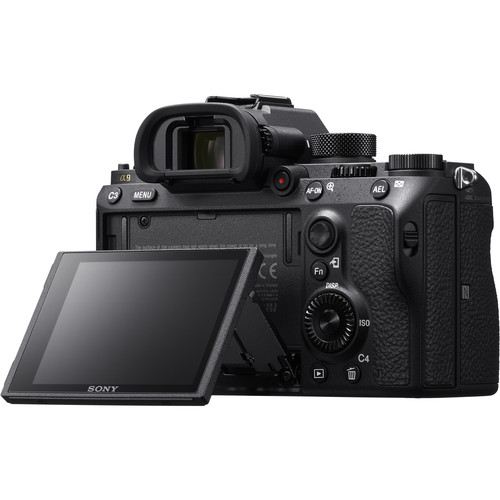
REVIEW: Sony a9 - The Best All Purpose Camera? (Part II of II)

In Part I of my review I asked Sony a9 - The Ultimate Action Camera By Which All Others Will Be Judged?, and I think the answer has to be yes. It's a very impressive AF system that almost guarantees you'll get the decisive moment for an action scene. However, this is a big investment and most of us aren't paid sports photographers, yet this camera has a lot of reasons why you might want to buy. As a result, I thought I'd spend the second half of this review discussing its value as an all-purpose camera to see how it does with typical shots that the average person might take.

Would this be a case of yet another expensive camera that's really just a one trick pony, or did Sony really make one camera to rule them all? Read on to find out and see my final conclusion.

Real World Shots

Real world shots is my way of saying examples of photos that an ordinary person might take as compared to ones that a paid professional being hired to photograph something would take. I like to include these types of shots in my reviews because it reflects exactly what you can expect to see if you buy this camera and examine the results on your computer.

All of the photos are 100% unedited (not even cropping unless noted) and you can click the photos to see the exact unedited JPEG that came out of the camera.

While I might use white balance (shade) and creative style (vivid) adjustments to enhance the in-camera image, the rest of what you see is what you'd see at home yourself if you took this same shot yourself.

All images are copyright, Ron Martinsen - ALL RIGHTS RESERVED, but you may examine the originals to your hearts content while viewing this article in your web browser. After closing the article, you agree to delete any local copies and you also agree not to print, re-post, re-distribute, link to or otherwise use these photos in any way without written consent.

With that said, please enjoy my thoughts on these and all of the photos found in part 1 of my review and in the galleries associated with this review.


f/2.8 @ 70mm for 1/160 sec at ISO 250

Using full resolution (6000x4000) you can't get a good shot of this subject from the fixed viewpoint


f/2.8 @ 70mm for 1/250 sec at ISO 400

However, if you switch to the APS-C mode, then you get some extra optical zoom without sacrificing quality - but you do get a smaller 3936x2624 file so you've essentially just done an in camera crop. That said, I still liked this mode and it will still print and look gorgeous on a 4k TV.


f/2.8 @ 70mm for 1/250 sec at ISO 500

Using the Clear Image Zoom feature at its maximum 4x means you can't pick the focus point but you get impressive reach and quality using this intelligent digital zoom technique.
Again, I have a file that needs no editing to show friends on a 4k TV - impressive


f/16 @ 24mm for 1.3 sec at ISO 100

In this intentional dynamic range torture test, I was reminded that this definitely no a7R II
The highlights were pretty blown despite the cloudy conditions


f/22 @ 24mm for 2 sec at ISO 100

However, if you shoot within the dynamic range of this camera,
the landscape results are very satisfying


f/4 @ 70mm for 1/800 sec at ISO 100

I snatched a frame of the distant boat,
but I was surprised to see how much detail still remained in the power lines


a9 Camping-34
f/4 @ 68mm for 1/3200 sec at ISO 100 
(cropped - click for unedited original)
As I was taking the shot above, I heard this plane overhead so I took a quick shot
Despite being underexposed, I was impressed with the detail in the shadows
and especially the wires going from the vertical stabilizer on the tail


f/5.6 @ 70mm for 1/100 sec at ISO 640

Zoom in to the original for a scary look at this spider shot done at full frame at roughly the minimum focus distance of the 24-70mm f/2.8 GM lens


f/4 @ 70mm for 1/200 sec at ISO 800

Decent bokeh and amazing detail make the kit a great deal for those getting started with Sony


f/3.2 @ 70mm for 1/1250 sec at ISO 100

Wild unpredictable boys are no problem with this camera


f/3.2 @ 70mm for 1/500 sec at ISO 100

Clear Image Zoom is excellent for hard to reach flower macro shots at the botanical garden


f/4 @ 70mm for 1/2000 sec at ISO 500

There is enough dynamic range to keep cheek highlights in check
when photographing family members in the harsh sun

Slow Motion Video Autofocus Test

I don't do much with video, but I think slow mo videos are cool so I couldn't help but play around with that feature on this camera. In this test, I was curious to see how the AF would hold up to the torture test of keeping up with my son's eyes. It failed, but honestly I thought it did better than expected given the fact that I was using eye focus mode on such a challenging scene.

Bookshelf Test


f/5.6 @ 50mm for 10 sec at ISO 100

ISO 100 quality was excellent even by today's standards
and the shadow detail above the books to the back wall was impressive

Where many special purpose cameras fail is how they perform when pushed to the extremes. In this case, I'm happy to report that the a9 did a respectable job in my bookshelf test that I use to just shadow detail, dynamic range and ISO performance. The full gallery of shots lets you examine full ISO stops from 100 (shown above) to 51,200 (shown below) where you can decide what your maximum tolerance is for sensor noise and noise reduction control. However, I found 51,200 to be usable in a pinch and 12,800 to be good enough to consider it a default top ISO for regular shooting.


f/5.6 @ 50mm for 1/50 sec at ISO 51200

As this shows, unless you are going to be viewing at large sizes, images of your vacation or kids shown a social media sizes is going to be totally fine at ISO 51,200

Conclusion

Yes, I have to say that this is the most impressive camera that I've tested this year and one of the best ones I've every shot with. While I won't be getting rid of my Canon 1D X Mark II because if its superior line up of sports lenses, better metering and excellent flash system, I did find myself looking at my camera and wondering why Canon can't do that!

I've also shot with the Nikon D5, and I'd prefer it over the Sony for the same reasons. Yes, I've seen adapters used with Canon and Nikon lenses and I'm extremely underwhelmed at AF performance when used with adapters, but manual focusing is fine. That kinda defeats the purpose of this camera and sports lenses, so I'd still say that if you are a sports shooter that this is a good second camera for close range action, but stick to Canon or Nikon for your >200mm needs.

With that said, if you are an event or wedding photographer then I think this is the camera you have to own. While you might want a a7R Mark II also around your neck or in the hands of your second shooter for its superior dynamic range, this will be the camera that helps you to get the shots that bring tears to your clients eyes. It's also got the high ISO performance to come home with concert and evening event shots that are totally usable.

Now this is an extremely expensive camera, so it's tough to suggest it for parents based on price. However, if you are a financially successful dual income household that can easily afford it then I can say without hesitation that this is the camera you want to photograph your precious little angel.

Overall, I'm extremely satisfied all around with the first Sony camera body that I didn't hate (thanks to its wealth of programmable buttons) and can easily give it MY HIGHEST RECOMMENDATION.

Where to Buy?

CLICK HERE to learn more or buy today.

Other articles you may enjoy

If you enjoyed this article, you may also enjoy these:

Disclosure

If you make a purchase using links found in this article, I may make a commission. It doesn’t cost you a penny more, but it does help to support future articles like this.

Unless noted, ALL shots in this article are unedited and come straight out of the camera as shown. In-camera JPEG's were used with in-camera Creative Style (vivid) and White Balance (shade) being leveraged to give shots an improved color over the camera default.

Wednesday, December 28, 2016

REVIEW: Canon 1DX Mark II - I'm no longer lusting for a Nikon (Part I - Opinions of a Parent)

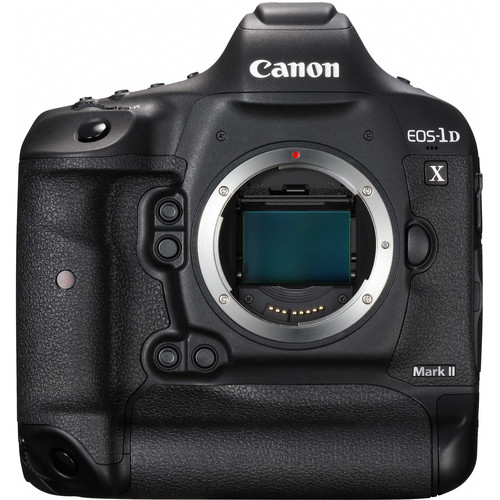
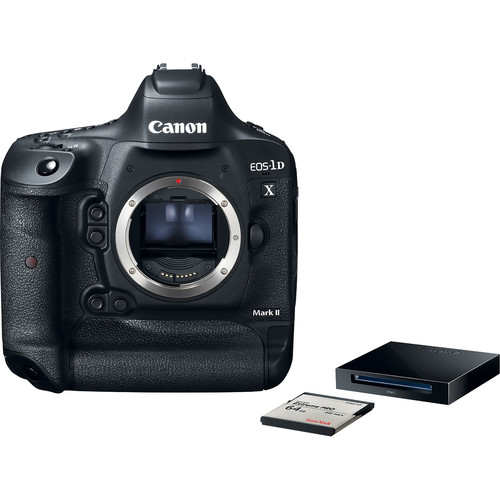
Canon EOS-1D X Mark II Body with CFast Card & Reader

When I did my Nikon D4s vs Canon 1D X review, I declared that the D4s had the best autofocus system I had ever tested. As a result, when the D5 came out, I was very eager to get my hands on it and see what improvements Nikon had made.

As  Canon 1D X owner, I was expecting to be blown away by the D5 so much that I'd finally switch over to the Nikon camp. However, my D5 testing reminded me of an old saying amongst the Nikon faithful - don't get the D series until the D*s model comes out. Sadly, this would be the case again as the D5 disappointed me greatly with its poor and inconsistent metering behavior, and an AF system that took a step backwards from the flawless performance I experienced with the D4s.

Canon has underwhelmed me for quite some time with its sensors, so I was expecting to be very disappointed with the 1DX Mark II. However, I was extremely surprised to discover that this time they seemed to make some improvements to dynamic range.

About this review

There will be plenty of people doing reviews that focus on the sports aspects of this camera, and that makes a lot of sense. However, I'm taking a different approach for this installment where I focus on the everyday use of this camera.

While I do shoot sports, a good portion of what I also shoot are pictures of the kids and things that grab my eye in every day life. I like the performance features when photographing my kids, and I love the control I have over my camera for pretty much every subject matter you can imagine. This is the unsung value of pro camera bodies that goes far beyond the glamourous sports photographer usage.

Camera Body Thoughts

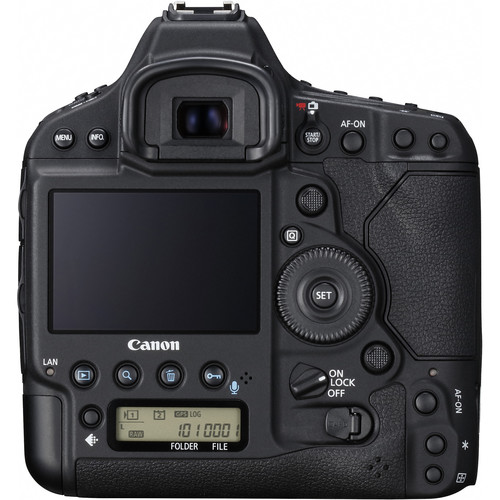
Canon EOS-1D X Mark II Rear View

Nikon D5 Rear View
Nikon D5 Rear View

While these camera bodies look slightly different, they are functionally very similar. Canon users will appreciate and be more familiar with many things that will cause them to gravitate to the 1DX Mark II and Nikon users will do the same with the D5. With that said, both have a wealth of new features that only previous pro body users from both camps will understand initially - and both thankfully mostly mirror their excellent predecessors.

I appreciate that Nikon locates the row of buttons to the left of the LCD instead of under it as shown above on the Canon, but Cano's wheel is a huge improvement over Nikon's thumb pad - especially its touch sensitive feature for video.

Batter performance and features are excellent on both, so my experience was both was that they are a delight to use day in and day out. Really the only gripe that can be made is about the weight, but they are built like an old Mercedes so you feel armed with a tool that definitely seems to be optimized for Gulf War photojournalism duty.

Where both bodies shine is where you can control the range of many settings and show/hide features to get your configuration set up exactly the way YOU work . You can even dial in exposure compensation in-camera for the meters so the 0EV performance matches your preference - not the choice of the engineers that built it. Basically it is tweaking to your hearts content, so if you've ever been unhappy about a feature in a lesser camera body - this is the camera that will allow you to dial in things the way you want it. This also includes reprogramming the buttons to different things beyond what their labels imply.

Canon Fails

Copyright Ron Martinsen - ALL RIGHTS RESERVED
f/2.8 @ 200mm for 1/1000 sec at ISO 1250 [UNEDITED]
Not necessarily a fail shot, but a good fail face

Whereas Nikon learned from the D4/D4s that trying to combine Compact Flash with XQD was a stupid idea, Canon didn't get that memo and foolishly opted to force users to only one CF slot and only one CFast slot. This means if you don't jump on the CFast bandwagon, you are limited to one card. However, if you do, you still need a CF if you want to use that other slot. This is super frustrating because the rollover from card 1 to card 2 slots means a drop in performance if you use CFast and it means card switch time if you don't. Dumb, dumb, dumb, dumb, dumb!

Another thing that is annoying is that Canon didn't match Nikon's touch screen which has twice the resolution and support for swipe and pinch to zoom on playback. Since Canon offers a touch screen, hopefully this functionality will come in a firmware update.

Lastly, Nikon stumbled in its implementation but I commend them on shipping the AF Fine Tune feature (video in this article). This feature attempts to make setting the AF micro adjustments much easier, but Canon didn't try that here. Given the price of both bodies, you want each to do everything possible for their mega price.

Canon Surprises

Copyright Ron Martinsen - ALL RIGHTS RESERVED
f/4 @ 67mm for 1/320 sec at ISO 160 [UNEDITED]

Because I am a Canon shooter, I tend to notice the faults and take its strengths for granted. The D5 reminded me once again that while Nikon may have some advantages in high ISO performance, their metering is child's play compared to what you get with Canon.

While shooting RAW will save the Nikon from ruining a shot, the out of camera result I get with a Canon 1D X Mark II is print worthy whereas the D5 always requires white balance, curves and vibrance tweaks.

This won't matter to web trolls, but photojournalists and event/wedding photographers will appreciate how the Canon will give them something they can deliver to a client straight out of camera - especially if they tweak the picture styles to their desired output.

To minimize high ISO usage, I typically limited my shutter speed to a maximum of 1/1000. This introduces some occasional motion blur, but that's not the fault of the camera.

Nikon has Picture Controls for this same functionality, but I find that more challenging to dial them in without also having the camera in the correct white balance mode (often shade) and manually adjusting the exposure just right (since the in-camera meter often fails to do what I want like the Canon does).

Excellent focus performance

Copyright Ron Martinsen - ALL RIGHTS RESERVED
f/2.8 @ 135mm for 1/1000 sec at ISO 1000 [UNEDITED]
Click for original to see how the eye is still in focus despite the foot distraction
This was taken using default camera settings and single point AF

As a former Canon 1D Mark III and up owner, I've invested a ton of money while Canon has learned how to build a proper focus system. After testing the Nikon D4s, I was frustrated that Canon could have made it that easy to use, but now they finally have.

While the Canon has more options to dial in your desired preferences, it also means it is easy to shoot yourself in the foot. However, the defaults are almost as good as the D4s defaults. With basic tuning (i.e., setting focus as a priority over speed), you can get performance that noticeably outshines the 1D X.

In full auto with face detection is was about as good as I could do with a single point on  Nikon D3s or 1D X. Using a single-point AF with no pre-focusing (i.e., half press shutter button for a half second) using a default speed priority, I could typically get all but the first two shots in perfect focus. If I did a focus priority shot with pre-focus, then I got D4s autofocus performance (which is superior to D5 in my opinion).

ISO 25,600 is definitely usable

Copyright Ron Martinsen - ALL RIGHTS RESERVED
f/4 @ 70mm for 1/80 sec at ISO 25600 [UNEDITED]
While my white balance was off here (user error),
the in-camera jpeg high ISO quality was definitely usable

I'll discuss more about image quality and ISO in part II, but I found the high ISO performance to be very good at 25,600. This is every bit as good as ISO 6400 just a few years ago, so I'd have no issues with printing images shot at this ISO. For on-screen display I'd probably run Noiseware on the RAW and sharpen it.

Real World Shots

Work duties have kept me from getting out and enjoying this camera as much as I would like, but I did manage to do some casual shooting here and there. As usual, the images featured are straight out of camera and you can click on them to see the full-size in-camera JPEG originals. Unless noted, the photos are taken with default camera settings except for the exposure settings. I also favored the Auto Selection AF in AI Servo Case 1 using the EOS iTR AF (Face Priority) setting for most of my shooting.

You can view the images while you are viewing this article in your browser, but please delete them afterwards. No permission is granted for reuse, printing, editing, redistribution, etc... without signed written consent.

Click here to see the gallery for other images not shown..

Copyright Ron Martinsen - ALL RIGHTS RESERVED
f/8 @ 24mm for 1/160 sec at ISO 1250
Despite shooting in a dark black interior, the improved dynamic range and metering managed to balance the scene well to still get decent outside color and detail while still preserving details in the shadows of the floor mat area

Copyright Ron Martinsen - ALL RIGHTS RESERVED
f/5.6 @ 67mm for 1/2000 sec at ISO 1000
I included this candid shot of my 7-year old playing because his face was transitioning from sun (here) to shade (below) during the burst mode. I was impressed with how the meter compensated perfectly for the two adjacent frames taken in the fastest burst mode

Copyright Ron Martinsen - ALL RIGHTS RESERVED
f/5.6 @ 67mm for 1/2000 sec at ISO 1000
The D5 I tested would have failed miserably exposing this series.

Copyright Ron Martinsen - ALL RIGHTS RESERVED
f/4 @ 70mm for 1/250 sec at ISO 1600
Improvements in the red tones are obvious
for Canon users 

Copyright Ron Martinsen - ALL RIGHTS RESERVED
f/4 @ 70mm for 1/320 sec at ISO 3200
Again, I was very satisfied with color of the flower being very close to its real life appearance

Copyright Ron Martinsen - ALL RIGHTS RESERVED
f/4 @ 70mm for 1/400 sec at ISO 2500
Yellow tones were also good even when back lit

Copyright Ron Martinsen - ALL RIGHTS RESERVED
f/5.6 @ 70mm for 1/80 sec at ISO 8000
A default exposure showed great improvements in dynamic range
over what I've seen from my previous Canon cameras

Copyright Ron Martinsen - ALL RIGHTS RESERVED
f/5.6 @ 70mm for 1/200 sec at ISO 5000
When I compensated by -1EV to bring the colors out in the sky,
I was impressed at how much detail on the golf course remained

Copyright Ron Martinsen - ALL RIGHTS RESERVED
f/2.8 @ 130mm for 1/1000 sec at ISO 640
Kai is never predictable, yet this camera got him nearly time

Copyright Ron Martinsen - ALL RIGHTS RESERVED
f/2.8 @ 130mm for 1/1000 sec at ISO 800
It's common for AF to focus on that hand, but not the 1DXM2

Copyright Ron Martinsen - ALL RIGHTS RESERVED
f/2.8 @ 200mm for 1/1000 sec at ISO 1600
See comment below

Click here for a link to a series of 45 shots taken in burst mode using the aforementioned settings.A few shots had minor focus misses, but that's pretty good for a face detection fully auto mode!

Click here to see the gallery for other images not shown.

SIGMA 85mm Art Series


f/9 @ 85mm for 1/200 sec at ISO 100
Want to be able to count the pours, facial fuzz and eyelash textures? Check!

This camera really shines when paired with good glass and so far the best glass I've tested it with has been the amazing SIGMA 85mm Art Series lens. Click here to see my review and click here to see my 2nd bonus review which features 4k video and some cool outdoor shots like this:


f/16 @ 85mm for 1.3 sec at ISO 100
Yet even at f/16 this lens and camera combo is incredible!

Conclusion

I'll be back for more in part 2 with more thoughts and photos, but so far the hype for this camera seems to be true. I'm glad given the price!

Check out the Comparison: Canon 5D Mark IV vs 1DX Mark II article too!

Learn more or buy

Click here to learn more or buy your own via B&H.

Other Articles You Might Enjoy

Disclaimer

If you make a purchase using links found in this article, I may make a commission. Thank you so much for supporting this blog by coming back here and using my links when making your purchase!

Sunday, October 23, 2016

Comparison: Canon 5D Mark IV vs 1DX Mark II - CORRECTED

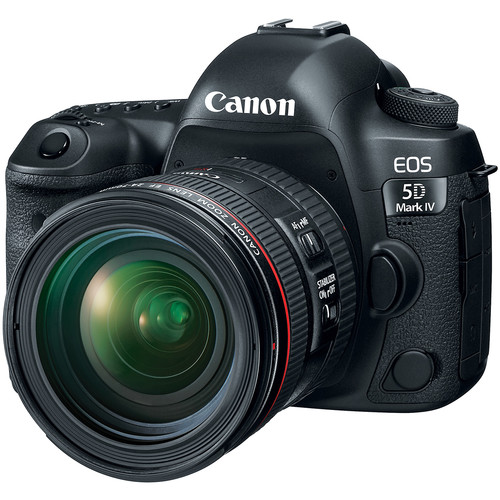
Canon 5D Mark IV
Canon 5D Mark IV

Canon EOS 1DX Mark II
Canon 1D X Mark II (Review)

When the 5D Mark III and 1D X first came out, I bought them both. At the time I was doing quite a bit of commercial shoots  where I needed a proper sports camera and a proper event camera that was lighter weight. Both cameras served me well, but honestly my biggest test with both camera bodies wasn't the paid work - that was easy because it was always a controlled situation with the light I needed. What was really hard were the shots I did for personal pleasure where I had the pressures of the family not wanting to wait for me to take pictures, horrible light - often indoors with lamps or outdoors in the rainy Northwest.

Over the years that I had these cameras, I favored the 1DX for the superior image quality over the 5D Mark III and it's better high ISO performance. I also loved the better control I had over the settings, despite missing creature comforts like the HDR mode found on the 5D Mark III and not the 1DX. In fact, the extra megapixels offered on the 5D Mark III would become a negative as its image was always softer and noisier than the 1D X.

I've sold both of my beloved cameras and have decided that I'm going to limit myself to one DSLR this time around, so the basis of this review is NOT about burst mode performance as the 1DX Mark II has no equal. It's more about every day use and which one would I want in my hands if I were shooting any situation where I wanted the highest probability of getting the shot with an image that will print beautifully at 24x36 - the largest size I often print.

This article isn't about camera price or features, as I was really most interested to see if the extra megapixels resulted in a better image or if the lower resolution would give me a more usable image file.

October 23, 2016 Correction - I made a mistake

In the original article that follows here, it turns out that I made a mistake by not being scientific enough in my comparison. I was hand held and thought I was close enough to make accurate determinations but I was wrong.

To prove to myself the differences between the two I ended up shooting with both cameras again in the exact same position using the same 70-200mm lens at 200mm using camera settings of 1/200 sec at f/4 and ISO 8000 (to show noise) and creating tungsten white balanced 16-bit ProPhoto RGB PSD files from the CR2 files of both that I loaded into Photoshop.

I normalized both files to be the same size as a 1DX Mark II image size (5472x3648 px) which would show the benefits of the greater resolution of the extra megapixels in the 5D Mark IV. With the files normalized and aligned, I created this animated GIF to compare the two images as precisely as possible:


Animated comparison of a 100% crop from a normalized 5472x3648 pixels image

The net result is that I still have a preference for the 1DX Mark II, BUT you can see that my original conclusion below about the lens distortion was inaccurate. This animation more closely represents what you might expect to get if you printed images from both cameras at the same size on the same printer. This type of comparison favors the 5D Mark IV simply for the finer details achieved by the higher resolution image.

It All Started With A Spider

5D Mark IV (Left) 1D X Mark II (Right) at f/5.6
5D Mark IV (Left) 1D X Mark II (Right)
1/200 sec at f/5.6
100% zoom to actual pixels

I was out in my back yard when I spotted a spider, so when I ran in to grab the nearest review camera, I decided that I better get outside again and shoot with the same camera.

These shots were taken about 26 minutes apart - both freehand using the same 24-70mm f/4L IS lens. You can view the original 5DM4 image on the left HERE and the 1DX2 image on the right HERE. Both were shot in manual mode with Auto ISO and a single AF point using the macro range of the 24-70mm f/4L IS lens.

The color difference is due to the auto white balance and auto picture style settings which can easily be normalized in RAW, but my favorite here was easily the 1D X Mark II image for the sharpness of the spider, despite the superior bokeh of the 5D Mark IV. This observation would begin a theme where naturally a higher megapixel camera is going to have less depth of field which results in superior bokeh - unless you normalize the files to the same size (or print them out).

5D Mark IV (Left) 1D X Mark II (Right) at f/9, ISO 25,600
5D Mark IV (Left) 1D X Mark II (Right)
1/200 sec at f/9, ISO 25,600
100% zoom to actual pixels

As I closed down the aperture the ISO naturally climbed resulting in an image where the 1D X Mark II was clearly the better image in my opinion. Click here to view the in-camera JPEG from the 5DM4 and click here (shown right above) to view the same from the 1DX Mark II.

Doing this of course begs the question, would the 1DX2 advantage carry over in a studio where the lighting was excellent?

Model with Studio Lights Test

Full Frame Comparison
5D Mark IV (Left) 1D X Mark II (Right)
1/200 sec at f/7.1, ISO 100, 200mm

In the studio, I once again shared the same 70-200mm f/2.8L IS II USM lens between the camera bodies with the model under identical light sitting in the same spot the entire time. While I did shoot freehand, as you can see from the image the models head and hair were my guide for her placement within the frame. In this case I used auto picture style and white balance just to see how both would perform in an informal test.

These images are 100% unedited - straight out of the camera in-camera JPEG files. You can view the 5DM4 JPEG or RAW and 1DX2 JPEG or RAW. All images are copyright Ron Martinsen - ALL RIGHTS RESERVED. You may view them while this browser session is open and this is your active page, but afterwards you must delete them. You may not save, edit, print, etc... these images without written on paper signed consent.

The net result was that the 5D Mark IV made the model look a little more heavy than the 1DX Mark II with the image quality being very good for both.

The heavier look wasn't real but rather an illusion created due to the model and lens not being an EXACT distance from each other and comparing two files that weren't the exact same size. If printed, or the files normalized to the same size, this issue would not exist.

Face comparison

I then zoomed in on the eyes and without normalization I favored the 1DX Mark II but in print or with normalization it'd probably be a draw:

Eye comparison

As I looked at the lips, again without normalization or printing I felt that the 1DX2 had more detail but that both were equally good results.

Lips comparison

Finally, here's a nose comparison:

Nose comparison

Conclusion

The net takeaway is that both cameras did a great job, but for the way I work and the file sizes I need, I preferred the 1D X Mark II.

The bigger story to tell is that out of thirty six 5D Mark IV images with the spot focus point on the models eye, I only had 6 that were in crisp focus under studio lighting conditions. With the 1D X Mark II I had 18 out of 24 in crisp focus. The model, camera shake, etc... could be blamed for some of the softer shots, but this experience left me thinking that if  I was going to get a once in a lifetime shot to briefly photograph my favorite celebrity, I'd want the 1DX Mark II in my hands!

While I'd rather the price of the 5D Mark IV, my next camera has to be the 1D X Mark II.  My gear has always paid for itself, so the ability to get the shot and have more freedom with depth of field and better high ISO performance makes the 1DX Mark II my money making camera of choice.

Learn more or buy

Click here to learn more or buy your own 5D Mark IV via B&H.

Click here to learn more or buy your own 1DX Mark II via B&H.

Other Articles You Might Enjoy

Disclaimer

If you make a purchase using links found in this article, I may make a commission. Thank you so much for supporting this blog by coming back here and using my links when making your purchase!

Thursday, June 9, 2016

REVIEW: Nikon D5 – Great, but … (Part II of II)

Nikon D5 DSLR Camera (Body Only, Dual XQD Slots)

After a month and 5000 shots with the Nikon D5, my opinions have changed quite a bit since my first look article. Yes, I still love it, but I’ve had enough time to experience both its greatness, as well as its flaws.

If you haven’t already, be sure to read part 1 of this article where I dive a lot into features and even offer some videos that show this camera in action. What follows here are my final observations and conclusion.

Bookshelf Tests

For my bookshelf tests, I reset the camera back to factory defaults and then chose RAW+JPEG Fine* and took 19 separate shots using mirror lockup.starting here. Click the shots below to view a full-size original in-camera JPEG that has not been edited in any way.


f/2.8 @ 100mm for 2 sec at ISO 100

As expected ISO 100 was great as were the images taken at f/2.8 all the way to f/10 where  I  stopped due to the 30 second exposure limit for aperture priority. Sharpness was very good and no visible signs of diffraction were present.


f/5.6 @ 100mm for 1/100 sec at ISO 102,400

As the ISO’s started to rise, things looked pretty good up to 25,600 where I started to notice a drop off in quality that gradually gets worse. By 102,400, shown above, I find that anything larger than 4k screen resolution is too big for using these files.


f/5.6 @ 100mm for 1/200 sec at ISO 204,800 (H1)

In an extreme pinch, some might find 204,800 (H1) usable, which if you keep the file small as shown above it can be useful.


f/5.6 @ 100mm for 1/400 sec at ISO 409,600 (H2)

By the time you get to 409,600 (H2) as shown above, things start getting pretty smeared so anything larger than a thumbnail will likely disappoint.


f/5.6 @ 100mm for 1/3200 sec at ISO 3,276,800 (H5)

Everything after H2 is horrible with the worst being H5. Sure, it’s cool to say that you have a camera that can do three million ISO, but this is the worst image I’ve ever seen out of a camera in my lifetime. This was a pure marketing play as I can’t see anyone using an image like this for anything – yuck!

Of course, I had to try shooting the sky handheld at night when I was pretty dark and cloudy. I got an interesting shot:


f/5.6 @ 200mm for 1/125 sec at ISO 144,815

but nothing I’d use beyond a talking point like this. This is however, the first time I’ve handheld a shot in the dark of night and got something that is better than what my eyes could see. Yes, my eyes had a better overall balanced exposure and no noise, but the backlit effect on the clouds was cool, and not visible to the naked eye without a seriously long exposure.

Long-Term AF Findings


f/4 @ 200mm for 1/2000 sec at ISO 180

Yes, this AF system is excellent, but like all systems I’ve used, I still get the best result when I use a single AF point in continuous mode and do a good job manually tracking my subject. Full auto (Auto Area AF), is still flawed and various group / multi point methods all resulted in a fair number of misses in real world use – even in sunny conditions that warranted 1/000 sec or greater shutter speeds.

Here’s an example when using the dynamic area AF 25 mode where the system just failed (it focuses on the grass behind the runner):


f/2.8 @ 200mm for 1/1000 sec at ISO 100

However, the next two frames got more in focus and the remainder afterwards were focused. This tells me that the system is good at self correcting and just a little more R&D is required to get more perfect shots from the time you first press the shutter button.

While I was out shooting my model noticed an eagle, so without changing any settings I just pointed my camera up and sprayed and prayed to get a shot. Out of 16 frames, I got one shot which is somewhat understandable – especially given the dandelions flying in the air:


f/2.8 @ 200mm for 1/1000 sec at ISO 100

I hoped and expected for more in focus shots since I did an ok job tracking the subject, but I’ve done better using other cameras – including the D4s.

There were plenty of in focus shots taken over the month that I had this camera where this camera performed flawlessly, but it really was about tried and true methods that work with most sports cameras to get the best results. You an see some in the first look and part one of this article, or here in the gallery.

Yes, it’s an improvement over the phenomenal D4s, and it’s definitely better than any Canon I’ve shot with, but it impressed me so much up front I had a false sense of hope that this would be the camera that nailed every shot that was outside the minimum focus distance.

4k Videos

I hate doing video, but the 4k video on this camera combined with a touch screen intrigued me. I was hoping it would act like a cell phone or a lower end DSLR that allows tap to focus, but as you can see from this video that tap to focus (done on a monopod here) is a total disaster:

Instead, pre-focusing the scene as I’d do with most DSLR’s without touch screens is going to give you the best results (unless you have additional video hardware to assist):

The 4k quality was good and recorded flawlessly with compact flash cards as slow as 90 mbps. My only gripe was that it would stop after three minutes instead of just spilling over to a new file.

Conclusion


f/7.1 @ 125mm for 1/400 sec at ISO 36,000

Yes, this  a great camera. Is it the best Nikon sports camera ever made, it’s hard to say but if history repeats itself I think the inevitable D5s will be the one to earn that title. For now, I’m impressed but also reminded at how good the D4s was, so I’d be hard pressed to just stick with it if I were a Nikon shooter.

The focus was excellent, but not foolproof – I learned how to cause it fail – a lot. The ISO performance was good, but I’ve seen better from Nikon. The metering mode, was typical Nikon – which is to say maddening for Canon shooters who can just use evaluate all the time and not think about metering. These realities, along with the interesting but flawed AF Fine Tune feature (learn more) tell me there will be some much needed firmware updates, and that D5s will be the one that meets the expectations that this camera sets.

If you are a commercial Nikon shooter doing sports or events, then I’d say yes this is worth the upgrade because this camera will easily pay for itself. However, if you area prosumer who shoots for fun, I’d consider getting a great deal on a D4s or waiting for the D5s before parting with your hard earned money .

As for me, I’m going to hold out and test the Nikon D500 and Canon 1DX Mark II to see if either motivates me to part with my 1DX or if I’m going to sit this round out.

Where to order

Click here to learn more or order on the B&H web site. I opted for the dual CF version, but an XQD version is available at no extra charge.

Other articles you may enjoy

If you enjoyed this article, you may also enjoy these:

Disclosure

If you make a purchase using links found in this article, I may make a commission. It doesn’t cost you a penny more, but it does help to support future articles like this.